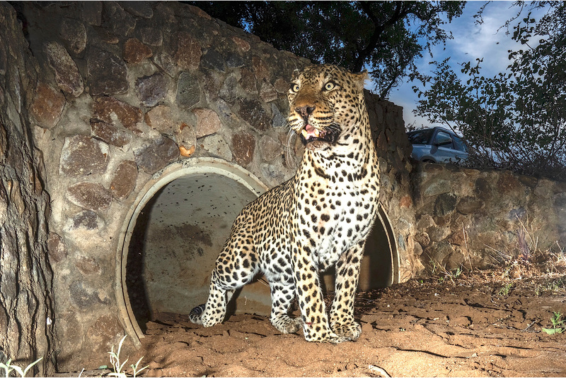
The rising number of wildlife-vehicle collisions in the Hoedspruit area has become a significant concern for conservationists, researchers, and local residents alike. Between May and October 2024, seven leopards were tragically killed on local roads, alongside other species such as wild dogs, hyenas, side-striped jackals, and civets. These are just the cases that have been reported—many others are likely to have gone unnoticed, underscoring the scale of the problem.
In response to this urgent issue, the Ingwe Research Program has launched the Road Ecology Project, an ambitious and innovative initiative aimed at identifying wildlife crossing areas, mapping roadkill hotspots, and developing strategies to mitigate the risks. Supported by a major sponsorship from AirNav Systems, the project brings together advanced technology, community engagement, and rigorous scientific research to drive meaningful change.
“We hear heartbreaking reports from residents about the loss of wildlife on our roads,” says Marine Servonnat, Director of the Ingwe Research Program. “But conservation is not just about reacting to these tragic incidents—it’s about understanding the causes and preventing them before they happen.”
A Comprehensive, Two-Phase Approach
The Road Ecology Project is structured into two phases, each focusing on a different aspect of addressing the issue. The first phase is the Baseline Research, which aims to identify key wildlife collision hotspots and assess the role of culverts in facilitating safe road crossings for animals. In addition, this phase will explore various environmental and human-made factors—such as fencing, vegetation, and road design—that influence animal movement patterns and their ability to cross roads safely.
The second phase, Mitigation Measures and Community Engagement, will build upon the data gathered during the research phase. This stage is focused on developing and implementing practical, data-driven solutions. Engaging local authorities and communities will be a key aspect of this phase, ensuring that interventions like improved culvert access, clearer signage, and animal detection systems are not only realistic but also widely supported. The implementation and ongoing evaluation of these measures will be critical to ensuring their effectiveness.
AirNav Systems: Leveraging Technology for Conservation
With a strong background in global air traffic monitoring, AirNav Systems has adapted its expertise in data analysis and artificial intelligence to support wildlife conservation.
“Our mission is not limited to aviation,” explains Andre Brandao, CEO of AirNav Systems. “By collaborating with the Ingwe Research Program, we are now applying our technological capabilities to track leopard movements, identify high-risk areas for wildlife-vehicle collisions, and develop strategies to reduce these incidents, ultimately saving lives.”
How You Can Contribute to the Cause
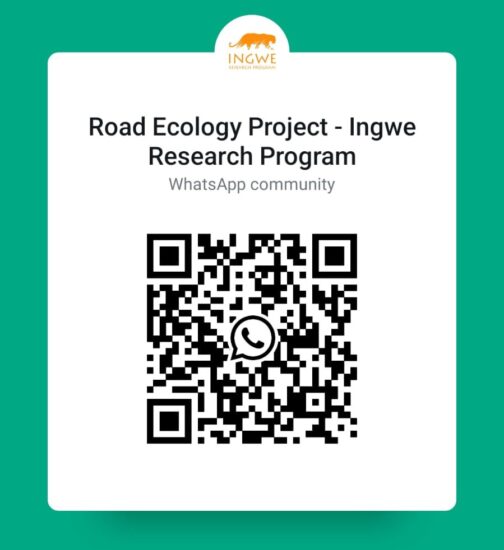
You don’t have to be a researcher to make a meaningful difference. By participating in the citizen science movement, individuals can help track wildlife sightings and report roadkill incidents through a dedicated WhatsApp community group. All it takes is scanning the QR code to get started!
In addition, financial support is crucial to the continued success of the project. Funding is needed to cover operational expenses, fuel, and specialized equipment—costs that are essential to ensuring the project’s effectiveness. Equally important is raising awareness: the more people who understand the scope of this issue, the greater the impact the Road Ecology Project can have.
About the Ingwe Research Program
The Ingwe Research Program began as a project under the On Track Foundation, a UK-based initiative connected to On Track Safaris. After two years of mentorship, Will and Carol Fox enabled Marine Servonnat—now the Executive Director of the program—to register Ingwe as a non-profit organization in South Africa in 2024.
Today, the Ingwe Research Program operates across a network of 35 reserves, 26 lodges, and a growing community of over 380 citizen scientists. The program has made significant strides in tracking leopard populations, with more than 11,000 images submitted, over 7,000 leopard sightings reported, and 140 leopards fully identified in and around the Hoedspruit area. Using advanced AI-powered tools like the African Carnivore Wildbook, the program continues to track and monitor leopard movements.
Ingwe encourages reserves, lodges, landowners, farmers, and residents—whether inside or outside protected areas—to contribute data, such as leopard sightings or camera trap footage. The data collected is uploaded to the SMART conservation app, helping to build a comprehensive picture of local wildlife movement.
Ongoing Research Initiatives
In addition to the Road Ecology Project, the Ingwe Research Program is also involved in two other important research projects, both of which form the basis for students’ master’s theses. The first, the Leopard Distribution Study, aims to understand leopard distribution patterns in the Hoedspruit region. The study will examine the spatial patterns of leopards and the environmental factors, as well as human influences, that affect their movement and habitat use.
The second project, the Socio-Ecological Survey, explores human-wildlife coexistence within South African wildlife estates. The goal is to better understand how people and wildlife interact in these areas, with the aim of developing more effective management practices that support peaceful cohabitation.
Both research projects are set to culminate in community presentations in the last quarter of 2025, where the findings will be shared with the broader Hoedspruit community.
A Collective Effort
Wildlife conservation is a collective effort, and everyone has a role to play. Whether you contribute data, provide financial support, or simply help spread the word, each action brings us closer to ensuring Hoedspruit remains a safe haven for wildlife. Together, we can make a real difference in preserving the biodiversity of this unique region.
To get involved, visit ingweresearchprogram.org or email admin@ingweresearchprogram.org.