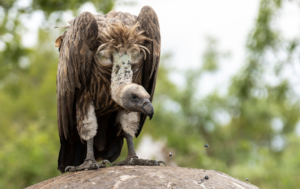
Beyond the Boundary: Tackling Lead Poisoning Across Vulture Landscapes
BirdLife South Africa’s Vulture Project

BirdLife South Africa’s Vulture Project

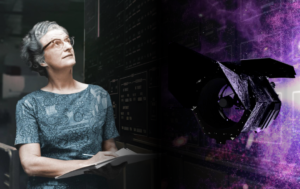
If all goes according to plan, by the time this article is published, the next great cosmic observatory should be on its way to its new home. The Nancy Grace Roman telescope is NASA’s latest offering to aid in our understanding of the Universe. It will join Hubble and James Webb in scouring the cosmos, trying to unlock its deepest and darkest secrets.

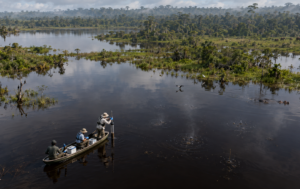
In the heart of the Congo Basin’s Cuvette Centrale, a large depression hosting the world’s biggest tropical wetland complex, lie two vast, shallow blackwater lakes, Lake Tumba and Lake Mai Ndombe. Together they are roughly the size of 420,000 football fields.

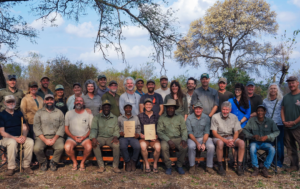
CyberTracker’s international evaluator community is gathering this week (24–31 August) for the first time in the organisation’s 30-plus year history – hosted outside Hoedspruit. This was all made possible thanks to the organisers, Kersey Lawrence and Lee Gutteridge.

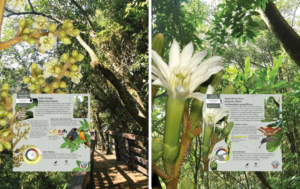
Hidden beneath the water’s surface is a botanical world that is among nature’s most innovative and ecologically important.

On 9 August 1956, more than 20 000 women marched to the Union Buildings in Pretoria to protest the apartheid pass laws, demanding dignity, equality and freedom. Women’s Month gives South Africans an important moment to remember those women, the courage of their stand and the rights for which they fought.

September doesn’t ask things nicely. Whatever you’ve been avoiding since winter – the awkward call, the overdue decision, the promise you made yourself in a weak moment – it wants an answer now. The good news: most of you already know what to do. You’ve just been hoping someone else would do it first.
Spring in the Lowveld means the bush is stirring, and so is everyone’s patience. This is a month for finishing things, not starting new ones. Half-built plans get exposed fast. If you’ve been coasting, September notices.

I know that I have harped on this subject before but if you have felt the news drumbeat about a “super El Niño” and wondered what it actually means for Hoedspruit, here is the honest answer. As of now, our dams are full, our soils are wet, and the drought everyone is talking about has not arrived. The El Niño is real, it is strengthening, and it is likely to make the coming summer hotter and probably drier than usual – but the Lowveld enters this event from a position of unusual strength, and preparation now matters far more than alarm.

We were treading a game trail parallel to the N’watindlopfu River in southern Kruger Park, mid-morning on a sweltering March day and we were nearing the Bushman rock paintings the river was named for. My mind was on finding a shady spot there for a short “tea break,” before heading back to our vehicle some 4km to the south behind us.

Hearing that a new primate species has been named is exciting news for scientists because primates across the world are in decline. According to the IUCN Red list, a global inventory of animal extinction risk, 44.4% of primate species are classed as endangered or critically endangered (versus 13.2% of all mammals).