When most people think of snakes, especially the infamous black mamba and the cryptic puff adder, they envision stealthy predators slithering through the undergrowth. However, beneath the surface of their unwarranted fearsome reputations lies a lesser known but equally fascinating aspect of their lives: their breeding behavior during the cooler winter months.
Southern Africa’s winter, from May through August, is typically a time of reduced activity for reptiles. As ectothermic creatures, snakes rely heavily on environmental conditions to regulate their bodily functions. Yet, this period of relative calm marks the beginning of an extraordinary cycle in the lives of the black mamba (Dendroaspis polylepis) and the puff adder (Bitis arietans) – the mating season.
The black mamba, one of Africa’s most feared yet misunderstood snakes, becomes notably active during the early part of winter. Despite the cooler temperatures, males enter a phase of heightened activity as they search for receptive females. Males have been observed traveling several kilometres during this time, following pheromone trails left by females. It is not uncommon for me to encounter more than one snake together when responding to mamba callouts at this time of year.
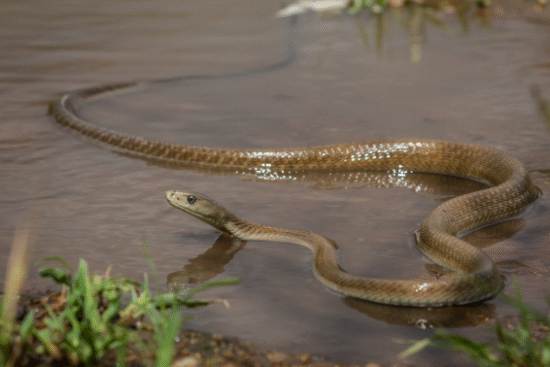
When two males encounter one another in pursuit of a female, a ritualistic combat dance may ensue; these confrontations rarely if ever involve biting. Instead, the snakes engage in a wrestling match, intertwining their muscular bodies, each trying to pin the other’s head to the ground. The victor earns the right to court the nearby female. This behavior is often mistaken for mating, however courtship and copulation is subtle and gentle affair. The male aligns his body alongside the female, flicking his tongue to read her chemical signals and gently rubs against her. If receptive, the female allows copulation, which can last for some time. After mating, the male leaves in search of other opportunities, while the female goes on to seek a safe, warm location to lay her eggs, usually a few months later.
Interestingly, this timing offers several advantages. The eggs are typically laid in early spring when temperatures begin to rise, allowing the warmth of the new season to incubate them. Hatchlings emerge in summer, when prey is plentiful and conditions are ideal for growth.
In contrast to the sleek and speedy black mamba, the puff adder is a master of ambush and camouflage. This thick-bodied viper spends much of its time motionless, relying on its cryptic colouration and patterning to blend into the surrounding environment. However, during the first few months of winter, male puff adders become uncharacteristically mobile in their quest to locate a mate.
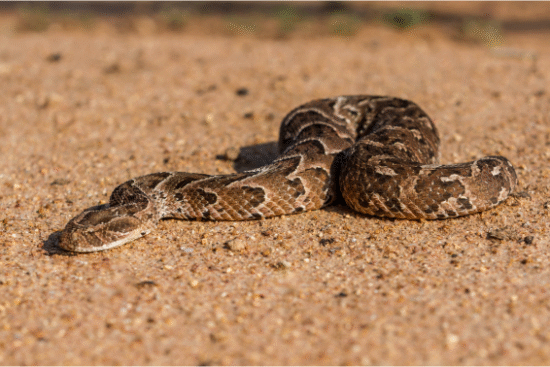
Using a powerful sense of smell, males detect the pheromone trails of females and follow them persistently. When the male encounters a receptive female, he will stroke the female’s body with rhythmic motions, attempting to align their cloacae for copulation. Unlike the egg-laying black mamba, the puff adder is ovoviviparous, meaning the eggs develop inside the female, and she gives birth to fully formed live young. This strategy provides an advantage during winter, as developing embryos remain protected within the mother’s body, kept at a relatively stable temperature.
The winter breeding behaviour of these two iconic snake species highlights the remarkable adaptations southern Africa’s reptiles have evolved to ensure their survival. While the environment seems dormant, a hidden drama of life and reproduction plays out across the veld, unseen by most.
Snake populations are under pressure from habitat loss, road mortality, and persecution by humans. Knowing when and where snakes breed allows for better protection of critical habitats and a deeper appreciation of their ecological roles. Moreover, this knowledge helps dispel long-standing myths and fears. Black mambas, despite their reputation, are shy and avoid confrontation. Puff adders, while responsible for a number of bites each year, strike only when stepped on or provoked. Recognizing their roles as predators of rodents and pests can shift perceptions from fear to respect.
While the African winter may appear to slow nature’s rhythm, it is, in truth, a vital season of preparation and renewal for snakes like the black mamba and puff adder. Their winter breeding behaviour is both strategic and biologically brilliant, ensuring the continuation of their lineages in an often harsh and unpredictable environment. By peering into this secret world, we gain not only scientific insight but also a profound respect for the resilience and complexity of these misunderstood reptiles.
For more information on scorpions, snakes, spiders and other venomous animals, awareness training and talks, as well as a professional 24hrs problem snake rescue service, contact the author at Wildlife Safety Solutions: 073 934 6156; info@wildlifesafetysolutions.co.za; www.wildlifesafetysolutions.co.za, FB Wildlife Safety Solutions, Instagram wildlife_safety_solutions