An extraordinarily rare and unique little butterfly on the brink of extinction, the Wolkberg Zulu in Limpopo, has been given a fighting chance to ensure its survival with legal protection thanks to the first butterfly servitude in the country.
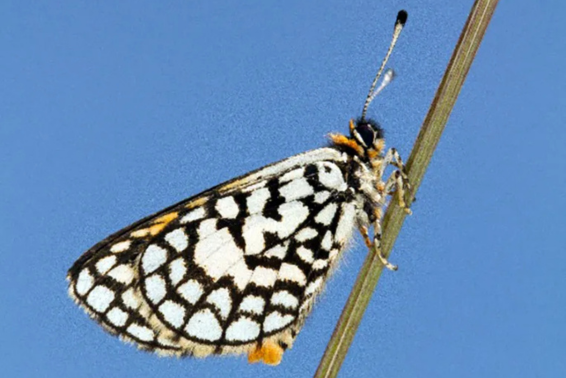
The Wolkberg Zulu (Alaena margaritacea) is a highly elusive species, 26mm long with pearly white wings patterned with dark markings, on the brink of extinction and found in only two tiny, high-altitude sites within the Wolkberg mountain range in Haenertsburg, Limpopo.
This critically endangered species was discovered exactly a century ago in 1925 and could be completely wiped out by the merest development or agricultural activity, with its major threat to date being habitat destruction and degradation of the woodbush granite grassland at its two localities.
According to researchers, what makes this butterfly so striking is its unusual diet – its larvae feed on hard rock lichens.
Due to its extremely restricted habitat and unique feeding habits, the species is incredibly vulnerable to environmental changes, with fewer than 30 butterflies left on the planet.
In the Lepidopterists’ Society of Africa’s (LSA) conservation assessments and Red Listing for this butterfly, they found that both sites where it’s found fell outside officially protected areas and were threatened by plantations and other factors associated with commercial operations (change or reduction in fire frequency, invasive species and decreased soil moisture content).
They also found that this habitat, where the species is endemic, was deteriorating and severely fragmented.
Now a century after its discovery, a conservation servitude has been secured for this species on a farm in Limpopo where it is found, thanks to landowner Gustav van Veijeren, the LSA and the Endangered Wildlife Trust (EWT).
This is a legal agreement that permanently protects a piece of land for conservation purposes while allowing the landowner to retain ownership, which is why the landowner’s support is crucial for success. It places legally binding restrictions on certain land used to preserve biodiversity, ecosystems or endangered species.
On Van Veijeren’s farm the Wolkberg Zulu’s habitat is now safeguarded from further destructive activities such as mining, agriculture or other development.
The servitude was made possible through LSA’s Custodians of Rare and Endangered Lepidoptera (Corel) project, which allocates LSA members to act as custodians of threatened species, at one to five species per custodian.
Etienne Terblanche, the LSA’s custodian of the Wolkberg Zulu, said it was Van Veijeren who came to the party and made this possible.
“We hope that more landowners will follow in Gustav’s pioneering and big-hearted footsteps,” he said.
A first for conservation servitude
In a 2015 article in an LSA journal, Andre Coetzer said the species was only known to occur at the type locality near Haenertsburg, where there was an observed decline in both habitat quality and population size.
After this, the species was included in the LSA’s Corel programme, and a search for further localities was prioritised so that the society could plan for conservation efforts in future that would protect this and other similar species from further habitat destruction.
Then in January 2013, a second locality was discovered, which he said significantly improved the conservation outlook for this species.
Dr Dave Edge came up with the idea of conservation servitude for this species in 2021, with a rigorous conservation effort now legally ratified in the form of the servitude.
Terblanche told Daily Maverick: “Thanks to the servitude regulations provided by the state, which have been gaining traction over the past decade only, it is possible to arrange for the conservation of an organism and/or place privately.
Since this is the first butterfly servitude in the country, the ground has been broken for farmers to follow the lead so that more of these can be created.
The servitude also protects a critically endangered vegetation type, the woodbush granite grassland, of which 1% to 10% remains on Earth.
Threats to the Wolfberg Zulu
Terblanche warned that the species could be wiped out by the merest development or agricultural activity, especially because of the small number of individuals, but that the servitude pushes back on these by law.
“Plantations near the site pose the threat of usurping too much water for the butterfly to survive because it needs moisture on those hard rock lichens in order to feed. But the potential link between plantations and moisture needs to be established by research. The servitude prevents the expansion of the plantations into its domain.”

Bush encroachment, in which shrubs and forbs push out grassland, was another potential threat to the species, although the management plan details how this can be prevented.
The previous major threat that faced the butterfly was habitat destruction, which Terblanche said would be caused by developments such as mining.
Doubts and worries about a given aspect or development had to be worked through with careful and caring dialogue.
Terblanche added that, because the servitude was a new procedure, one had to be patient, willing to go with twists and turns, and willing to act as a bit of a glue.
For instance, drawing up a valid contract was a cumbersome process involving toing and froing between the LSA, the EWT and the owner, and it took more than a year to draft and tweak to everyone’s satisfaction.
Nobody made any income from this but the legal fees for registering the servitude at the title deeds office had to be paid. At a lowered rate, Badenhorst Attorneys of Humansdorp were paid by the EWT.
Terblanche said the process of convincing stakeholders – such as local authorities and other landowners – to support the initiative was fairly smooth. Naturally there had been doubts and worries about a given aspect or development, which had to be worked through with careful and caring dialogue.
Next steps for conserving the Wolkberg Zulu and its habitat
Now that legal protection is in place, Terblanche said the species’ habitat must be managed and research carried out to understand the butterfly better.
The first step was to clear bush encroachment where the butterfly used to occur. This area, ironically, fell outside the servitude since it’s not on the same property, so they would need clearance for this step.
Ultimately, Terblanche said it comes down to the nitty-gritty and often scientific things: ensuring that a thorn tree species with imperial tendencies does not overgrow the breeding area, finding out what the moistures are that the microclimate needs, and even looking for new sites for the butterfly.
Ian Little, the EWT’s head of conservation, said South Africa was home to an incredible number of threatened and endemic species, making it one of the world’s most biodiverse countries.
“The formal protection of these unique and isolated habitats for these incredible species are the building blocks towards securing our natural heritage and the life-giving ecosystem services that are provided by these intact landscapes,” he said.
Terblanche added that the Wolkberg Zulu’s “extraordinary rareness and uniqueness” give impetus to protecting it. The individuals lived in a colony, which meant they remained in their patch year after year, season after season.
It would be enormously difficult to discover another colony, if it even existed.
This article was previously published by Daily Maverick/Our Burning Planet