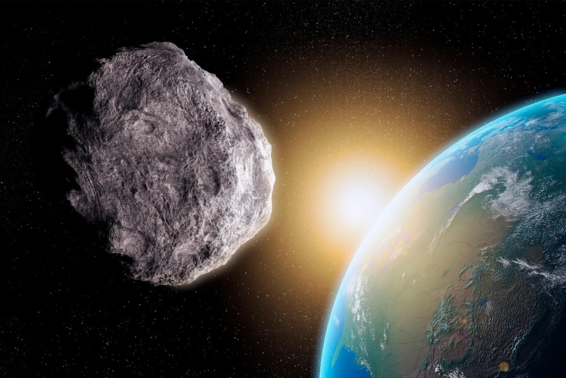
On the 27th December last year, the ATLAS telescope in Chile caught sight of an asteroid, estimated at around 50m in diameter, speeding away from Earth. After careful orbital calculations, it now looks possible that its new path might put it on a collision course with Earth.
As dramatic as this (and the title of this article) may seem, it’s not time to start building bunkers, hoarding canned goods and toilet roll, and generally picturing every disaster movie you have ever seen just yet! Currently, asteroid 2024 YR4 is speeding away from Earth, and should our calculations be correct, any potential impact will not happen until December 2032.
During its trip to the outer solar system and back, a lot of things can change, including needing to survive a pass around the Sun on its return journey. In terms of likelihood of a direct impact, the current figures suggest a 1:43 chance. As terrifying as this may sound, that equates to only about a 2% chance that it will careen into our home, and there is an excellent chance that this number will diminish as we gather more data.
Despite this, we can all brace ourselves for an internet onslaught of apocalyptic narrative as those trawling for click-bait ramp up their efforts! So before succumbing to their doubtless over-exaggerated scenarios, here is some background.
X atmos
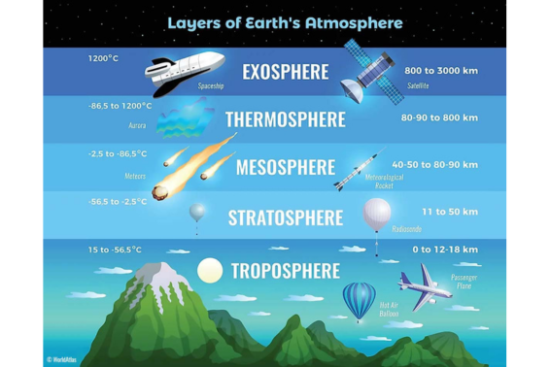
The Earth is hit by countless pieces of rock all day, every day. If you have ever witnessed a meteor (shooting star) in the night sky, you have seen evidence of this. Thankfully, we are wrapped in a protective blanket of atmosphere that shields us from these impacts. As these rocky projectiles penetrate our planetary neighbourhood, the ‘substance’ of our atmosphere (gas, dust, water vapour, pollution, etc.) causes it to decelerate rapidly, and ultimately destroy itself due to friction. Amazingly, it is thought that over 15,000 tonnes of ‘space dust’ is added to our atmosphere each year from these destroyed meteors.
Admittedly, asteroid 2024 YR4 is a little bigger than the standard objects that hit us. At an estimated diameter of 50m, it does pose a local threat. However, before you are once again struck with impending doom, remember that 70% of Earth is ocean, and between 40 – 50% of the remaining landmass is unpopulated, so the chance of it doing serious damage to an inhabited area is incredibly small. Also, its composition, mass and angle of entry will also play a major role in how much potential damage could be done.
So, what is the worst-case scenario? To answer that, we can look back at our history – this is not the first time it has happened – and nor will it be the last.
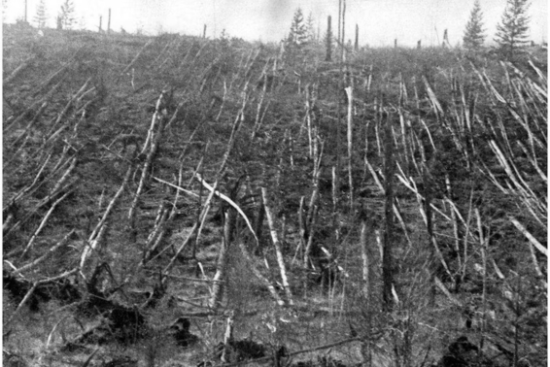
In 1908, a meteor estimated to be between 50 – 80m wide plunged through the atmosphere above Tunguska in Siberia, Russia. The heat and friction caused it to explode 5 – 10kms above the surface of the Earth with the force of 15 megatons of TNT – about a thousand times more powerful than the atomic bomb dropped on Hiroshima.
The resulting blast wave flattened 2000km2 of forest and shattered windows in huts nearly 100kms from the epicentre. The blast was visible from 800kms away and seismographs in western Europe even picked up the event. Thankfully, the area was completely unpopulated and there were only 3, unconfirmed, deaths. A similar, though less violent event, was also recorded above Chelyabinsk, Russia, in 2013. For those interested, there are lots of CCTV and dashcam footage of the explosion on YouTube.
If this happens in 2032, over a major population centre, the devastation would indeed be widespread and catastrophic. However, times have changed in the past 100+ years and we have made tremendous technological advances. It may sound like science fiction, but we have proven technology that can nudge an asteroid off its current orbit.
In 1908, a meteor estimated to be between 50 – 80m wide plunged through the atmosphere above Tunguska in Siberia, Russia. The heat and friction caused it to explode 5 – 10kms above the surface of the Earth with the force of 15 megatons of TNT – about a thousand times more powerful than the atomic bomb dropped on Hiroshima.
The resulting blast wave flattened 2000km2 of forest and shattered windows in huts nearly 100kms from the epicentre. The blast was visible from 800kms away and seismographs in western Europe even picked up the event. Thankfully, the area was completely unpopulated and there were only 3, unconfirmed, deaths. A similar, though less violent event, was also recorded above Chelyabinsk, Russia, in 2013. For those interested, there are lots of CCTV and dashcam footage of the explosion on YouTube.
If this happens in 2032, over a major population centre, the devastation would indeed be widespread and catastrophic. However, times have changed in the past 100+ years and we have made tremendous technological advances. It may sound like science fiction, but we have proven technology that can nudge an asteroid off its current orbit.
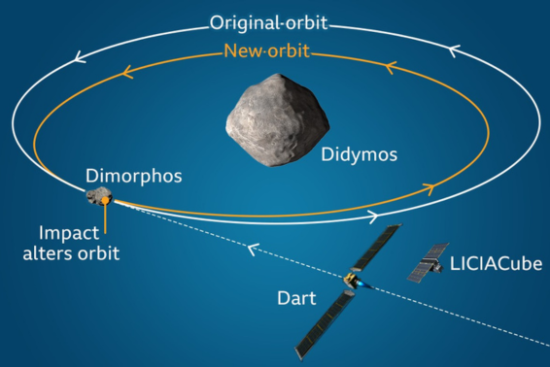
In 2021, NASA launched DART (Double Asteroid Redirection Test) and aimed it a small asteroid, a mere 170m wide. After a journey of 11 million kms, DART successfully impacted with Dimorphos 10 months later, altering its trajectory. Not only was this proof of concept, but a remarkable feat of engineering and maths!
Ultimately, we will not know the severity of asteroid 2024 YR4 until at least 2028. To reiterate once again, this is not a doomsday scenario! Chances are, the current impact estimation of 2% will drop significantly, but it is comforting to know that we, as a species, have the ability to protect ourselves should it become necessary. Just imagine what we would be capable of if we stopped funnelling our technological abilities into creating weapons of mass destruction and other financially motivated projects.
If nothing else, perhaps this scenario should give us renewed impetus to protect our fragile atmosphere. It is our last line of defence and has protected us for billions of years. The least we can do is return the favour.
See Celestial Events SA advert for contact details