For most people, Easter arrives as a welcome pause – a long weekend, a road trip, time with family. But behind the scenes, it is something far more powerful. Easter is one of the few moments in the year where travel, retail, hospitality and leisure all surge at the same time. It is a holiday – but it is also a synchronised economic event.
Globally, the scale is significant. In the United States alone, Easter spending exceeds $20 billion annually (about R 332 billion), according to the National Retail Federation. That figure includes everything from food and clothing to gifts, travel and dining out. In the United Kingdom, Easter confectionery sales alone are estimated to exceed £400 million each year (about R 9 billion), highlighting just how commercially powerful even a single category can be.
Yet chocolate is only the visible tip of the iceberg.
One of the biggest drivers of Easter’s economic impact is movement. Airlines, hotels and tourism operators see reliable demand spikes around the Easter period every year. The International Air Transport Association has long identified public holiday windows like Easter as predictable peaks in passenger travel.
Closer to home, the same pattern plays out. Across South Africa, Easter consistently ranks among the busiest travel periods of the year, with national parks, coastal destinations and bushveld regions all seeing a clear influx of visitors.
This year, however, the picture is slightly more complex.
Apart from the Middle East fiasco – which is another story for another time, recent flooding in parts of the Lowveld and within sections of the Kruger National Park has caused infrastructure damage, including roads, low-water crossings and access routes. In practical terms, this means that some areas may operate below full capacity over the Easter period, or not operate at all, and movement within the park may be more restricted than usual.
That has two important effects. The first is pressure. Where capacity is reduced, demand does not disappear – it concentrates. Visitors who would normally disperse across a wide area begin competing for fewer available beds, routes and experiences. In those conditions, availability tightens quickly.
The second is redistribution. When parts of a system become constrained, activity shifts. Private lodges, towns like Hoedspruit, and surrounding attractions often absorb some of that displaced demand. Day visitors may spend more time outside the park. Restaurants, retail outlets and activity providers beyond the core SANParks infrastructure can see increased footfall as a result.
In other words, disruption in one part of the system does not necessarily reduce economic activity – it changes where and how that activity happens.
Across South Africa more broadly, the pattern remains consistent. Key tourism regions regularly report occupancy levels of around 80% over the Easter period, with many establishments reaching full capacity, a clear indication of how concentrated demand becomes over a single weekend. In areas like the Kruger National Park, visitor numbers typically increase to the point where gate quotas are enforced – a practical sign of just how much traffic moves through the region in a matter of days.
The reasons behind this are straightforward, but powerful. Easter lands at a perfect point in the calendar – the first meaningful break after the opening stretch of the year, often aligned with school holidays, and just as the intense summer heat begins to ease. In regions like Limpopo and the Lowveld, this translates into near-perfect travelling conditions: cooler mornings, clear skies, and landscapes shifting into autumn tones.
That combination changes behaviour. People don’t just consider travelling – they commit to it. Trips are well planned and longer, spending is less constrained, and decisions that might normally be delayed are brought forward into a single weekend.
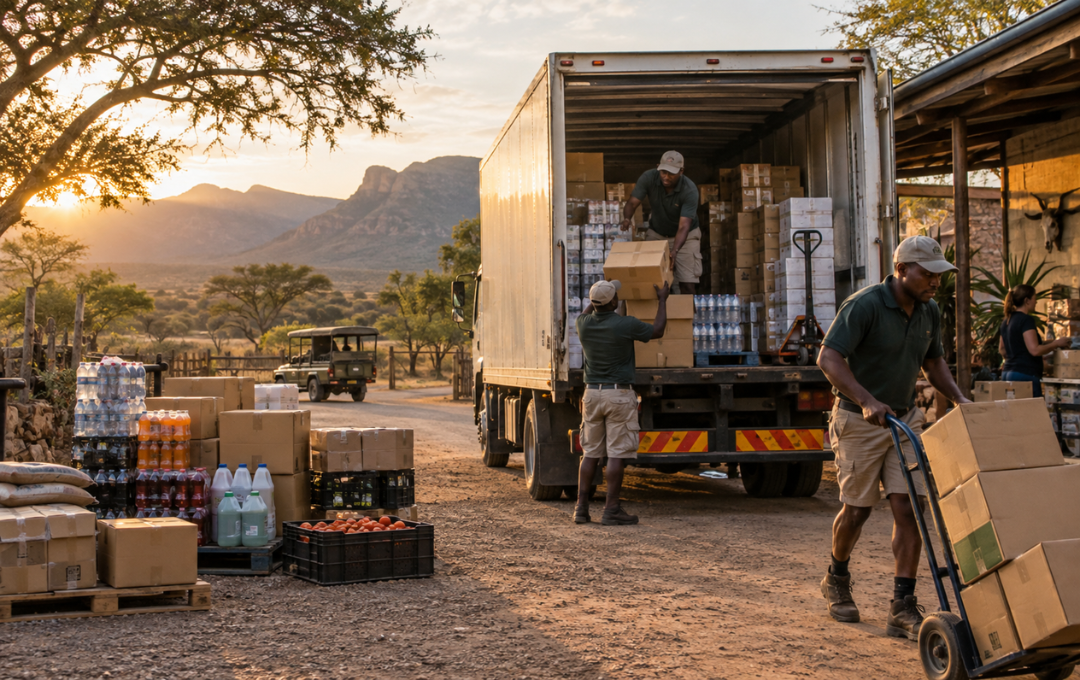
For the hospitality sector, this creates a short, highly concentrated window of opportunity. Lodges and hotels typically see increases in both occupancy and average daily rates, driven by a surge in demand over a limited number of days. Restaurants, activity providers and local businesses benefit from the same influx, creating a ripple effect that extends well beyond accommodation and into fuel stations, retail outlets, guides, transport services and informal trade.
Retail follows closely behind. While Easter eggs and chocolates dominate the shelves, the broader impact runs deeper – grocery spend, clothing purchases, gifts and entertainment all lift. It is a period of elevated discretionary spending, driven by the simple fact that people have both the time and the reason to spend.
And that is the real engine behind it.
Easter works because of what economists often refer to as the “long weekend effect.” When time expands, spending follows. A four-day break lowers decision friction. Travelling further feels justified. Eating out becomes easier. Small indulgences scale quickly across millions of households. In economic terms, this creates a short-term multiplier effect. Money spent on accommodation flows into wages, suppliers, logistics and local services, amplifying the impact beyond the initial transaction.
In other words, people don’t just celebrate Easter – they actively and enthusiastically participate in it economically.
For regions like Hoedspruit and the greater Kruger-to-Canyons Biosphere area, this matters. Easter is more than a busy weekend; it is a concentrated injection of activity into the local economy – even in a year where parts of the system are under pressure.
Ask any local operator and the pattern is familiar – Easter bookings come in early, the roads fill up, and the region shifts gear for a few days. If anything, this year serves as a reminder of how resilient that system is. Even when conditions are not perfect, the underlying drivers remain the same: people move, they explore, and they spend.
It is easy to think of Easter as tradition. In reality, it is something far more practical. It is a moment when behaviour shifts, movement accelerates, and spending follows. And in a world where economic activity is often fragmented and unpredictable, especially in these turbulent times, that kind of synchronised momentum remains rare – and valuable.