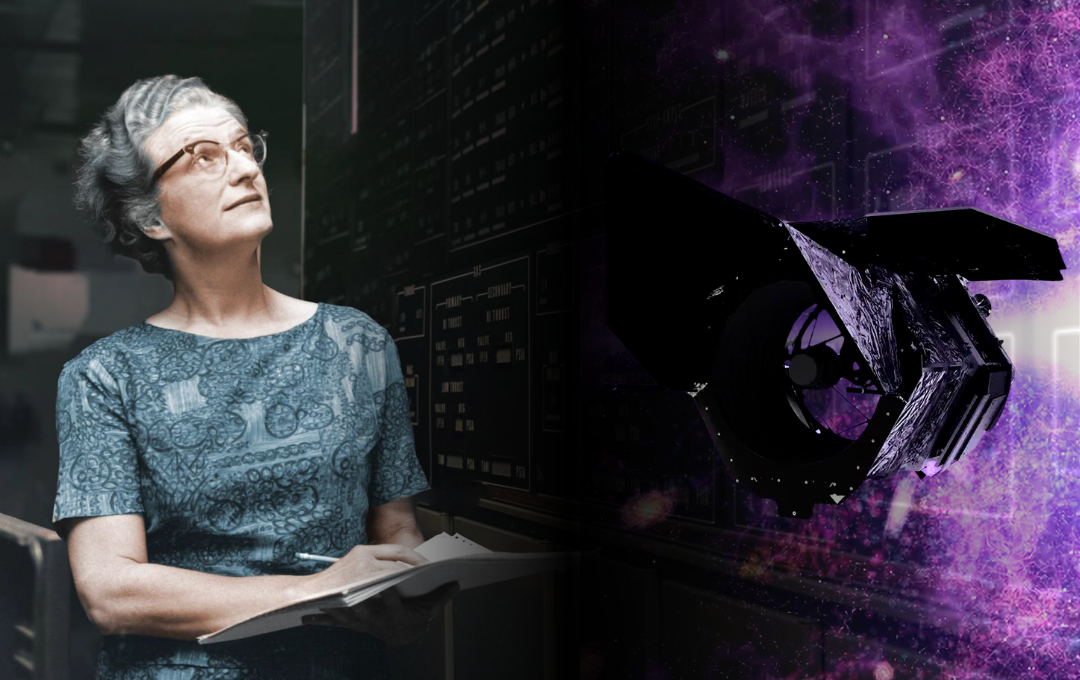
If all goes according to plan, by the time this article is published, the next great cosmic observatory should be on its way to its new home. The Nancy Grace Roman telescope is NASA’s latest offering to aid in our understanding of the Universe. It will join Hubble and James Webb in scouring the cosmos, trying to unlock its deepest and darkest secrets.
The telescope is named after Nancy Grace Roman, a brilliant scientist who served as NASA’s first chief astronomer in the 60s and 70s. She is most noted as being the driving force behind the development of the Hubble Space Telescope, as well as campaigning for its approval and funding. Because of her vital involvement, she is often referred to as the Mother of Hubble. It is fitting then, that the next great space telescope is named in honour of the woman who pioneered the era of modern space observatories.
The Roman telescope is not designed to replace any of the current observatories, but will rather complement them, widening our view of the expanse of space, literally. Whilst Hubble and JWST offer incredibly detailed, close-up views of objects, Roman’s technology will allow it to survey vast swathes of the Universe at once thanks to its 300-megapixel wide-field camera. This amazing piece of optical engineering will produce a field of view more than 100x larger than Hubble, but maintain a similar image sharpness, allowing astronomers to examine much larger expanses of space, in a much shorter period of time.
Roman is designed to see in the visible and near-infrared wavelength of light. Its power is its ability to survey large areas, and when a particularly interesting object is identified, JWST, with its 6.5m mirror, and deep infrared capabilities, can be called upon to reveal specific detail.
Roman has 3 main mission goals:
Understanding Dark Energy
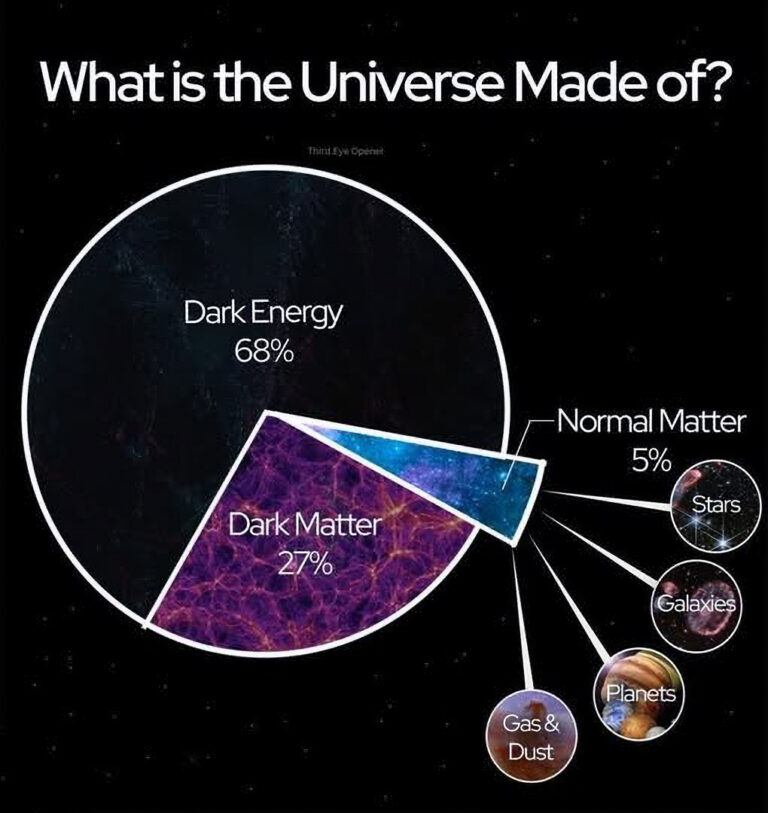
Most people know that the Universe is expanding, but what is unusual is that the more it expands, the faster its rate of expansion. This was an unexpected discovery since gravity should slowly begin to slow the expansion, the same way that a ball thrown into the air, will eventually slow and ultimately fall back down. This suggests that there is some unknown force acting on the Universe, ‘pulling’ it apart, counteracting gravity. Roman will peer at distant galaxies and try to help us understand more about this invisible force. Why is the Universe expanding? Is dark energy constant, or is it variable? Is our current understanding of the laws of gravity wrong?
Mapping Dark Matter
Dark matter is the invisible ‘stuff’ that seems to envelop galaxies, stopping them from tearing themselves apart. Frustratingly, this strange substance does not emit, absorb or reflect light in a way we can readily detect, but its effects can be mapped by watching how objects interact with it, and how its gravity distorts the light from distant objects behind it. Roman will look at millions of galaxies and try to gain a better understanding of the mechanics of this mysterious, seemingly invisible phenomenon.
Searching for Exoplanets
For decades we have known that our solar system is not unique. Astronomers suspect that almost every star has planets orbiting it, offering an almost infinite number of strange new worlds to be understood. Roman will direct its mirror at the heart of our galaxy, where billions of stars orbit our central supermassive black hole. It will use a technique called ‘gravitational microlensing’, in which the gravity of a foreground star acts as a natural magnifying glass. An orbiting planet can produce a tiny additional change in the magnified light, revealing its presence.
Perhaps the most exciting thing about Roman, is what else it will discover. As technology continues to rocket forward, so does our ability to discover things that we did not know existed, or even contemplated. Roman promises to discover as many new secrets that it unlocks – but that is the fun part! We are only just beginning to understand the Universe and now have a new tool with which to examine it.
Space remains the ultimate mystery, a place where anything we can imagine may well exist … We just have to find it.

Ben Coley / Celestial Events SA can be contacted on 079 575 0900.