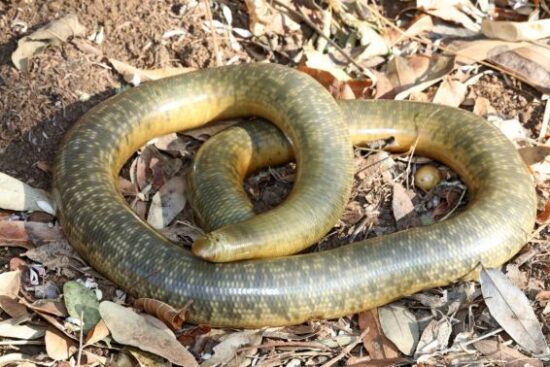
One of the largest blind snakes in Africa, this species can reach a length of 90 cm, although they are usually between 30 – 50 cm in length. It is a strange looking snake with a rounded tail and short stubby head, with a prominent rostral shield that forms a beak. The eyes are small dark spots and are covered by a scale, giving these snakes very poor vision. Colour is quite variable with juveniles usually being grey to blue with fine dark speckles or stripes down the body. As they age, they shift to creamy yellow, white or golden brown, with dark blotches scattered across the body.
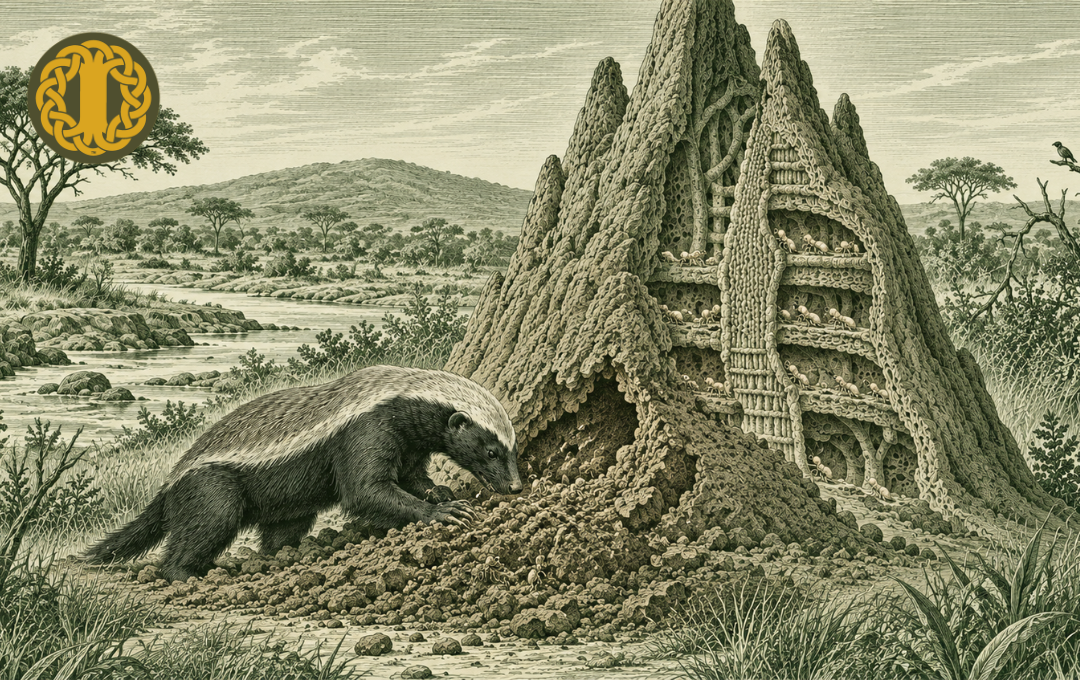
These large blind snakes live underground, using the hardened beak to push through soft soil. They feed on ants and termites – especially their eggs. They will also use the hardened beak to break into termite mounds in search of food. The body is covered in small, glossy scales which somewhat protect the snakes from the biting ants. The snakes usually raid the nests and egg chambers, eat as much as they can, and get out before the biting ants swarm the snake.
As these snakes live underground, they are not commonly seen. They may be found when moving logs and rocks or digging trenches or doing other earthwork. However, when the decent summer rains set in, these snakes are often forced to the surface by rising groundwater and may then be commonly seen actively moving, often crossing roads or falling into swimming pools. They will also take advantage of the softer, damp soil and attempt to burrow into termite mounds after heavy rains.

Females can produce between 8 and 60 eggs depending on the size of the female. The eggs will take five to six weeks to hatch.
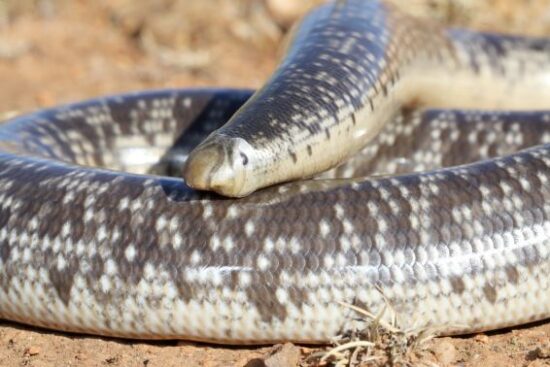
They are not easily confused for other snakes as they are quite unique looking but are often incorrectly referred to as mole snakes. The blind snakes are completely harmless to humans. They may use a spike at the end of the tail to poke a hand of someone handling them. The spike doesn’t break the skin but may give the illusion that the snake is biting. They are also known to secrete a foul-smelling liquid out of musk glands near the cloaca if harassed. These slow-moving snakes may also wriggle furiously if touched. As they are essentially blind, they feel quite exposed on the surface or when handled.
Check out the website on www.africansnakebiteinstitute.com – and get your FREE App on the link http://bit.ly/snakebiteapp