![Farmers share their knowledge on climate-smart agriculture[39]](https://kruger2canyon.co.za/wp-content/uploads/2025/08/Farmers-share-their-knowledge-on-climate-smart-agriculture39-scaled.jpg)
This transformation began through the launch of the Dinkwanyane Water Smart (DWS) Project in 2019, funded by the Government of Flanders and implemented in partnership between Kruger to Canyons Biosphere (K2C), Hoedspruit Hub and Conservation South Africa.
Originally aimed at addressing water shortages and land degradation, the project has since evolved into a fully-fledged Ecosystem-based Adaptation (EbA, a nature-first approach to building climate resilience) demonstration site maintained by the K2C Biosphere. This despite formal funding ceasing in March 2024. It now serves as an evolving, real-world example of how communities can build climate resilience by working with, rather than against, nature.
A living model of climate-smart land use
In Phiring, EbA is not just a theory, it is being lived, tested and refined on the ground. The Demonstration Site is underpinned by five core pillars: Rangeland Management, Agroecology, Eco-Tourism, Eco-Savings and Credit Groups and Conservation Agreements.
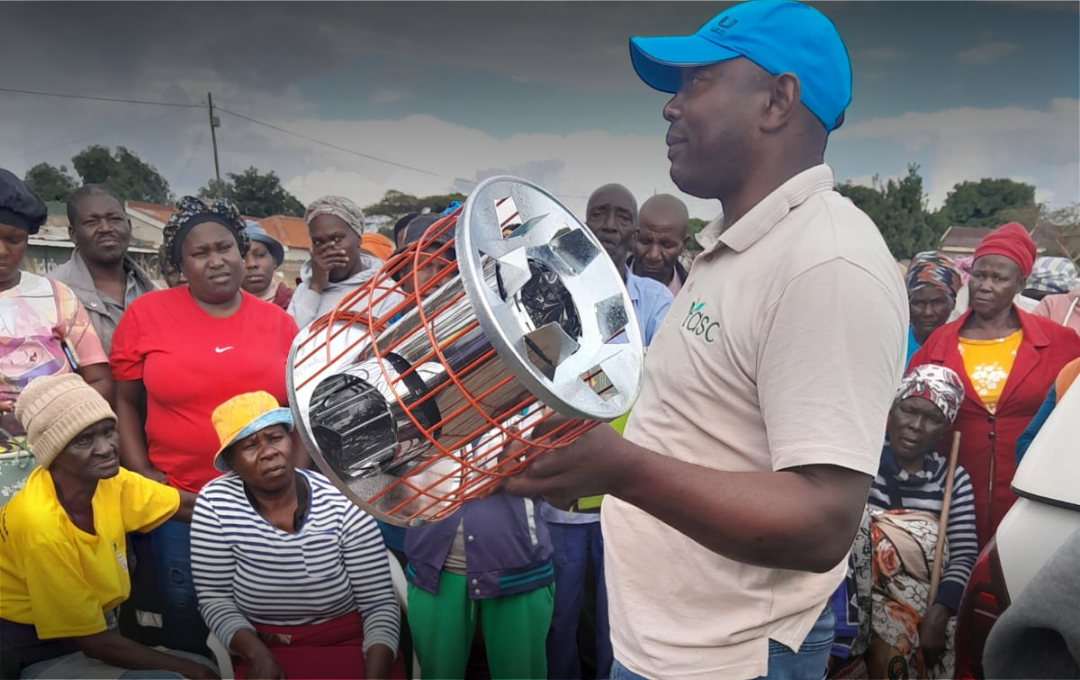
Local farmers are restoring rangelands with rotational grazing and erosion control. Households are experimenting with agroecological food gardens that nourish both soil and families. Traditional leaders are integrating sustainable land-use into governance structures, while women and youth take active roles in planning and stewardship.
These activities are helping to rebuild ecosystems, improve water security and support sustainable livelihoods in a region where climate vulnerability, limited market access, and the legacy of underdevelopment continue to challenge rural communities.
Learning that travels
What sets Phiring apart is what’s happening on the land, but also how that knowledge is being shared. The site has become a vibrant learning hub, attracting local and international guests, including government departments, leadership programmes, school groups, researchers, universities and other learning institutions. Activities range from research visits and peer-learning exchanges to overnight camping, guided hikes and day trips.
Regular peer exchanges, participatory monitoring and documentation ensure that the learnings emerging from the site are shared widely, positioning Phiring as a scalable model of green, community-led development. The site has also informed the development of a Conservation Agreement framework that ties community incentives, such as market access and training, to long-term ecosystem stewardship and tourism opportunities. This holistic approach is already inspiring similar efforts in neighbouring communities across the K2C landscape.
![Lessons learnt and lived at Phiring are shared.[23]](https://kruger2canyon.co.za/wp-content/uploads/2025/08/Lessons-learnt-and-lived-at-Phiring-are-shared.23-550x309.jpg)
From resilience to opportunity
Despite being located on the renowned Panorama Route, Phiring has been long overlooked by mainstream tourism. That changed with the launch of the Ba-Dinkwanyane Tourism Association in 2023. Unlocking nature-based tourism has revived cultural traditions in the community and created visitor experiences that align with conservation goals.
Local families now host visitors in homestays that they have built and manage themselves. Community members were identified to train as site guides to the wealth of natural attractions like the Sekweneng Waterfall and the Sethunyeng Forest Trail, and the rich musical, culinary and craft traditions of the BaPedi people are being authentically shared with visitors. These experiences offer meaningful income for residents, particularly youth and women, while reinforcing the value of protecting cultural and natural heritage.
People and planet, in partnership
Phiring is now more than a place – it is a working model for how we can address climate change, restore ecosystems and create opportunities in even the most under-resourced settings. It proves that when communities are empowered and ecosystems are healthy, resilience follows, along with pride, purpose and progress.
For the K2C, having a physical site like Phiring grounds its strategies in lived experience. It strengthens partnerships, fuels learning and proves that ecosystem-based approaches are viable in our region and beyond, and that they are vital!
For enquires regarding the tourism opportunities at Phiring, contact the Ba-Dinkwanyane Tourism Association via Whatsapp on 060 701 9526.
All photo credits to R. Mafogo