As we once again prepare our farewell to the luscious verdant nature of summer with its thick vegetation and fantastic diversity, this month was indeed one that had a mixture of subtexts as it passed unabated.
The shifting of the seasons and their subsequent consequences for the natural world, despite seemingly surprising each year to us, it’s admirers, is in fact nothing strange or startling. These wonderful reciprocations in the dynamics that affect ecosystems, both at home and abroad, are themselves direct ramifications. They are the result of changes in the angle of light received at various points of the globe during the annual sojourn of our little rock, the one we call Earth, all the way around the solar system’s warming stelliferous centre.
The elliptical oval-shaped racetrack we take, around the sun, etched as a groove into space-time by our own gravity, is not only precise, but has been in existence since before the planet had even reached its final form. As we travel, spinning like a bottle top on the daily basis that we do, we lean at a 27 degree tilt on an off-centre sphere, to which we are glued by our feet and all of their gravitational gripping power.
For billions of years, our home and all the life that has ever existed throughout the eons upon it, has experienced similar changes to intensity of sunlight and annual patterns in local climate and weather. The seasons are in many ways, a constant of an earthly existence, that has remained steady and predictable since the days of the first living entities.
Other aspects of our planet however, have changed dramatically since its inception, and which continue to change on their typically ancient time scales to this day. If able to travel back 200 million years or so, the planet and its distribution of land and water for example, would appear quite alien to what most of us alive today may recognise.
Once our molten glass bead of a home had cooled sufficiently to produce its solid jigsaw-piece like crusted surface, and time to settle had passed, all of the land we know today was clumped together surrounded by one global body of water. This was the supercontinent known as Pangaea where all of the land was locked together as one.
For us interested in birding today, this was a somewhat crucial time, as it was in this period that the birds we enjoy evolved. First primitive species like Archeaopteryx and then more recognisable avians like Coraciformes such as Protoavis, the new vertebrate on the block was surely more widespread than the fossil record suggests. As niches opened up for those able to reach new and far away destinations, birds rapidly evolved to take advantage of whatever resources offered a chance at existence.
This was true of many families, groups and species of bird including the original flying ancestors of the infamous ratites, now thought to have reached their contemporary locations before evolving into their current forms.
As the molten mantle moving beneath Pangaea began tugging convectionally upon its various portions of the landmass, the massive continent began slowly splitting. Over millennia after millennia, rifts and gradual loss of narrowing land-bridges formed the separate continents that us as layman would recognise today.
Due to their adaptability, many of today’s birds evolved to take advantage of new shorelines, islands and even new types of vegetation on land discovering new climates, while travelling slowing north, south, east or west. In many cases, one can gauge how long an order, family or even genus has been around for by taking note of which continents they can be found on. With their specialized method of locomotion, flight, they were relatively unique among chordates in their ability to spread far and wide, quickly and over narrow, or even larger bodies of water, that would separate other classes like mammals or reptiles.
From Pangaea came the two mega regions, Laurasia, responsible for today’s North America, Europe and Asia as well as the larger Gondwanaland holding Africa, Madagascar, South America, India and Australia. By the time of this first major split, many of the bird families that we would recognise today were already around. Various forms of passerines had already evolved, a number of duck families, raptors such as accipiter’s and kestrels and much more. This pattern, in what is referred to as zoogeography, of these clades or groups is easily seen as today they have representatives in all corners of the globe. Thus, in some cases, each different species evolved along their divergent paths once isolated sufficiently from their common stock.
South America along with the North and its Central component were torn from there Laurasian and Gondwanan homes across the mid-Atlantic Ridge and far away, into a new world as it were. This left much opportunity for divergence through convergence, resulting in new families as others that existed somewhere else had few or no representatives over this time.
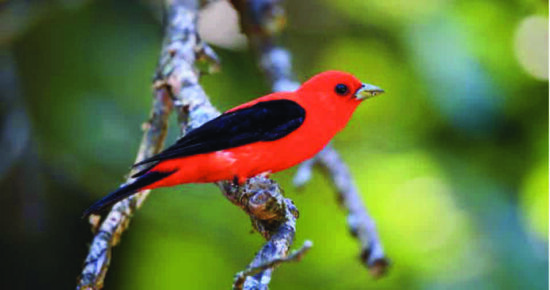
Families such as New World Vultures and Wood-Warblers evolved, as opposed to their Old World counterparts, Wood-Quails and Tinamous resemble Francolins in form and role, Hummingbirds pollinate on a nectar-rich diet as in Sunbirds, while Tanagers are generalists just as Bulbuls are. These are just a few examples that have all evolved to take advantage of similar gaps in the ecosystem left by birds that may be more recognisable but which were absent as the continents separated.
Then it was Australia’s turn to trek east, as far as possible from its original position. Some of the most primal land, the original dirt as it were, was splitting in two, half remaining as the Barberton Supergroup within Africa, and the other half emigrating all the way to the edge of the Pacific ,as part of the land down under.
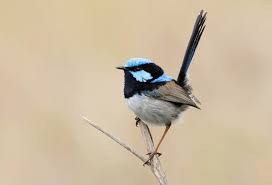
In terms of its avian diversity, and due to millennia of isolation, there have been many new recipes generated to take advantage of vacant niches in Australia. The continent is rich with odd families like Honey-eaters which act as gleaners, Kookabura’s which are an offshoot of the Kingfisher family, Fairy-Wrens take the place of our Prinia’s, while a wide variety of Parrots of all kinds exist. These include Cockatoos, Rosellas, Budgerigars and Lorikeets, all of which have radiated out and which are not the only family to do so here. Similar species have a mix of Asian influences with few that can commonly be recognized from an African perspective.
One of the most fascinating results of our tectonic anatomy is with regards to the close ties we, as Africa, share with the relatively rapidly moving Indian Subcontinent. This distant cousin, which shredded off the remaining land 120 million years ago, created parts of today’s East African coastline. After crossing the turquoise Indian Ocean at a rate of 5cm per year, it is still slamming into Asia so hard that the Himalayas have been spearing up as a result of the crash for the past 40 million years and are still climbing.
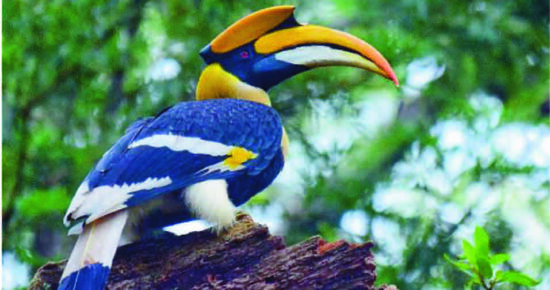
Despite this, there are a wide variety of familiar families that have common ancestry not only in birds such as Barbets, Hornbills, Drongos, Francolins and Bee-eaters but also many mammals like Asiatic Lion, Honey Badger and Caracal just to name a few. Alongside these recognisable names are others like Ioras, Treepies, Koels and Leafbirds as examples, while big mammals include both Tiger and Snow Leopard.
Despite our most recent loss, that of the localized oddity that is Madagascar, we find a number of newly evolved families, with crazy mixes like Mesites and Vangas, but also a number of very similar species to what we find close to home. Species like Madagascar Jacana, Madagascar Wagtail, Madagascar Hoopoe and Madagascar Harrier-Hawk are all relatively subtle variants to our equivalents. This shows a relatively recent divergence of many of these from each other which reflects the time since the separation of the landmass.
As a whole what is truly amazing is how many families of birds, adapted for a wide variety of food sources, have truly conquered the world. Despite holding our 10% of the world’s avian species, there is much still to be discovered, and explored for, while travelling beyond our regional borders. This month, while planning an international trip, with the use of resources such as site guides, websites and apps, have a look for some top quality birds to add to your bucket list for future journeys.