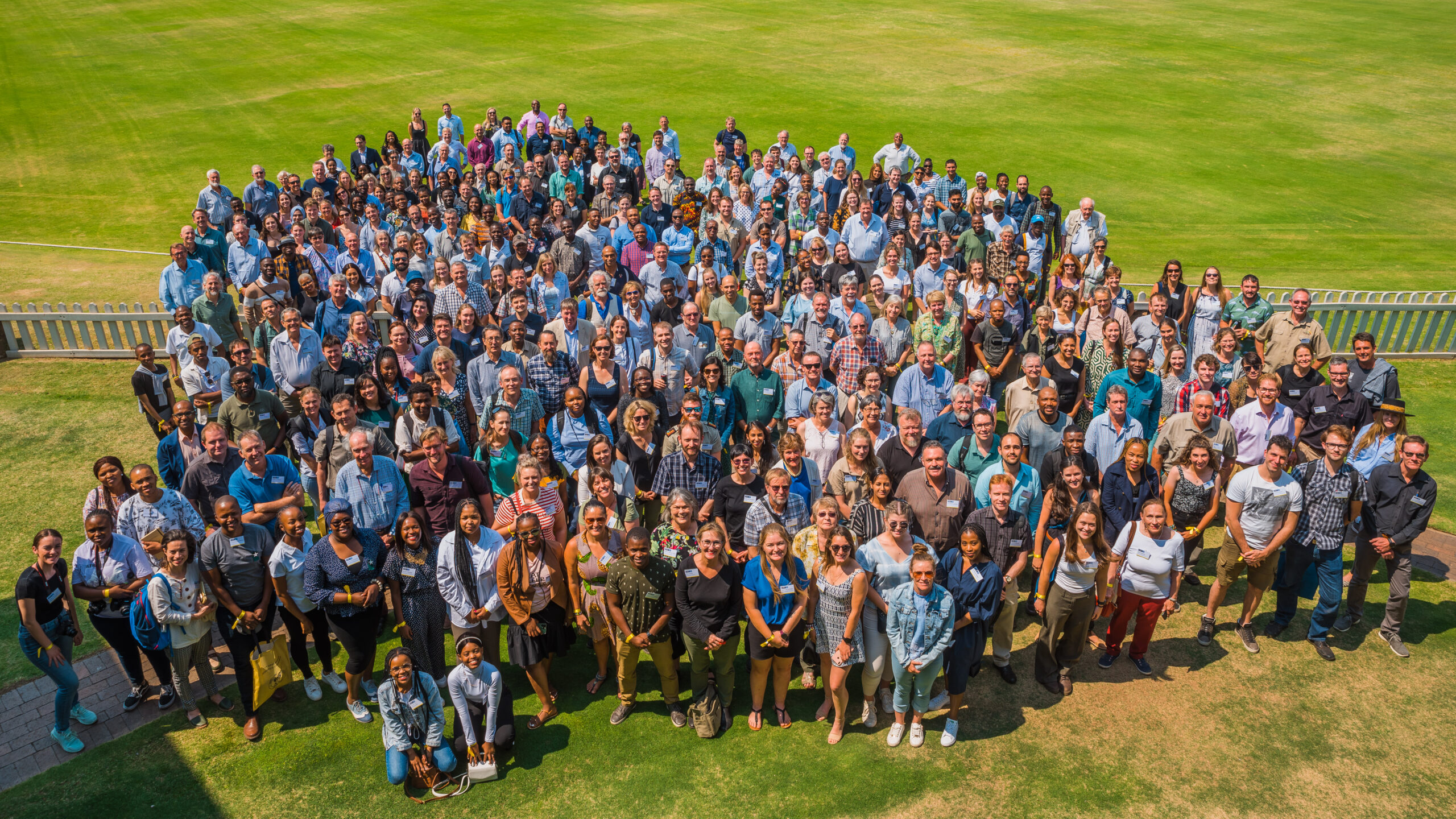
Down with the doom. Time to crack on with conservation.
Conservation in Africa is at a crossroads. A false step risks mass extinctions and economic ruin. It’s time for hard work, clear thinking, and tough choices. There’s little wilderness left, and climate change may be nearing a point where it will be too late to stave off mass extinctions. Yet, we continue to consume natural resources quicker than the Earth can heal itself.
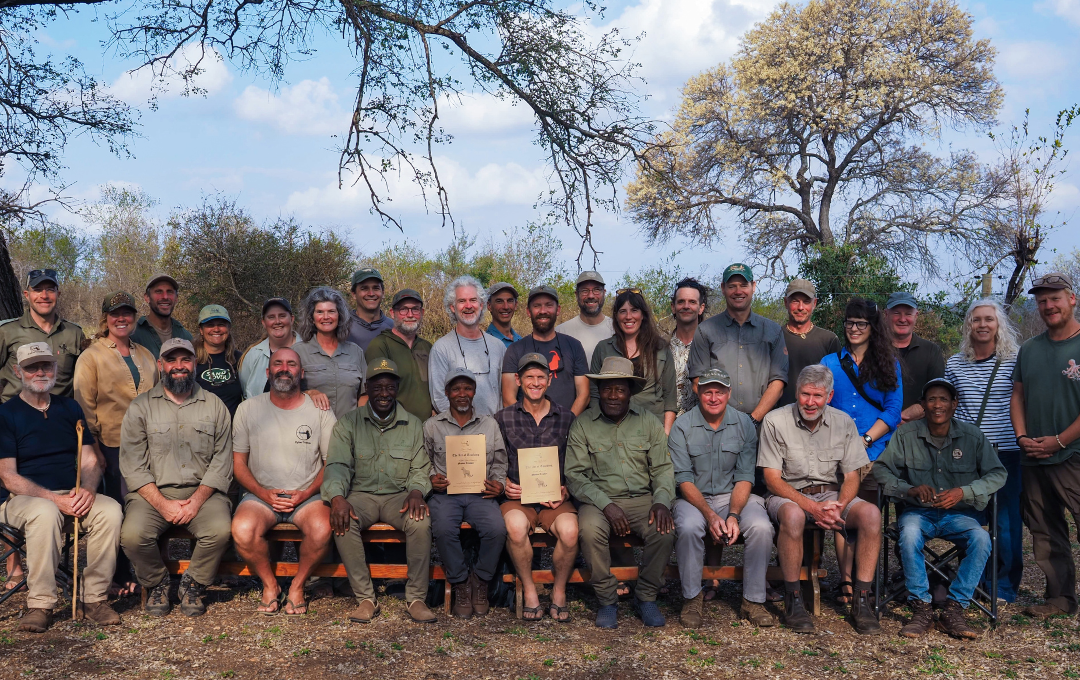
Time is running out, but Dr Duncan MacFadyen, co-organiser of the recent Oppenheimer research Conference, believes there is hope. So too, does, world-renowned Wits University paleoanthropologist, Lee Berger.
Berger was, in many ways the odd man out at this year’s event, attended mainly by conservation researchers, NGO’s and environmentalists. Berger’s business is old bones – finding them and unlocking their ancient secrets; most of the more than 380 other delegates are immersed in the here-and-now worlds of biodiversity, landscape ecology and wildlife economies.
Drawing on his discoveries at the Cradle of Humankind in Gauteng, Berger sought to inspire and energise, telling how his own discipline had gone from being “devastated by scepticism” to making “transformational discoveries” in recent years.
It was a message not lost on his audience, who have their work cut out in halting biodiversity loss, climate change, and conserving wildlife. At the same time, Africa urgently needs economic growth and development – a complete facelift of sorts. How to do this in a way that conserves nature rather than erodes it, was the key question arising.
Mitigating climate change ranked high on the agenda too, as did the dire consequences of dependency on coal to generate electricity.
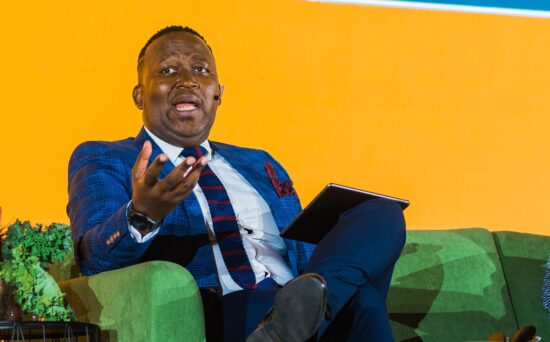
Another big area of concern that emerged at this year’s conference was the way African voices on climate change and conservation tend to be drowned out by what some refer to as “scientific imperialism”. In the first panel session, ‘Conservation: Who owns the conservation?’ outspoken Radio 702 host and Carte Blanche presenter Bongani Bingwa, pointed out that less than 1% of top climate research authors are based in Africa and that less than 1% of African media coverage was about climate change. He warned that the muted voice of African researchers would lead to imposed conservation models that disregard African environmental knowledge.
Nolwazi Mbongwa, a practising Sangoma and research assistant at the South African National Biodiversity Institute, put it more bluntly: “Conservation is not a colonist concept. It always existed in Africa,” she said.
Mbongwa and Wits University professor Sally Archibald derided the phenomenon that sees cash-flush overseas researchers fly into developing countries, grab data, and hurry home to analyse and publish without really involving locals, referred to as so-called “helicopter research”.
This “helicopter science” betrayed “a shocking lack of understanding of ecological processes” in Africa, said Archibald, referring to her own work as a fire ecologist. And in Africa itself, said Mbongwa, most traditional healers had a deeper appreciation for nature than what could be learned from books, but were largely ignored when it came to decision-making in the conservation sector.
This was also touched on by Minister Barbara Creecy, the Minister of Forestry, Fisheries and the Environment. In her keynote address, Creecy said more research was needed into the role and value of indigenous and traditional knowledge in promoting biodiversity conservation in Africa. She said the Oppenheimer conference could not have been more opportune.
“This audience understands more than others, the crisis confronting our natural world and indeed the future of humanity as we know it. Climate change, biodiversity loss and pollution, threaten the environment on which we depend and weaken our economic and social systems,” said Creecy.
Conference patron, Nicky Oppenheimer, stressed that the southern African conservation sector was uniquely positioned to tackle unpleasant, real-world problems that were often ignored by big environmental NGOs.
“In the Western world conservation is all too often somewhat of fiction … a Disney vision of the real world,” said Oppenheimer. “Some very unpleasant things happen in the world and in the conservation areas where we operate. You have to be able to face up to those and make that part of your research and deliberations.”
But, he added, it was also important to know that humankind could not bend nature to its will. “After all, the real world has been out there longer than any of us … Because it has been there so long, it has been successful, and we need to learn from that,” said Oppenheimer.
In his opening address, conservationist, corruption-buster, and government turnaround specialist, Mavuso Msimang, referred to predictions that a 4°C increase in global temperatures (relative to pre-industrial levels) could cause about a 12% decrease in the African continent’s overall GDP – “a decline we simply cannot afford.”
“But we can stop this trend and safeguard our economy if we embrace nature-based solutions,” said Msimang.
He cited a 2020 World Economic Forum report, stating that a transition to a nature-positive economy could generate $10.1 trillion in business value every year and provide about 400 million new jobs! “If Africa chooses to unlock the power of nature by expanding and improving management of protected areas, it will create unparalleled business value for the continent,” said Msimang.
The other panel session streamed live from the conference, was titled: “Post-growth or green-growth – alternative development pathways for Africa”. It grappled with whether continuous economic growth would lead to sustainable solutions, or whether such solutions can only be found by changing the way the global economy works.
Ramasar, a sustainability science researcher at the Lund University Centre for Sustainable Studies in Sweden agreed that there was a need to change “economic organisation” as a whole, but stressed that growth should not itself be the primary objective.
“We actually need to think about what is it to have a good life? What is it to have a fulfilled life? It’s not always about hi-tech. It’s not about solutions that are going to allow us to consume more,” she said. “It’s about solutions that allow us to consume enough.”
While such discussions gave delegates plenty to ponder, a number of top scientific presentations got down to the nitty gritty of conservation conundrums and the fresh insights gleaned from the latest research.
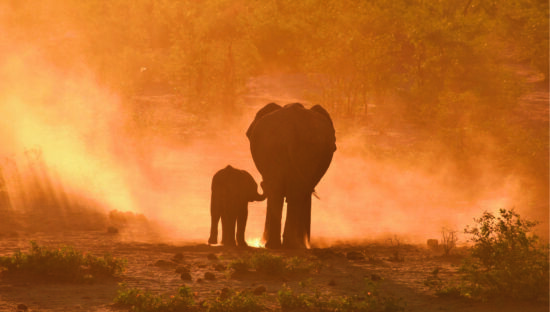
In his presentation on managing elephant populations, University of Kwazulu-Natal Zoology Professor Rob Slotow, said reserve managers often agonised over whether a particular park had too many or too few elephants. Instead, he said, they should be looking at whether natural ecosystems in protected areas were functioning properly to support biodiversity, and sufficiently diverse and robust to bounce back from major disturbances such as storms, drought, heatwaves, and diseases.
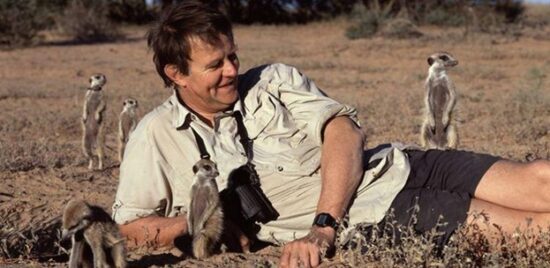
Evolutionary biologist, Professor Tim Clutton-Brock, gave a fascinating account of his studies on the impact of global warming on two very different animals: deer and meerkats. In a nutshell: while deer do well, it’s misery for meerkats. Clutton-Brock hopes that the wealth of data he has collected will have predictive value, providing lessons on mitigating the effects of climate change and biodiversity loss.
Another presenter, Professor Graham Kerley, Director of the Centre for African Conservation Ecology at the Nelson Mandela University, observed that there were nearly 240 000 protected areas globally, yet we have a growing number of endangered species. His presentation, The Protected Area Paradox and Refugee Species Concept, also cautioned against conserving species in the wrong places with inadequate space, “all in efforts to tick a box that we have conserved areas.”
Tech savvy solutions to find new funding flows for conservation came under the spotlight in a presentation from the executive director of the Kenya Wildlife Trust, Dr Irene Amoke, entitled Changing the conversation around conservation.
Professor & SARChI Research Chair in Ecosystem Health and Biodiversity at UKZN, Professor Colleen Downs, won the prize for the best conference presentation. It looked at the importance of “green cities” serving as lungs to maintain biodiversity, and how various species such as the crowned eagle, vervet monkeys and chameleons were adapting to urban environments.
In a recorded Zoom chat interview with Roving Reporters after the conference, MacFadyen said while there was a touch of gloom and doom about the conference, the overriding “take home” message was that there was a lot that can be done to build wildlife economies into a much-needed cornerstone of prosperity in Africa.
And he heaped praise on young, emerging African scientists who featured prominently at the conference, helping shape debates.
Among them were UCT PhD candidate and ornithologist, Merlyn Nkomo, who reminded delegates that it was not that long ago that national parks were fortresses, put up to “protect” nature from the black communities that had lived in harmony with it for centuries.
Nkomo has, since 2020, been very vocal about what she terms the ‘Achilles heel of conservation’ – detailing the challenges faced and the fact that people of colour are not sufficiently recognised in the conservation of nature and wildlife.
MacFadyen said Nkomo’s presentation had also brought into sharp focus the challenges she had personally faced as a black woman in the conservation sector.
This had, said MacFadyen, highlighted the need to turn the page on that past and bring fresh voices into the conservation sector – in much the same way that palaeoanthropologist Lee Berger had recently brought in young African fossil finders into “the greatest age of exploration”.
Roving Reporters coverage of the Oppenheimer Research Conference was commissioned by Jive Media which helps young environmental scientists produce multi-media content. Fred Kockott is the Director of Roving Reporters. Maxcine Kater is a marine biologist interning at the Department of Forestry Fisheries and the Environment. Rio Button is a conservation biologist and Western Cape ambassador for WESSA’s Young Reporters for the Environment.