While watching the vegetation take full advantage, of what has been for most of us, a healthy onset of summer rainfall during the past month, one of the most obvious but perhaps least noticed changes that permeates around us is in the growth of natural vegetation of all kinds.
Not only does the increase in greenery and other vegetative matter support new waves of arthropodic herbivores, but it also provides cover for the commensalistic act of nest building and then breeding. While there are small shoots and buds, species such as the Grey Go-Away-Bird might take advantage of the new leaves themselves, but true herbivory in birds is, in fact, quite rare.
Thus, a bloom in vegetation is generally associated with good times ahead for nectarivores, frugivores and granivores relying on flowers, fruit, and seeds respectively. This is alongside the obvious boom in prey numbers which supports the vast diversity of passerines and other insectivores.
Seasonal changes in vegetation offer a wealth of fascinating implications for birds, but it is an awareness of the habitats themselves that is of utmost importance for those who go birding. Knowing what kinds of species to expect in an area is directly linked to two aspects, the geographical location and what types of habitats are present. To determine what could be on the menu, in terms of habitat, there are a few things to think about in order to get to a short list.
The first is which biome or ecoregion one is in? This would also be naturally linked to the geographical location, such as the lowveld savannah, or the grasslands surrounding Johannesburg, etc. Another major thing to be constantly aware of, is if there are changes, thus being able to take note of each individual habitat found while moving through an area. Habitats can be small or vast, but in many cases, several of them can be noted within a single view from even a modest vantage point.
Many birds simply require a broad set of parameters of the right kind. This can be in familiar places, like reedbeds around waterbodies, or when in open grassland in savannah – each of which holds their own collection of birds. Equally though, the same principle applies when in unfamiliar zones. Some bare rocky outcrops somewhere in the escarpment, for example, could undoubtedly hold Cape Rock Thrush, Buff-streaked Chat or Nicholson’s Pipit, just because of what they are, and where they are.
There are also a handful of usually scarcer birds which are dependent on very, very, specific conditions, which themselves may or may not be a fundamental limiting factor to the success of those species. Birds such as Rudd’s or Botha’s Lark, White-winged Flufftail and Blue Swallow, are largely limited by their specific habitat preferences, and are thus treading a fine line between being classified extant or extinct.
Even within a familiar biome, such as the savannah, understanding the habitat needs of less common species often leads to success. Sourveld birds like Pale Flycatcher, Bushveld Pipit, Shelley’s Francolin, Flappet Lark and more, are all best located by considering their preferred surroundings.
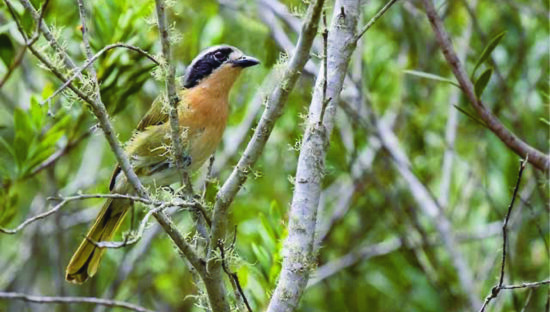
The size of individual habitats themselves can be from a small stand or area, to vast swathes of monotonous terrain. It is often surprising how many species can be found in even the smallest amounts of habitat, especially if it is excellent or pristine. Narrow valleys of secondary forest for example, that drape down mountainsides, hold species more typical of primary gallery forests. Species like Olive Bush Shrike, Green Twinspot, Blue-mantled Crested Flycatcher and others, survive far from strongholds within metre-wide belts of lush vegetation. This is a classic example of how habitats really do dictate what species can be found.
There are specific habitats that have specific birds, the aforementioned forests are one of these, as are mature stretches of Mopane, while the Brachystegia (commonly known as miombo) woodlands of Zimbabwe and further north, are another. Having an appreciation for how different ecosystems support differing avian communities, adds fantastic insight when tackling the challenges of birding and separating sometimes similar looking species apart.
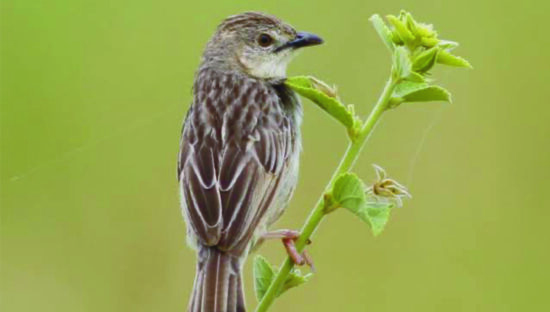
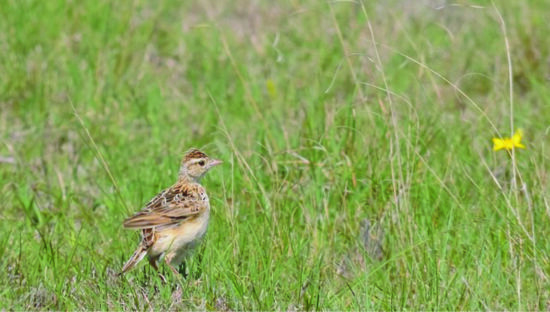
In many difficult cases, the members of the famous ‘LBJ’ families are often, first and foremost, found in one habitat or another with only a handful of generalists. Cisticola’s are perhaps the best example of this, followed by the Larks, then Warblers and Pipits as well, all partially or holistically bound to one habitat or another.
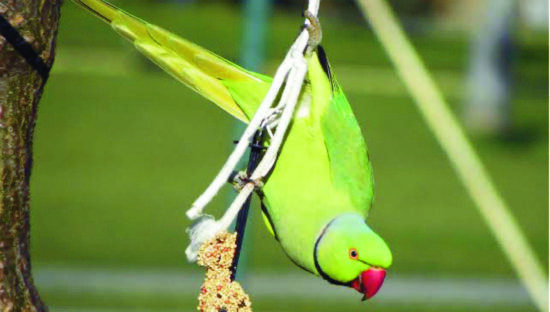
When discussing this concept, it can’t be complete without one final note on the urban environment. The habitat we have generated is like no other, and there are birds that have adapted around and in spite of us. Birds like House Crow, House Sparrow and invasives like Common Myna or Rose-ringed Parakeet, are all species that have learnt to take advantage of our excess. The most extreme example of this lies in America with the Purple Martin, which is solely dependent on human structures for survival in both breeding and non-breeding seasons.
Small slivers of natural habitats left between modern cities yield an incredible amount of diversity, particularly here in South Africa. Within Johannesburg birds like Orange River Francolin, Red-chested Flufftail, Short-tailed Pipit, African Grass Owl and more all occur. Durban has forests species like Spotted Ground Thrush, Knysna Warbler and Mangrove Kingfisher, not to mention the pelagic boat trips for the rare Barau’s Petrel. Cape Town, one of the world’s best spots for ocean-based sea birding, also lays claim to an incredible diversity of endemics. These are but a few examples of the over four hundred species that can be found between the country’s three major cities.
This month, in order to learn about birds and the habitats they prefer, one of the easiest ways, while out birding, is simply to start taking note of where different species can be found. After a small amount of practice, it is surprising how much can be gleaned and assimilated into a more complete, but also more categorized, view of the natural world.
Happy birding!