Sustainable use of wild meat value chains contributes to carbon sequestration and local climate regulation. Wildlife economies have more diverse revenue streams than conventional agriculture. Boosting wild meat consumption will help rewilding and restoring landscapes.
Conventional protected areas are unlikely to conserve the land area necessary to curb the extinction of plants and animals and secure the ecosystem services on which millions of people across Africa depend. Different nature-friendly wildlife enterprises are one way in which this footprint can be extended to achieve conservation outcomes and mitigate climate impact.
One of the objectives at COP28 was how to implement the 30×30 target to tackle climate change, which represents the commitment of governments to conserve, protect, and restore at least 30% of the planet’s land and ocean by 2030.
The Africa chapter of the latest report of the Intergovernmental Panel on Climate Change highlights the significance of ecosystem services to African people and the risks presented by climate change. For example, based on a fossil-fuel development scenario, 1.2 billion African people are predicted to be negatively affected by water pollution due to reduced water quality regulation by ecosystems; 27 million by reduced coastal risk mitigation by ecosystems and 1.5 billion by lost crop production due to reduced wild pollinators. The number of people negatively affected by diminished ecosystem services reduces to 0.4 billion, 22 million and 0.7 billion respectively under a sustainable development scenario.
Conserving Africa’s biodiversity and the ecosystem services it provides should therefore be central to climate change responses, given the high dependence of people on these services.
Research shows that there will be reduced species representation in African protected areas due to climate-induced range shifts, with range shifts impeded by increasing land transformation and fencing. Research further predicts that conserving 30% of sub-Saharan Africa’s land area could reduce aggregate extinction risk of plants and vertebrates across the continent by up to 68.6%. Conventional protected areas are unlikely to meet this 30% goal, given resource constraints of African governments and the importance of access to land and its resources for sustainable livelihoods.
Wildlife economies
Africa needs to increase the extent of conserved ecosystems to mitigate biodiversity loss under climate change and needs complementary conservation strategies to mitigate the effects of climate change on biodiversity. Wildlife economies present one such strategy — increasing the extent of conserved ecosystems and their connectivity, while also contributing to livelihoods and food security through sustainable wildlife use (hunting, harvesting, meat) and tourism.
Ecosystem-Based Adaptation interventions comprise a third of all nationally determined contributions in Africa. Such interventions can promote both climate change mitigation and adaptation simultaneously.
Wildlife economies are one example of such an intervention, since they:
- have been shown to be more viable than livestock in low rainfall areas (which span much of Africa’s open ecosystems), particularly under climate change; and
- can increase soil carbon sequestration through rewilding.
African Wildlife Economy Institute (AWEI) research also shows that wildlife economies have more diverse revenue streams than conventional agriculture which builds their resilience to disturbance and change.
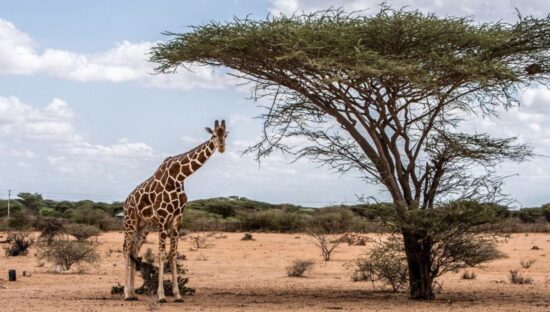
Policy changes in South Africa will accelerate the prospects of success for such interventions. A newly gazetted game meat strategy paper is set to transform and formalise the game meat industry, enabling big retail outlets to put more wildlife meat on shelves. At the moment only about 10% of game meat is formally marketed through retail outlets.
The strategy paper says it aims “to create a formalised game meat industry and achieve economies of scale necessary for commercial ventures based on game meat production, harvesting, distribution and marketing”.
Restoring landscapes
The AWEI (African Wildlife Economy Institute) at Stellenbosch University is promoting wildlife economies to restore/rewild and conserve African landscapes. This includes developing wild meat value chains, liberalising intra-African trade in wild meat, and providing decision support tools for developing viable wildlife enterprises. Further, there are opportunities to align biodiversity conservation, climate responses, and livelihoods in developing Africa’s ‘blue economy’ including ocean-based climate change mitigation.
AWEI research supports the argument that commercial interests and scaling of wild meat consumption present a unique opportunity for rewilding and restoring landscapes. Thus, sustainable use of wild meat translates to the protection and expansion of wildlife habitats with triple effects on biodiversity (e.g., reintroduction of insects, vegetation, well-managed landscapes in care of animal habitats, etc.).
This supports the decision on sustainable wildlife management adopted at COP14, and supports using voluntary guidance for a sustainable wild meat sector. It also seeks to promote the sustainability of supply at the source, managing the demand along the entire value chain, and creating the enabling conditions for legal, sustainable management of terrestrial wild meat in tropical and subtropical habitats.
Developing a sustainable use of wild meat value chains across the continent is a game changer as it contributes to not only landscape restoration but also helps mitigate climate impact through carbon sequestration, local climate regulation and improved water management.
In this regard, AWEI’s approach to sustainable use as an area-based conservation measure offers a pathway to implementing landscape-based climate responses in support of both UN Framework Convention on Climate Change and Convention on Biological Diversity objectives.
This includes the recently launched Global Biodiversity Framework and, notably, its target to: “Minimise the impact of climate change and ocean acidification on biodiversity and increase its resilience through mitigation, adaptation, and disaster risk reduction actions, including through nature-based solutions and/or ecosystem-based approaches, while minimising negative and fostering positive impacts of climate action on biodiversity.”
In line with COP28’s core theme, of “investing in climate solutions by committing and investments in nature-positive projects, policies and practices” AWEI research opens doors for identifying investment options that support successful scaling of different nature friendly wildlife enterprises to achieve conservation outcomes and mitigate climate impact.
Dr Francis Vorhies is the Director and Co-Founder of AWEI.
Dr Hayley Clements is Senior Researcher at Stellenbosch University and University of Helsinki, and a Research Chair at AWEI.
Dr Wiseman Ndlovu is a postdoctoral research fellow at AWEI at Stellenbosch University.
This article was previously published in the Daily Maverick – Our Burning Planet.