
Editors Desk
From the Editor’s desk…
Can you believe that we are about to turn the tide and move very steadily towards winter! Already!

Can you believe that we are about to turn the tide and move very steadily towards winter! Already!

Hoedspruit’s rapid growth has the potential to benefit the town and its surrounding communities. However, without addressing the underlying issues of infrastructure and social services, this growth could quickly become a burden rather than a blessing.
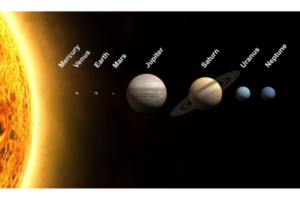
Over the past few weeks, the internet has been awash with articles on a planetary parade on the 25th January whereby Venus, Mars, Jupiter, Saturn, Uranus and Neptune will all be visible in the sky after dark. However, many of you may have noticed that we have been able to view this phenomenon for the past ten days or so, and will continue to enjoy this cosmic configuration for another couple of weeks.

With soaring electricity costs the current hot topic, there has never been a better time to look at ways to reduce your electricity bill.
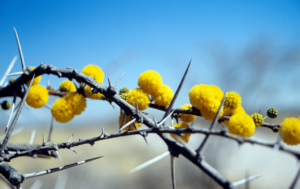
The tree formerly known as Acacia karroo is one of South Africa’s most iconic and versatile species, deeply woven into the country’s history. It has been used for a wide range of purposes—from crafting rafts and sewing needles to building fences for the royal Zulu women’s homes. Early naturalists even used its thorns to pin collected insects.

No object has received more attention, and is the centre of more cultural stories, than the fabled star cluster colloquially known as the Seven Sisters. Officially named ‘the Pleiades’ this vibrant group of young stars is unmistakable, twinkling close to the horns of the great bull, Taurus. Through binoculars or a small telescope, it is a remarkable object containing close to 500 blue/white stars that are just starting their stellar journeys. Its prominence has been noted by multiple civilisations in both hemispheres and its importance in cultural astronomy cannot be underestimated.
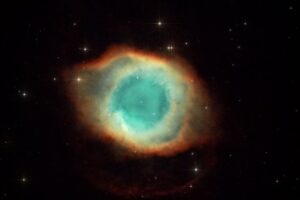
As we saw in last month’s article, stars are not infinite objects. They live out their lives, just as we do. They are born, reach maturity, and ultimately die. Stars can be seen as great stellar engines – they are reliant on a constant supply of fuel to shine. Once that fuel is depleted, the star can no longer sustain itself.
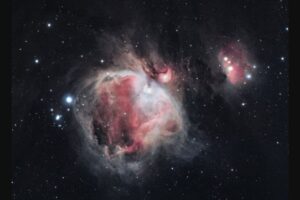
Each and every night, our planet is bathed in starlight; an eternal vigil held by the countless members of our galactic community. But it is easy to forget that our Sun is just one of many… The Milky Way is thought to contain up to 400 billion stars, yet within the cosmic web of our Universe, there are as many as 200 sextillion stars. This is an incomprehensible number, the equivalent of 10 times the number of cups of water in all the oceans on Earth!
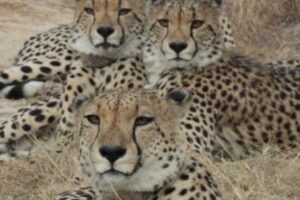
In a significant conservation effort, the Endangered Wildlife Trust (EWT), a leading conservation NGO with over 50 years of experience in southern Africa, in collaboration with the Greater Makalali Nature Reserve (GMNR), is spearheading a project aimed at revitalizing the cheetah population in the GMNR. This initiative is part of the broader Carnivore Range Expansion Project, which focuses on species conservation across South Africa and neighbouring countries.

“We must see nature as a process within which man exists, splendidly equipped to become the manager of the biosphere”


