

Olivia Sievert from EWT explains that their work involves collaboration with various reserves—both private and governmental—throughout South Africa. The project also extends to partnerships in Mozambique, Zambia, and Malawi. “Cheetahs are facing a multitude of threats, including habitat loss, conflict with humans, and competition with other predators,” said Olivia. “Relocation efforts are crucial to maintaining genetic diversity, re-expanding their range and ensuring the species’ viability.”
Discussions began with the Makalali team two years ago, following a dramatic decline in the local cheetah population due to an overabundance of lions in the area, which had led to significant pressure on cheetahs and in fact a population crash around 2018.
A project like this one, involves carefully selected cheetahs being relocated to reserves where they can thrive and contribute to genetic diversity. There is an immense amount of ecological, habitat, predator and animal population data considered for any cheetah relocation – it’s not a matter of ‘we don’t have them, let’s put them in’.
As of 2023, with only two cheetahs remaining on the reserve, a new plan had to be developed. Antony Collett, the Warden of GMNR was already in discussion with EWT concerning relocation of cheetah onto the reserve. With only two resident individuals there was little chance that the population would bounce back. GMNR took the decision, in consultation with EWT, to initiate a program to bolster the dwindling cheetah numbers by relocating individuals from larger reserves that had experience with lion interactions.
Four cheetahs – a female and her two sub-adult daughters and a male – were identified and successfully relocated from Tswalu Nature Reserve to GMNR. While the male cub tragically fell victim to a leopard, the remaining females have adapted well to their new environment and are now ready to breed.
To strengthen the population, a coalition of four male cheetahs, led by Stompie (so called because of his short tail), was identified and moved from Nkomazi Game Reserve near Barberton, and recently released onto the GMNR. Stompie joined the coalition of three males – he is unrelated, and was a singleton male – and they have all been together for the last five months. The relocation process involved a meticulous planning and execution phase, with the cheetahs being carefully transported and acclimated to their new surroundings. The hope is that the coalition will successfully integrate into the GMNR ecosystem and contribute to the growth of the cheetah population.
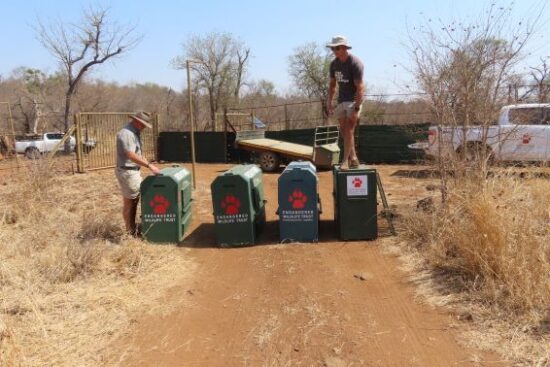
“We are committed to protecting the endangered species that call our reserve home,” stated Antony. “The introduction of these cheetahs is a strategic step towards restoring the balance of the ecosystem and ensuring the long-term sustainability of our wildlife.”
Cheetah cubs typically stay with their mothers for 13 to 16 months, forming strong sibling bonds until they are ready to establish their own territories. This relocation strategy ensures that the males remain a cohesive unit, promoting social stability and survival in their new home.
Collett emphasizes the responsibility of reserves as custodians of endangered species, highlighting the need for sustainable land management practices. He noted that the past lion population was higher in the GMNR, but that between 22 – 25 lion is considered as the ultimate goal and as a sustainable lion population for the reserve. This change, part of a collaborative effort with the Lion Management Forum, aims to maintain ecological balance and enhance the reserve’s biodiversity.
In addition to managing lion populations, GMNR is implementing a five-year burning protocol and bush clearance program to create more suitable habitats for cheetahs and other plains animals. The long-term vision is to maintain a healthy, sustainable population of big cats, but also to ensure the survival of the cheetahs through opening up more areas thereby creating more favourable cheetah micro-habitats.
Currently, GMNR is home to five females (one of which is currently in a large ‘lion-free’ zone’ and which has just given birth to cubs) and the newly introduced coalition of males to add to the one currently on the reserve, which is the father of the newly born cubs. The hope is that the introduced coalition of cheetahs will successfully breed and contribute to broader conservation efforts by helping repopulating other reserves. This marks an ambitious first step toward establishing a self-sustaining cheetah population on the GMNR.
The relocation process involves a short acclimatization period in a boma, allowing the cheetahs to adapt to their new surroundings before full release. EWT’s approach ensures that the cheetahs are well-equipped to thrive in GMNR.
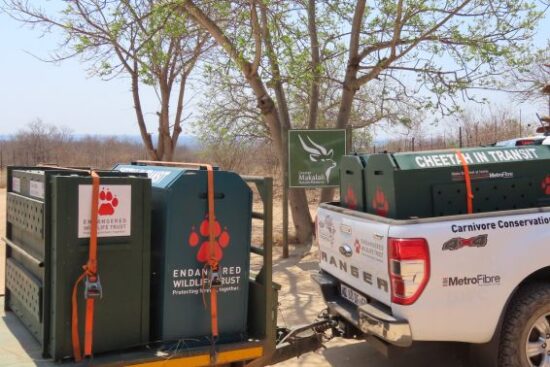
As GMNR continues to expand – soon to add 6 000 hectares (30 000 hectares in total) including two river systems – the potential for multiple cheetah coalitions becomes increasingly viable. The reserve aims to create a self-regulating population, a rarity in conservation efforts.
Antony is adamant that “as a nature reserve, we need to be protective of the land and the animals in the area.” He emphasized the importance of sustainable wildlife management and habitat preservation in supporting the cheetah population.
The successful introduction of these cheetahs will be measured in several phases: their ability to adapt post-release, establish comfortable territories, breed with the existing females, and ultimately have their cubs survive to adulthood. Achieving these milestones would not only signify a triumph for EWT, GMNR and the efforts of the Warden, Antony Collett, but also mark a pivotal moment in the conservation of this iconic species in South Africa.
“We are committed to protecting South Africa’s threatened species and ensuring their long-term survival,” said Olivia Sievert. “The cheetah relocation project is a significant step towards that goal.”
The successful relocation of the cheetah coalition marks a promising development in the ongoing efforts to conserve this iconic species in South Africa.


