The spotted rock snake is a widespread species, occurring from southern Namibia along the western escarpment into the Cape and karoo. It extends east along the Cape Fold Mountains and into the Drakensberg Mountains, spreading into the Mpumalanga Drakensberg and up into the Soutpansberg and Waterberg of Limpopo.
This is a rock-living species of snake. It has a flattened head and profile which allows it to easily slip into the cracks of rocks on mountains, koppies and cliff faces. It is largely active at night, when it may emerge from the cracks to lay on rocks and ambush geckos or other lizards. They may be locally common and abundant, but because they live in remote areas of mountains, they are very seldom seen by the general public.

In the Kruger2Canyon area we largely see them around mountainous areas like Nelspruit/Mbombela, Grasskop, Blyde Canyon and on some of the rocky regions around Selati.
Previously this species was included in the genus Lamprophis (which included the house snakes). It has recently been shown to be genetically different and was moved to a new genus Alopecion. There is still some confusion around this proposed move, as genetic material from the type locality (first place it was described from) was not used. Additionally, some genetics suggests there may be two separate species, with one occurring in the west and the other in the east. This work is still underway, and we look forward to the future published work.
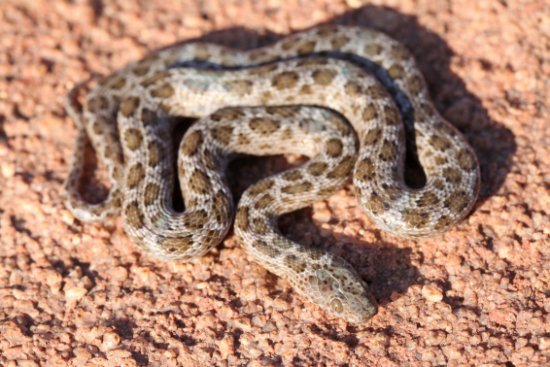
These snakes are non-venomous and docile, even if handled. They are constrictors, grabbing geckos and lizards and wrapping around them before swallowing them. Females will produce around six eggs in early summer. The young measure around 15 cm when they hatch.
These beautiful seldom-seen snakes are secretive, but may be common in the right habitats.
Check out the website on www.africansnakebiteinstitute.com – and get your FREE App on the link http://bit.ly/snakebiteapp