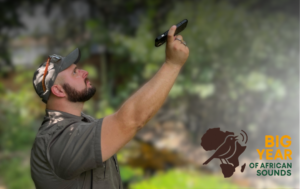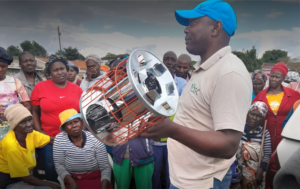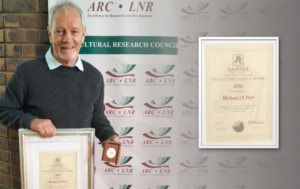
At a place called Lone Tree in the central Kalahari, a band of San hunters picked a young kudu bull out of the herd and started running it down. Louis Liebenberg, then a young South African researcher with no distance-running background, wasn’t meant to be part of that – the hunters told him the heat made the chase too dangerous for someone untrained. He talked his way into staying anyway.

Win a R1 000.00 book voucher! It is with great excitement that we get to the second half of the year and open the gates to young creative juices. Kruger2Canyon News is happy to launch their first story competition.

Conservation management has always been difficult. Managing wildlife, ecosystems, people, budgets, politics, and competing land-use expectations, has never been an exercise for the faint-hearted. Recently, what has changed dramatically is not necessarily the complexity of the ecological problems, but the environment in which conservation decisions are now made.

In the intricate biology of the human body, organs such as the breast, the colon and the lungs are lined with a defensive barrier known as the epithelium. At the heart of this barrier sits a remarkable protein called Mucin-1 (MUC1). In a healthy body, MUC1 is like a sentinel.
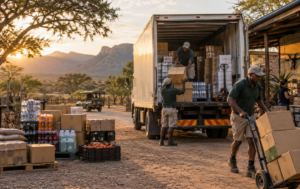
Luca Tooley and Safari Wines, Ultra Liquors and Moriah Foods – keeping the Lowveld stocked, one delivery truck at a time.
BirdLife South Africa’s Vulture Project

If all goes according to plan, by the time this article is published, the next great cosmic observatory should be on its way to its new home. The Nancy Grace Roman telescope is NASA’s latest offering to aid in our understanding of the Universe. It will join Hubble and James Webb in scouring the cosmos, trying to unlock its deepest and darkest secrets.
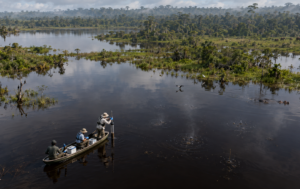
In the heart of the Congo Basin’s Cuvette Centrale, a large depression hosting the world’s biggest tropical wetland complex, lie two vast, shallow blackwater lakes, Lake Tumba and Lake Mai Ndombe. Together they are roughly the size of 420,000 football fields.

This month has Valentines Day – but it has always fascinated me as to where did it originate and why?
Valentine’s Day is now synonymous with roses, chocolates and candlelit dinners. But it has roots far less polished – and far more intriguing.

Win a R1 000.00 book voucher! It is with great excitement that we get to the second half of the year and open the gates to young creative juices. Kruger2Canyon News is happy to launch their first story competition.
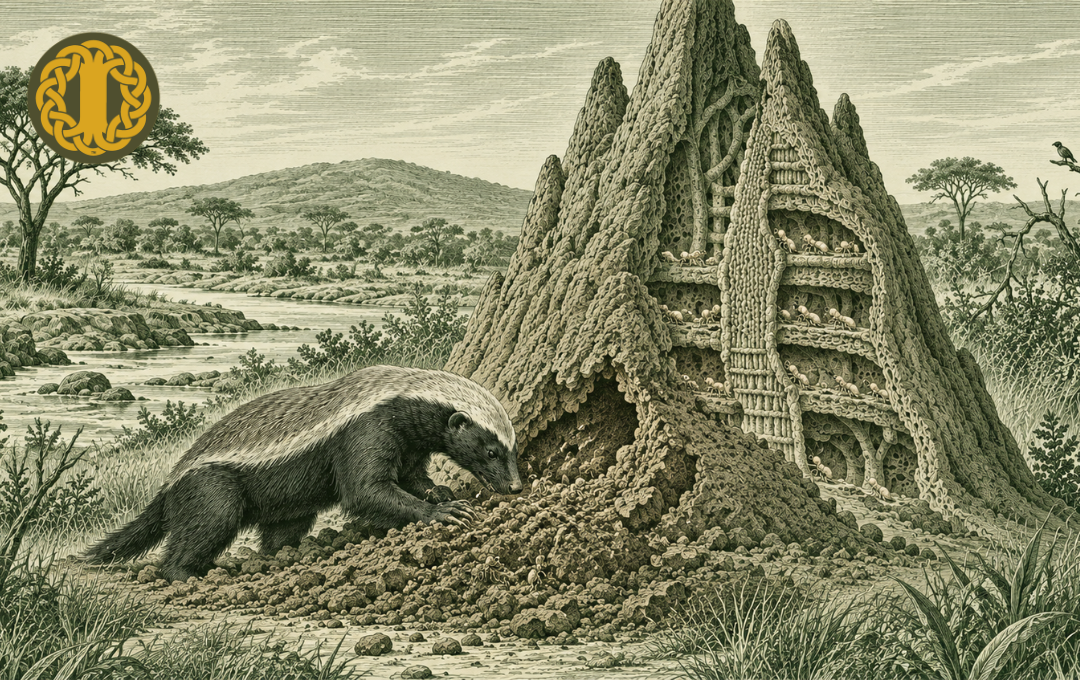
The termite mound had been breached by an African honey badger. The excavation bore the characteristic signature of its typically furious, single-minded digging, a cone of loose red soil fanned out across the surrounding ground. The mound itself, a two-metre column of compacted earth on the edge of a drainage line in the Sabi Sand, had a jagged opening at its base roughly the size of a football.