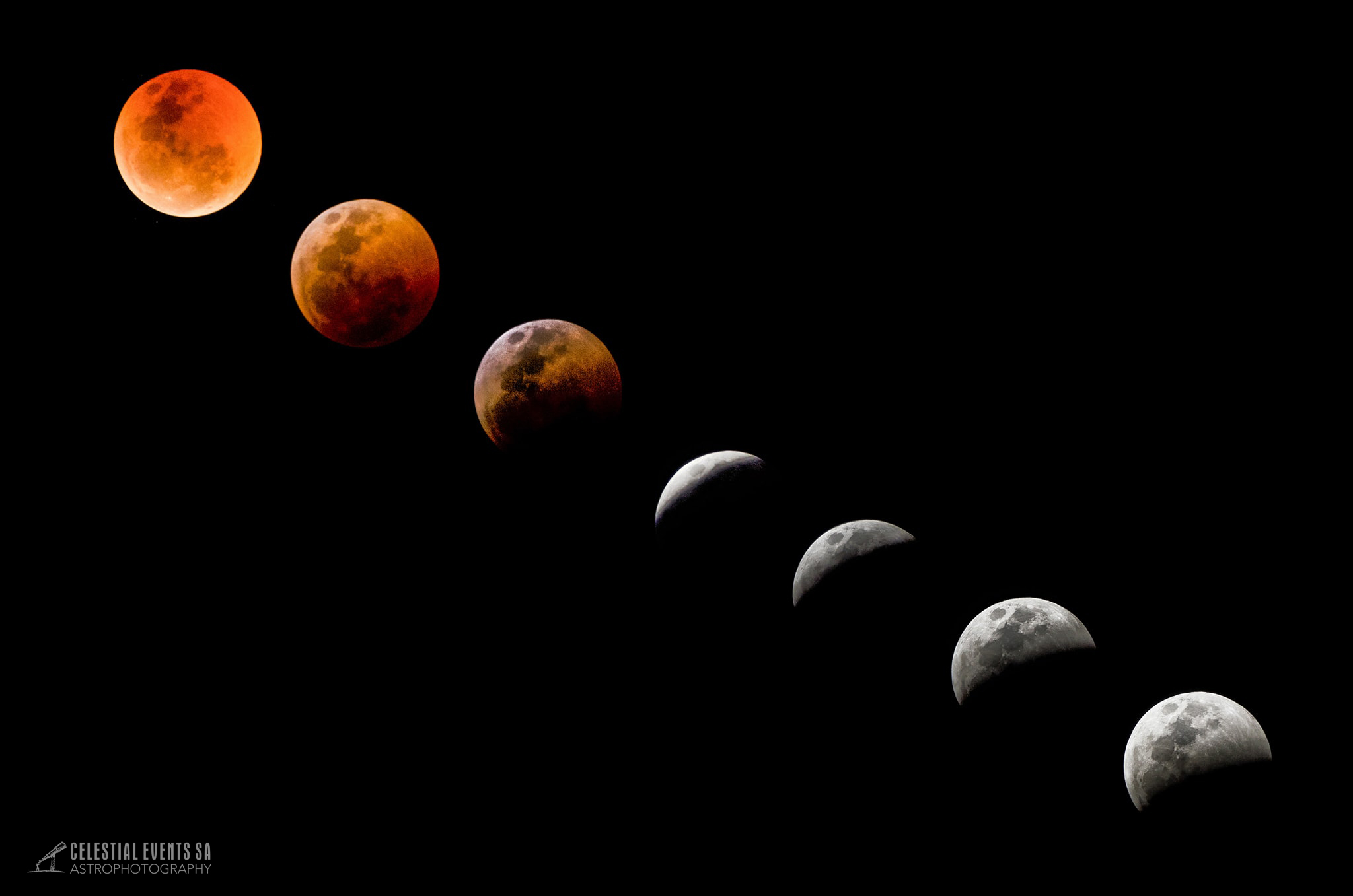
On the 7th of September, the world bore witness to a moment of celestial theatre as the Sun, Earth, and Moon took to the cosmic stage.
As the Sun set, the lights dimmed and the curtain rose on one of nature’s most beautiful performances: a total lunar eclipse. It was a show to which we were all invited – and best of all, no tickets were required.
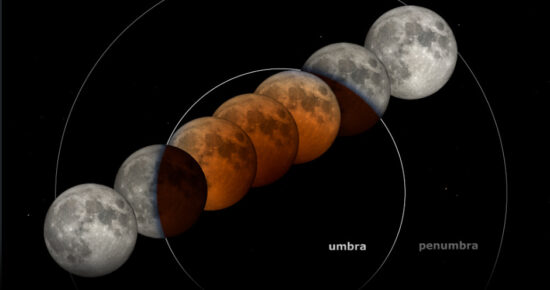
Each month, the Moon performs its orbital pirouette around the Earth, but once every 2.5 years or so, these cosmic characters align in perfect celestial choreography. The Moon’s path is normally about 5° removed from the Earth’s orbital plane, meaning it passes harmlessly above or below our shadow. But this month, it passed directly through Earth’s umbra, plunging the Moon first into darkness, then bathing it in an eerie orange glow – like a heavenly ember.
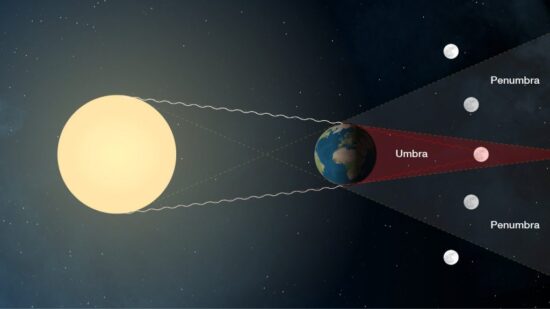
The conductor of this performance was gravity, and its predictability allowed us to know exactly when this sell-out event would occur. At precisely 18:27, the Moon entered Earth’s shadow, its light slowly extinguished by our cone of darkness. Yet, thanks to our atmosphere, the Moon was not booed off stage entirely. The gases that surround us bent the longer, red wavelengths of sunlight around the curvature of our planet and projected them onto the lunar stage like a diffuse spotlight. In effect, our atmosphere cast all the world’s sunrises and sunsets onto the face of the Moon at the same time.
At 19:31, the Moon was completely engulfed by our shadow, its face washed a burnt orange until it began to emerge again at 20:53. By 21:56, the show was over and the Moon restored to its full brilliance. Lunar eclipses last far longer than solar eclipses since the Earth’s shadow is much larger than the Moon’s. Solar eclipses rarely exceed seven minutes and can only be seen from very specific locations.
For millennia, our ancestors watched this cosmological concert – though often with trepidation. Without the scientific understanding we now enjoy, such events were met with fear and foreboding, seen as signs of imbalance in the otherwise perfect heavens. In Tswana and Sotho tradition, the darkening of the Moon was said to be caused by a great celestial lion attempting to pin it beneath its paw, the reddish hue signifying the Moon’s blood during the attack. Bushmen stories suggested the lion’s paw dulled the Moon’s glow to cloak its terrestrial brethren in darkness for the hunt. People retreated indoors, banging pots and pans to ward off danger, and praying for the Moon’s swift recovery.
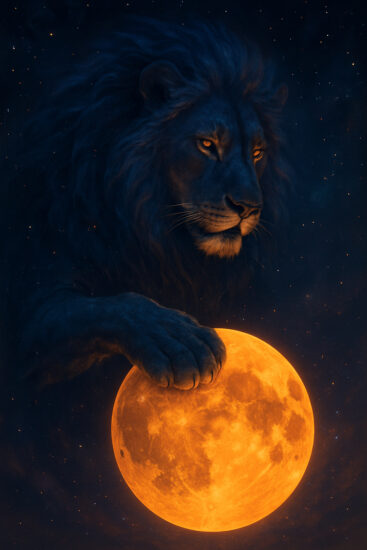
The theme of the Moon being attacked is found in many other cultures. The Inca imagined a jaguar trying to devour the Moon; for the Chinese, it was a celestial dragon. The Māori of New Zealand call a lunar eclipse kohu marama, “the smothering of the moon,” in which a jealous spirit lover wrapped the Moon in shadow. Its return signified that the spirit’s claim had been denied.
These beliefs and stories are more magical than the science itself – a testament to the imagination of ancient peoples and a reminder that our world, for all its knowledge and fact, has perhaps lost some of that mystery. The true reasons for this rare celestial performance may be fascinating, but on the 7th, I encouraged readers to take a seat in the cosmic theatre and let go of equations and orbital mechanics.
The stage was vast, the actors eternal, and the ticket free. When the lights went down and the Moon took centre stage, we gave ourselves over to the Moonlit Masquerade – and let the heavens steal the show.
See Celestial Events SA advert for contact details.