Environmental history was made on Friday 7 June 2024 when the last of 120 white rhinos were released into the network of private and communal reserves on the western border of the Kruger National Park. The operation was carried out under a strict veil of secrecy to ensure its security.
It has been over 15 years since the poaching crisis first hit Greater Kruger, when heightened demand for rhino horn in Asian markets sparked an unprecedented onslaught on the world’s largest rhino population.
It has been impossible to quantify the destruction of the crisis – on rhino populations and ecosystems, but above all, on the hearts, minds and morale of people who’ve had to witness its brutality day in and out.
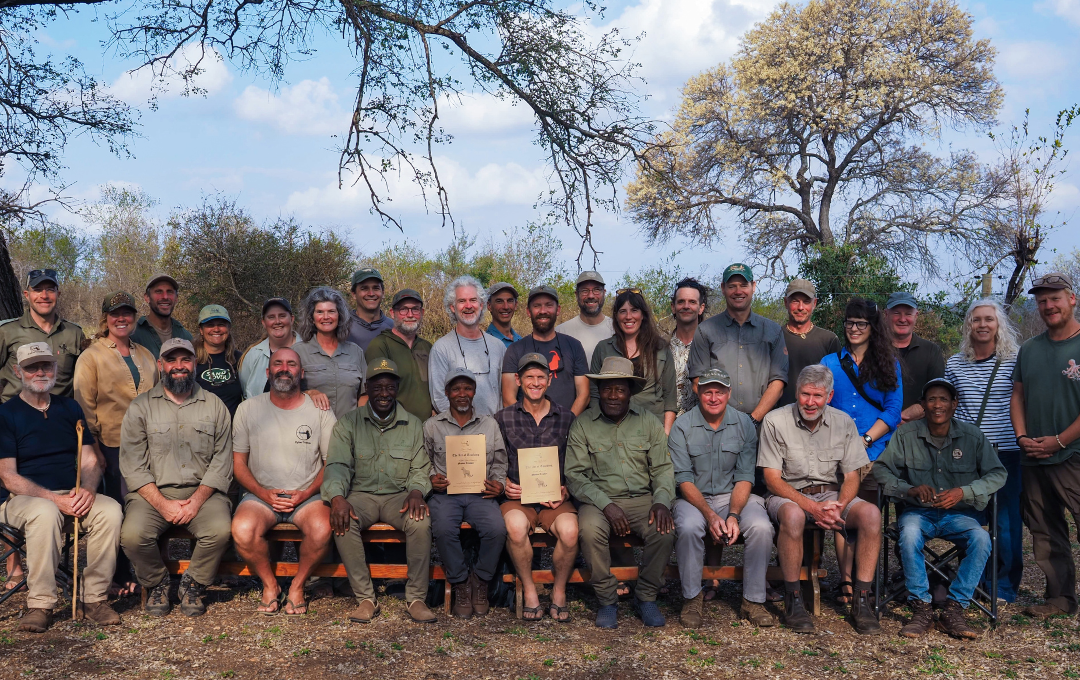
Yet on Friday 7 June 2024, we celebrated an unexpected milestone amid significant anti-poaching successes. Over many weeks, a historic rewilding project has seen 120 southern white rhinos translocated to private reserves along Kruger National Park’s western boundary. These rhinos arrived, marking a successful end to this translocation, which forms part of African Parks’ Rhino Rewild initiative.
After such protracted devastation in this area, it is a remarkable sign of positivity, progress and hope.
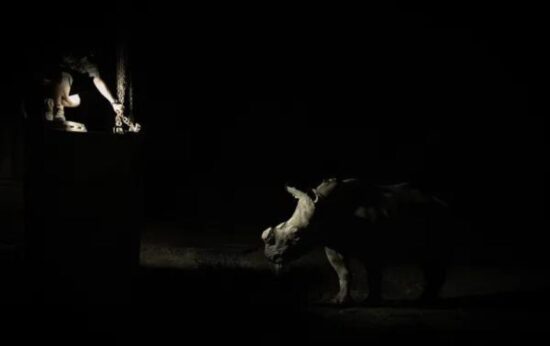
In September last year, African Parks announced it would rewild the 2 000 rhinos it had bought from the world’s largest private captive rhino breeding operation. Around the same time, along the western edges of Kruger, we were reflecting on security gains with cautious optimism. Criminality continues to be a significant threat, but poaching rates, particularly among our private reserves, have stabilised significantly. In the last three years, specifically, we have seen positive rhino population growth.
On behalf of our private member reserves, the Greater Kruger Environmental Protection Foundation (GKEPF) submitted a proposal to African Parks to return some of the rhino to their historic Greater Kruger habitat — an unfenced landscape of over 2,5 million hectares. Not only did it represent a chance to offset losses and restore a healthy rhino population in the landscape — but we could also offer a suitable habitat for the rhino to live a free and natural life. It was an extraordinary opportunity that arose through extraordinary circumstances.
Of course, there is no way to plan, coordinate and execute such a translocation without being clear-eyed about the many risks involved — including the ongoing threat of poaching. Thankfully, this is the most security-stable time to be taking this risk.
When the poaching onslaught first began, the threat was new. People equipped with the mindset, skills and propensity for a career in conservation suddenly found themselves scrambling to deter, mitigate and deal with a complex form of organised crime. Now, so many years and losses later, we have the partnerships, knowledge and expertise to be proactive and effective in our responses.
Hard-fought battle
Every day on this frontline has brought hard-won lessons. It has been a frequently painful school of life that has incurred a tremendous toll, but in the process, it has produced world leaders. A case in point is Project Fire, an unprecedented study published last year, which analysed intervention and poaching data from 11 reserves in the area over a five-year period.
GKEPF was formed in 2016 as a security alliance of 11 parks and reserves to unite in their anti-poaching efforts and approach. We’ve been able to establish that most elusive of collaborations: a well-functioning public-private partnership. And we’ve seen significant anti-poaching success.
Dr Sam Ferreira, Large Mammal Ecologist at South African National Parks (SANParks) and Scientific Officer for the African Rhino Specialist Group, attributes this success to GKEPF’s partnerships and operations.
“GKEPF focuses on workable areas, where reserves have been able to implement access controls and the cost-effective monitoring of rhino. They know their rhino well and have excellent situational awareness by covering small enough areas. They’ve also attained and manage high levels of integrity among personnel. All these factors, with strong partnerships at the core, have enabled them to keep rhino safe.”
He adds: “Despite many challenges, the management team are still positive about having a healthy population of free-ranging rhinos. The resilience shown in that is just remarkable. People in this landscape have earned the right to do this. They have earned the privilege.”

Population boost
Ferreira also explains that the rewilding project is a tremendous opportunity to restore rhino populations and some of their vital ecological functions.
“As mega-herbivores, white rhino can be thought of as ecosystem engineers that contribute cascade effects in the landscape. For instance, where they graze, they leave behind shorter grass suitable for small antelope, which in turn provide prey for predators. They help to create water holes and wallows. And rhino dung helps to disperse seeds and provide nutrients that help multiple other species thrive.”
How the rewilded rhino will adapt to their new landscape presents many unknowns — including how they will interact with existing populations, predators and other large mammals like elephant. That the habitat here is optimal for the species is indisputable, and this was a key consideration.
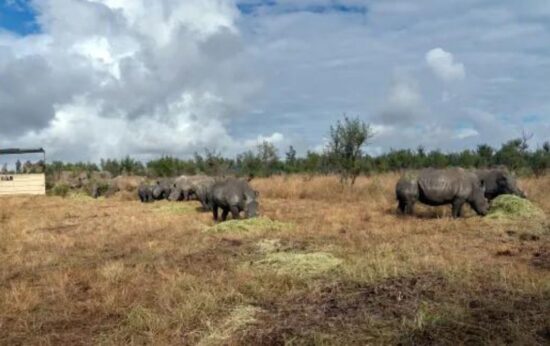
“This will be the first re-introduction of rhino into this landscape in about 50 years,” says Markus Hofmeyr, wildlife vet and Director of the Rhino Recovery Fund, who formed part of the rewilding planning and oversight. “We know rhino do well in the Lowveld. We know there will be losses from adaptation, but we don’t expect them to be significant.
“The rhino are coming in dehorned, which has been shown to be a very effective way to decrease poaching risk in this landscape,” adds Hofmeyr. “We do need to go in with our eyes wide open, which everybody is — but no success ever happens without taking some form of risk. We’re at a point where this risk is well calculated.”
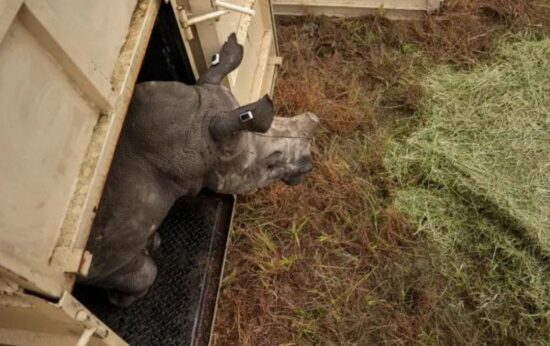
While African Parks are donating the animals, the translocation itself comes with a hefty price tag — as does the close, ongoing security monitoring of the rhino. This is a critical part of the process, with extensive network surveillance.
The data gathered will help to inform future translocations for African Parks’ Rhino Rewild initiative. But beyond that, in a time where “rewilding” has become a buzzword, it will also help to guide processes for restoring ecosystems across the globe.
“We can draw from these insights,” says Hofmeyr. “It’s an urgent and important function that we cannot discount, and we need to promote it positively as much as we can, so that people are willing to take those risks.
“Our own existence depends on having healthy ecosystems, and often animals are part of making sure those ecosystems function correctly.”
This article was previously published in the Daily Maverick – Our Burning Planet.
The Greater Kruger Environmental Protection Foundation (GKEPF) is a registered not-for-profit organisation to assist with the co-operation and co-ordination necessary for combating environmental crime in the area. Visit their website at https://gkepf.org/about/
Catch up note:
Our own Samantha Collett (Kruger2Canyon News) managed to catch up with Sharon Haussmann within her busy schedule to get further insight on this story:
SC: How did you manage to get involved in this AP Rhino Rewild project?
SH: The Greater Kruger area is known to be an ideal habitat for rhinos, and we are in a period now where we seem to be holding the poaching threat at bay – and these are extraordinary circumstances with those rhinos having to find homes. We decided to take the risk and try and be part of the solution. It’s been a long process with African Parks with a lot of scientific input from our side on how we go about it, and how we best mitigate all the obvious risks. We’ve got the first 120 in, and now we’re monitoring them very closely to see how it develops further and how they settle into the new environment.
SC: Did you apply to African Parks for the rhinos, and did they put out a call for applications?
SH: Yes, we did submit an application. In terms of African Parks, they have a framework by which they want to rewild this population, so a potential applicant must match the framework criteria and only then can you put a proposal application in.
SC: Did African Parks support you with funding or did you have to raise the funds for the project?
SH: The rhinos were donated to us, we don’t buy the rhinos, but we cover all the translocation costs which is very expensive operation. It’s eye-watering, but we were very fortunate to get some donor funding to do this. One of our existing funders came up with 90% of the funding for us to go ahead.
SC: That’s amazing, now the rhinos are relocated how long will you be monitoring them?
SH: we will monitor them very actively for six months after which we will integrate them into the existing population.
SC: How long has this rewilding process taken to this point?
SH: It’s taken about a year – in the planning and consultations, and then the actual rewilding was over a period of a month. We brought the rhinos in in four batches.
SC: Have they been dehorned?
SH: Yes, all of them were dehorned on site.
SC: That’s fantastic. So now that the rhinos are settled down and they’re in their boma, what are your reflections of the project and what are your hopes for the future?
SH: They’re only in the release boma for 48 hours, for the drugs to all work out and for us to make sure all the tracking devices work properly. And you do sometimes have subadults and cows and we just make sure they find each other again and bond before we open them up. After 48 hours we let the out and they’re basically out and off in the open system. Reflection-wise, I just think I’ve spent quite a bit of time where they’ve come from and it’s just amazing to give these beautiful animals the hope and the opportunity of living free again, where rhinos live, and where it’s in a very suited habitat. Where these rhinos have come from (Klerksdorp, Northwest Province), it’s not how rhinos should live.
SC: Which is why this story is so important. It is, as you say, a second life, a second opportunity.
SH: It really is. It’s incredible. It’s been, for me, a humbling and rewarding process and experience that I never, on any level, ever expected.
Kruger2Canyon News would like to express our thanks to Sharon for allowing us the time for this interview. We hope the project surpasses all expectations and certainly in the hands of professionals with so much passion, there is a good chance it will.