Criminologist and wildlife economy fundi, Dr Annette Hübschle calls it one of her “biggest a-ha moments”. Sitting in a circle of about 10 people in a community adjacent to Kruger National Park, she asked: “What does the rhino actually mean to you? Have you ever seen a rhino? What do you think about rhino protection?”
In essence, people replied, ‘The rhino has a ranger, a police officer; the rhino has land, a doctor that looks after it. And we don’t have these things. And maybe if the rhino goes extinct, we can finally get those things’.”
These were people living near the park’s fence line but had never seen a rhino and felt rhinos were being looked after much better than them, said Hübschle.
Hübschle, a senior research fellow attached to the University of Cape Town, was referring to the “big disconnect” that separates national parks from their neighbours – mostly people who get little services from the state, yet are deprived access to the natural spaces their forefathers turned to for water, wood, game meat and fish.
She was talking at a recent Khetha webinar on the social impacts of wildlife crime alongside Sboniso Phakathi, programme manager for Rural Initiatives for a Sustainable Environment at the Southern African Wildlife College.
The Khetha webinar series form part of a journalism training and story-writing grants initiative supported by the World Wide Fund for Nature (WWF) and the United States Agency for International Development (USAID). Organised by Jive Media Africa, the webinar series aims to foster better media coverage of the illegal wildlife trade and conservation challenges, particularly in the Greater Kruger area
Hübschle and Phakati were critical of shallow and alarmist crime reporting that ignored real-stuff-life experiences of people living alongside national parks.

Ever changing dynamics
Hübschle, who has a doctorate in social sciences and economics, has long been researching the illegal wildlife trade in Greater Kruger — both on the park’s western boundary and to its east, in Mozambique.
“I have spent a lot of time in Mozambique and my first trip to look at wildlife crime was in 2012. Back then I saw a lot of very traditional communities, villages, and livelihoods. But a year later rhino poaching had increased and you could see visible impacts of these poaching profits moving into a community,” she said.
Sex and cellphones
People were sporting smartphones; there was trade in fast-moving consumer goods.
“In one village where I spent a lot of time, suddenly you had a nightclub. There were bars, the things we would normally associate with urban life.”
In some villages and towns sex seemed more obviously on sale while hard drug use was up.
She also mentioned that in Mozambique, some kingpins of the rhino horn trade splashed out cash to keep in favour with people. For example, they provided boreholes to villagers, a boon in a poor part of the world where water and food can be scarce and clinics or police stations few and far between. And sometimes after a successful rhino hunt, poaching bosses slaughtered a cow so locals could feast.
But Hübschle said things were changing.
“On my most recent visit to Mozambique I saw a lot of half-built houses. Some of the poachers have disappeared or have been arrested. So, there’s huge risks attached to this wildlife crime for families and family members of poachers and poachers alike.”
Hunger
Phakathi has also been to Mozambique to better understand the realities facing the Kruger Park’s eastern neighbours.
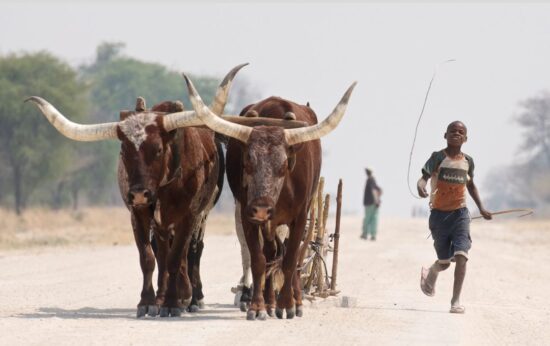
“The first thing that struck me was that hunger is a big issue in Mozambique, particularly in the more northern, rural communities,” he said, quoting statistics that 46 percent of the population lived under the national poverty index. They survive on R38 a day, sometimes less.
He witnessed hunger, with young children begging for bread at roadsides, and spoke about how Mozambique, with its history of civil war and displacement, struggled with malnutrition and inadequate housing.
Many communities lived directly off the land, Phakathi said, relying on fishing, or hunting for small animals. Some kept a little livestock, perhaps a few goats. They might sell fresh produce and others worked in the charcoal industry.
Different worlds
Phakathi observed that in Mozambique certain interventions, like getting people to plant cashews rather than fish, were more feasible than in South Africa, with its very different context.
The south and central areas on the South African side of Kruger, he said, were densely populated, and fast becoming peri-urban with many people working on mines, in farming and eco-tourism.
Home truths
Both Phakathi and Hübschle stressed that future conservation efforts need to consider the historical and complex social dynamics that have shaped the thinking of people living near protected areas, in particular their views on conservation and wildlife crime.
“People are dealing with issues like rape, poverty and not having enough food, loss of their livestock, the list goes on,” said Phakathi.
That all said, added Phakathi, it was important not to denigrate or downplay the important role of law enforcement, particularly in addressing highly organised elements of the illegal wildlife trade.
But he felt that there was a strong need to broaden policing focus to include the safety and security of neighbouring people and only “then we can have the meaningful conversations around the illegal wildlife trade”. The vast, densely populated spaces near the parks where people were live “are part of the ecosystem too”, added Phakathi.
Access
It was vital, he added, that these neighbouring residents, in particular the young generation, get access and exposure what the Kruger National Park offers to visitors, and how it contributes to the overall prosperity, generating revenue through tourism, creating employment opportunities, supporting community development, and preserving natural resources.
“You know nature is something that speaks to us all as people,” he said.

Partnerships
So, who should be creating these relationships and what successful initiatives might be adopted and applied more widely? asked webinar facilitator, Yves Vanderhaeghen.
“Everybody in these areas has a role to play,” replied Phakathi, adding that his work went beyond protected areas.
Hübschle agreed “We cannot preach and say this is how conservation should work (without consultation). We need to look at how to bring people in. And it’s also very important to provide livelihood options, and not just in the conservation sector,” she said.
Hübschle acknowledged the Kruger National Park could never be expected to provide jobs or benefits to everyone – the 3.5-million people living on its western boundary – but said we would do well to look around for lessons.
In Namibia, for example, where Hübschle grew up, several community conservancies have been a great success in involving people in conservation. But the demographics in the Greater Kruger area, were vastly different.
So, we need explore other approaches beyond conservation . . . “at rural development initiatives and livelihoods. It’s really, really important,” she said.
Moral panic
Webinar host, Vusi Tshabalala probed deeper into the panelists’ perspectives on media reporting on wildlife crime. For example, did reporting on the poaching of high value species like rhino and pangolin inadvertently lead to an increase in wildlife crime? And if so, what could journalists do?
Phakathi said journalists walked a tightrope in this regard, and that the same might be said of their role in stoking “moral panic” over wildlife crime. He was borrowing a term from sociology that describes a widespread feeling of fear that some evil person or thing threatens their interests, or well-being.
But this public discourse was rapidly changing due a lot more social scientists delving into poaching, helping to understand its complexities and the kind of broad solutions, beyond policing, that are needed, said Phakathi.
Hubschle agreed that more social scientists were working on the problem (by her own telling, she was among the first) but also paid tribute to Kruger conservationists, including “some amazing people” who were doing “good work in reaching out to and working with people living near the park”.
“There has been a big change in conservation thinking which is absolutely amazing and I think we really need to appreciate this is happening.”
Hübschle said Kruger conservationists and government officials had also realised it was “not positive to talk about a ‘War on Poaching’, or the ‘Rhino War’ ”, which like the failed “War on Drugs” risked alienating the people it sought to reach.
“If you want to invite people into conservation… that language is not helpful,” said Hübschle. –Additional reporting: Charlene Wandera, Kemunto Ogutu, Tulani Ngwenya and Nyameko Ishmael Bottoman.