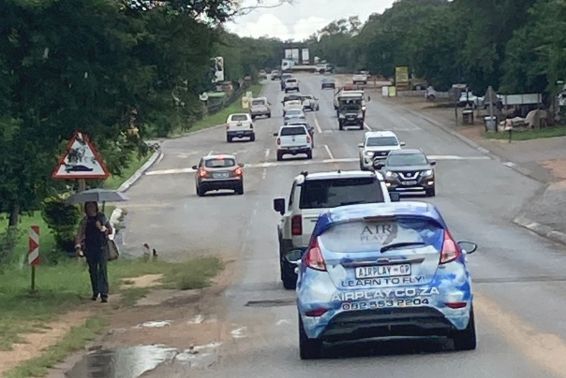
South African drivers, renowned for their impatience when wanting to overtake, are the leading cause of “head-on” collisions with oncoming traffic. Contributing factors like poor road conditions including potholes, road surfaces, gradients, alignments, and more; plus speeding and overloaded vehicles add to the carnage.
Why the exponential increase in heavy vehicles?
Most heavy commercial vehicles (HCVs) on the roads in our region are of the side tipper variety that carry product from the Phalaborwa Mining Company (80% owned by a Chinese consortium). The primary product from PMC is a mineral called magnetite, a black, magnetic mineral and one of the most important iron ores that is in high demand in China. Approximately 5 million tons of magnetite is exported via Richards Bay, and 15 million tons via Maputo every year. The majority of this is going by road, contributing to the substantial deterioration of the R40 (Phalaborwa to Nelspruit), the destruction of the R530 and R36 (Mica to Tonnel Plaza), renewed damage to the R36 (Tonnel Plaza to Lydenburg) and R527 (Hoedspruit to Tonnel Plaza) soon after recent repairs.
Mother Truckers
The side tipper industry is notoriously competitive, largely unprofitable (many large carriers are in business rescue) with low entry barriers into the industry. Vehicle utilisation is low as demand fluctuates according to shipment dates, and border and port waiting times are extensive. For obvious reasons vehicles are loaded to capacity, and often beyond with the latest smart trucks, allowed by the Department of Transport to exceed legal combination lengths and gross combination masses.
This makes the trucks slower and longer, and as a result more difficult to overtake. In 1996 the Department of Transport increased maximum axle mass loads from 8,2 tons to 9 tons. Many roads in South Africa were not designed to carry these increases. Even legally loaded axles cause some damage to road pavements, and it stands to reason that the more axles passing over a point, the more the damage.
The Abel Erasmus Pass (R36)
Built in 1959, the 24-kilometre mountain pass includes an altitude rise of 737m and still follows the wagon trails of the late 19thcentury. The pass has “62 bends, corners and curves of which 12 exceed an arc of 90 degrees”. With maximum gradients reaching 7,1%, this road is totally unsuitable for HCVs that are running at gross combination masses of over 56 tons. There is at least one serious HCV crash on the pass every week.
The R40 travels through the densely populated areas of Acornhoek and Bushbuckridge and includes several steep gradients and sharp bends, also making this road wholly unsuitable for heavy commercial vehicles.
What to do?
There is a foreign owned company resorting to exporting its product by road because of the country’s dysfunctional rail system. The basic infrastructure is in place, but insufficient rolling stock and locomotives (collapsed Chinese deal for new locomotives) hugely impact its operations.
The question that comes to mind is: Why should our hard-earned tax money subsidise a foreign company’s profits at the expense of lives and infrastructure damage? Instead, the national government must restrict ore export logistics to rail only.
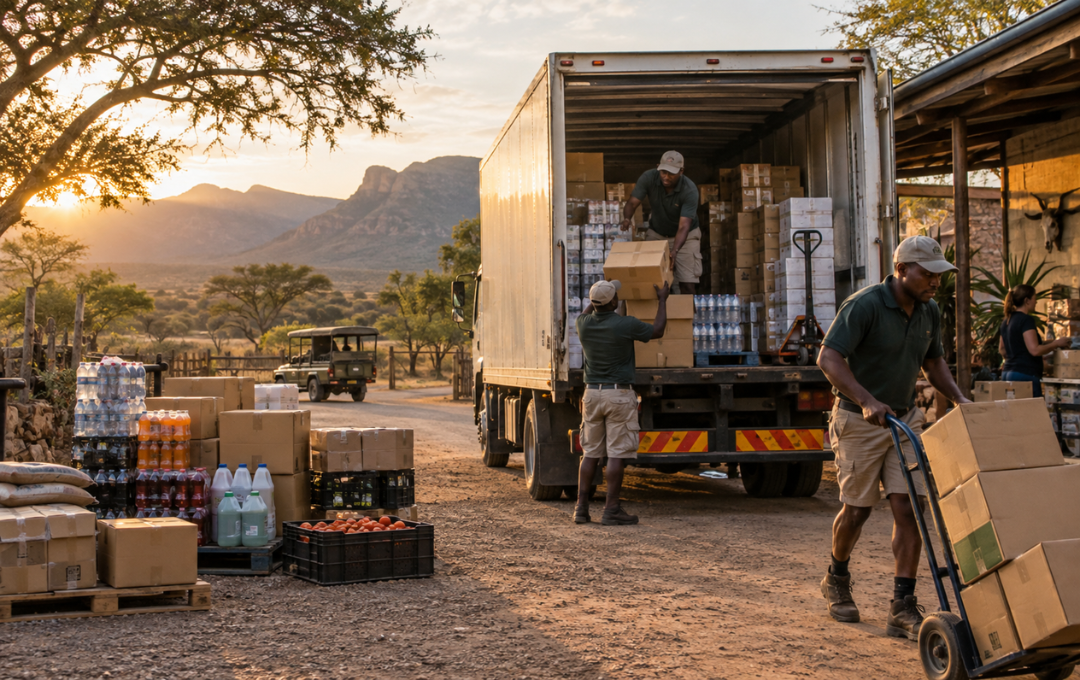
If we do not end this wanton destruction of our roads it will continue to drive up costs of all supplies coming into the area and drive away tourists. Traffic law enforcement is at very low levels for HCVs, possibly due to a lack of skills on the authority’s side. To protect our road users and roads we need a mind shift to put the transport of ore back onto rail where it belongs. If we cannot, we should not export. The cost/benefit does not make any sense at all.