In Mpumalanga, where farmland, forests, mining, and communities meet the Kruger National Park, Professor Dan Parker leads groundbreaking research on how humans and nature can coexist. Backed by a major research chair funded by Oppenheimer Generations Research and Conservation, he is exploring how science can guide sustainable solutions amid competing development and conservation needs in a climate-challenged world.
“We’re right at the intersection of the different needs that society has. We want to conserve ecosystems, biodiversity, but we also need to be able to go to Woolworths and buy our roast chicken because we need to eat.” Professor Dan Parker catches himself: “Maybe Woolworths is a poor example, but we need to be able to eat. How do we eat? We have to have agriculture. We need to make money. How do we make money? We’ll sell timber, and so on.”
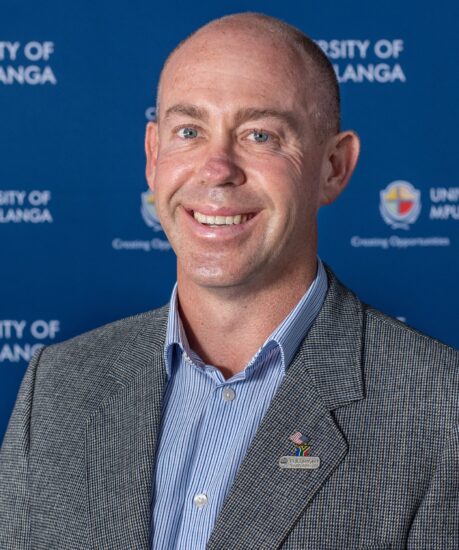
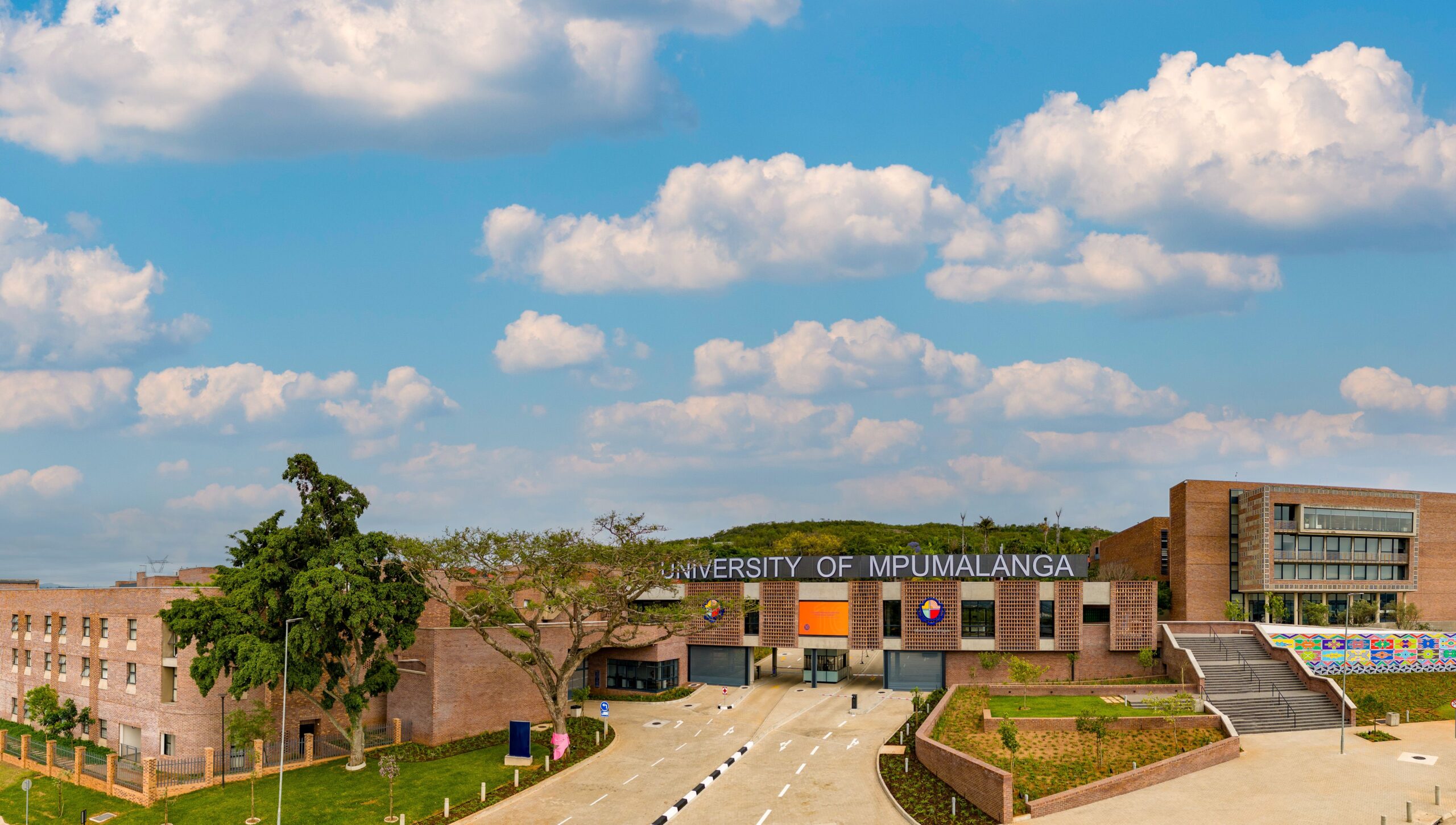
Parker is Professor of the School of Biology and Environmental Sciences at the University of Mpumalanga. He is also the first holder of the Oppenheimer Research Chair in Biodiversity Conservation, a landmark position that brings R6 million in funding over six years. This is the first-ever Research Chair hosted at the University of Mpumalanga and administered through the Benjamin Raymond Oppenheimer Trust (BRO Trust).
He emphasizes the value of conducting research in this region because it is not only a biodiversity hotspot, but also a place where multiple pressures – farming, forestry, mining, and human settlement – intersect, creating unique opportunities to study how ecosystems respond to competing demands.
“We are at this point where we’ve got all sorts of conflicting needs and requirements. We know that the population is likely to double in the next 50 years, and we’re seeing conflict over land use. The priorities around areas that are set aside for conservation, for agriculture, for forestry, for mining, become so much more intense. And in Mpumalanga, we are cheek by jowl with all these needs. You have the Kruger National Park, one of the premier conservation areas in the world, literally right next door to at least three and a half million people that are right on the boundary, living in very, very challenging conditions. They’re wanting to lift themselves out of those difficult socio-economic situations. Right next to that, you’ve got very lucrative commercial agriculture. There’s commercial forestry. In other parts, we’ve got mining as well.”
Clearly, this is where conservation gets real, and this is where, says Parker, meaningful research can be done into how to maintain the stability and resilience in natural systems to ensure biodiversity. “If we don’t have biodiversity, the planet can’t survive,” Parker says bluntly.
Parker says the close proximity of these different land uses in the same general geographic area is crucial in that it allows the region to be used for “natural experiments” or “quasi-experimental approaches”. This is important because to study the impact of agriculture on biodiversity, you can’t compare the Kruger Park to an orange farm in the Eastern Cape. We’re comparing a banana to an orange, and that’s not going to work. But within our geographic area, we can compare agricultural areas to natural areas. We know we have to spray the oranges before we export them to the EU, and they can’t have insect pests and so on. Okay. That means there might be some decreases in our insect biodiversity. Are there other ways of approaching this? For example, bats in orchards in the Lowveld area can make a huge impact on decreasing pests. And so perhaps we’ve got a natural solution to one of these problems, which means development can succeed, and conservation and sustainable development can go hand in hand.
“It means we don’t have to damage the entire planet because we just have to develop at all costs.”
Parker notes that the sub-tropical climate, while contributing to high biodiversity, also enables an abundance of invasive weeds, which affect both conservation efforts and constrain livelihoods, for example when they clog waterways, decrease biodiversity, and make fishing impossible.
One of the main reasons to channel funding through the formation of a chair, rather than simply giving money to a department, says Parker, is that it is able to free up and focus an individual or a group. “It channels funds specifically for research and capacity development, allowing the chairholder and their group to dedicate more time to these activities compared to time-consuming tasks like teaching, setting, or marking exams. This dedicated time allows them to drive a research agenda and implement ‘grand ideas’ that might otherwise be difficult to achieve due to time constraints.”
Parker says there is an added benefit in that the funding provides leverage for other funding. Springboarding allows the scale of vision to match the scale of the landscape.
Parker enthuses about a project in the pipeline. “We asked ourselves, ‘What do we have?’ Well, we have this entire area in and around Kruger National Park. And what’s important to stress is that this proposed project isn’t the kind of traditional conservation work where people go into a protected area, count elephants, and call it a day. This is about looking at broader socio-ecological regions and thinking outside the box.
“So we recently pitched a concept note to the NRF. If it moves forward, it will include multiple collaborators, many students, and cover a significant area. At the core of the project is a comparative study of three very different landscapes surrounding Kruger: The Kruger National Park itself, which is the quintessential protected area with no permanent human population and intact ecosystems; private protected areas nearby which function very differently, both ecologically and socio-economically; and the Limpopo National Park in Mozambique, where people live and sustain themselves within a national park, making it very different from Kruger.
“Our aim is to assess vertebrate biodiversity across these three socio-ecological zones using standardized methods, sampling everything from reptiles and amphibians to birds, bats, and soil eDNA. We’ll run broad transects from outside Kruger, into Kruger, and then into Limpopo National Park to assess how biodiversity responds to different land uses and management contexts.”
Parker reiterates that “the more we have a look at it, the evidence out there is that we can’t just carry on business as normal in the face of global challenge”. The high-impact research he and his team are embarking on hopes to address how habitat restoration, species conservation and sustainable development can take place alongside population growth and in the face of climate change.
Yves Vanderhaeghen writes for Jive Media Africa, science communication partner of Oppenheimer Generations Research and Conservation.