The tragedy, discovered on May 6th in the Kruger National Park’s remote Mahlangeni Section, has sent shockwaves through the conservation world – both for its scale and the evident escalating threat, and the swift, heroic response that followed from conservation teams around the country.
The crisis was triggered when the Endangered Wildlife Trust (EWT) picked up suspicious activity deep in the park. What they found was horrifying: an elephant carcass intentionally laced with deadly agrochemicals, surrounded by dozens of poisoned vultures. Within hours, a rapid-response coalition – including SANParks rangers, Moholoholo Wildlife Rehabilitation Centre, Briner Veterinary Services, WildScapes Vet, and Hope for Wildlife – was deployed to the scene.
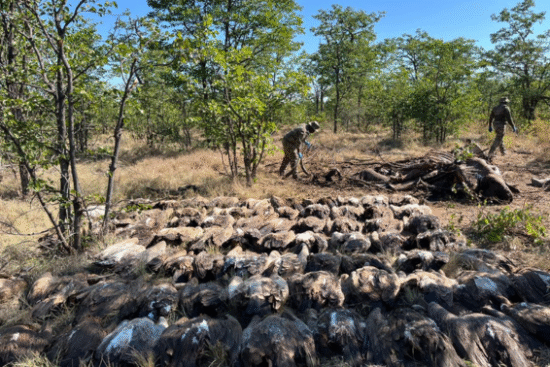
The intent was clear: poachers had poisoned the elephant carcass to eliminate vultures, which serve as natural alarms for rangers. Tragically, 123 vultures were found dead, including 102 white-backed vultures (critically endangered), 20 Cape vultures (vulnerable), and one lappet-faced vulture (endangered). Some may also have been targeted for the illegal trade in vulture parts used in witchcraft practices.
What followed was an unmatched, world-class wildlife emergency response. For the first time ever, SANParks helicopters – including one from Hope for Wildlife – were deployed in an anti-poisoning mission of this scale. The surviving birds were swiftly airlifted and rushed to safety in the EWT’s vulture ambulance. Through the night, vets and rehab teams at Moholoholo worked tirelessly, achieving an extraordinary 96% survival rate.
This incident marks one of the worst vulture poisoning events ever documented in the region but also the largest, most coordinated response and rescue operation to date. Already, 48 of the rescued vultures have been released back into the wild. Another 33, still recovering, are expected to be released in the coming days after weeks of intensive care. It is critical to ensure that the vultures are ready to return where they belong – in the wild. It is also important to return the vultures at this time so that they may also participate in the breeding season currently underway.
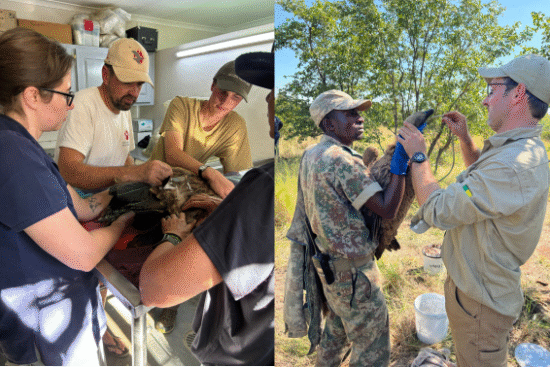
These efforts and the release of the vultures, has seen some of the rehabilitated tagged birds already having moved back into the Kruger National Park where they are busy maintaining their nests and preparing to breed.
Moholoholo has praised the Hoedspruit community and expressed heartfelt gratitude to everyone for rallying behind the cause during this crisis. But the threat remains. Conservation groups are calling on the public to support continued efforts, with donations going directly toward medical care, rehabilitation, and critical equipment for future emergencies.
The community as a whole has to understand that this is not an isolated tragedy. It is not the first and sadly nor will it be the last. Africa is losing up to seven percent of its vulture population every year to poisoning – a silent crisis that threatens the entire ecosystem. In just the last few years, Moholoholo has treated over 230 poisoned vultures, with an impressive survival and release rate of more than 95 percent.
Now, in a vital step forward, the EWT in collaboration with Briner Veterinary Services are sharing their proven treatment protocols across southern Africa, thereby equipping veterinarians and licensed rehabilitators with the tools empowering them to save lives of these wonderful creatures when every second counts.
Sadly, the horror hasn’t stopped. Just two weeks after this incident, another grim discovery was made: over 100 vultures found dead around a poisoned warthog carcass in the Lionspruit Reserve. Not a single bird survived. No body parts were removed.
The message? The threat is growing – and the need to act has never been more urgent. This is more than a wildlife crisis. This is a battle for the survival of one of nature’s most vital clean-up crews – and a powerful reminder of what’s possible when science, passion, and community unite.
Should anyone wish to contribute by donation please do so through the following banking channels:
Moholoholo Wildlife and Rehab NPC, Standard Bank, Account: 012746517, Branch: 051001, Swift: SBZAZAJJ
The Endangered Wildlife Trust, First National Bank, Account: 50371564219, Branch: 253305
** Both can issue Section 18A certificates for donations.
Martial Rappo is the Manager Moholoholo Wildlife Rehabilitation Centre