On Christmas Day 2021, the James Webb Space Telescope launched from Earth and now resides some 1,5 million kilometres away! It’s 6 metre mirror has been scanning the cosmos ever since its arrival, and sent its first images back in July last year. Unlike its predecessor, Hubble, the Webb sees in the infrared (IR) spectrum, allowing astronomers to see deeper into the Universe than ever before.
What it has discovered and achieved in just 5 and half months is simply astounding. Let’s have a look at some of the highlights from 2022.
Viewing Distant Galaxies
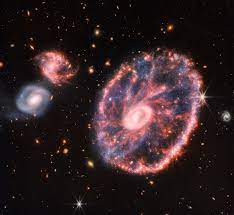
Thanks to James Webb’s capacity to see in infrared, it has been able to peer deeper into space than ever before, viewing more distant, and thus older galaxies than Hubble ever could. It has found evidence of galaxies 13,4 billion years old, that were formed when the universe was only two percent of its current age! These discoveries will aid astronomers in understanding our origins and shed light into galactic formation and evolution.
Viewing Exo-Planets
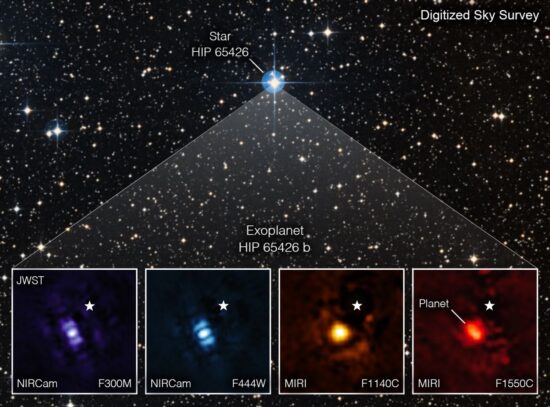
It has long been known that planets orbit other stars in the Milky Way, but Webb has been able to directly image these bodies. It has discovered great gas giants as well as rocky worlds, similar in size and composition to Earth. It can even decipher the chemical make up of these exo-planets’ atmospheres and is actively searching for biosignatures, and ultimately evidence of life on other worlds.
The Birth of Young Stars
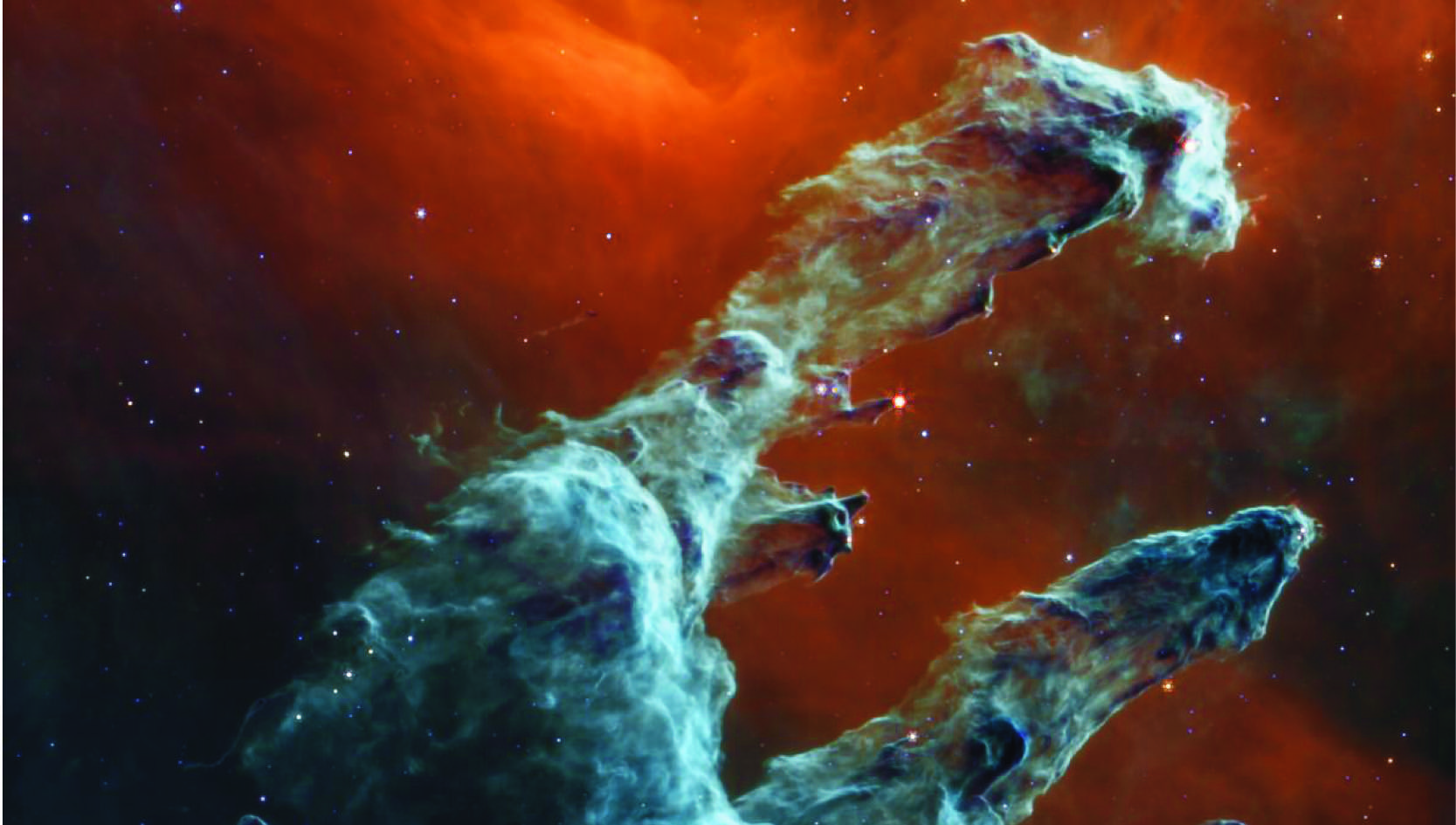
Stars are born from great glowing clouds of molecular hydrogen and other elements. In the visual spectrum, seeing through the dust is impossible, but Webb’s IR camera is unaffected and has been able to directly view baby stars in their stellar womb. These emission nebulae are common and many can be seen with backyard telescopes from Earth. Webb’s most significant image was of the ‘pillars of creation’, and area within the famous Eagle Nebula in the constellation of Serpens. Other well-known nebulae visible from Earth include the Orion Nebula and the Lagoon Nebula (Sagittarius).
Mapping Titan’s Atmosphere
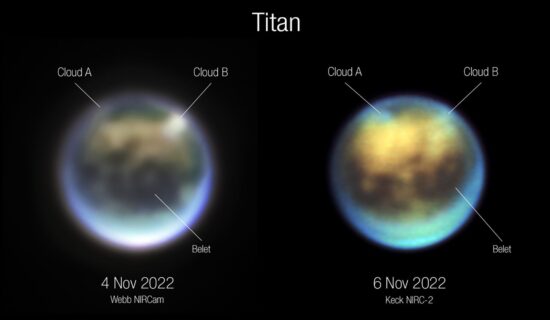
Webb is not only being used to explore deep space. It has also turned its massive eye on our own solar system. Titan is Saturn’s largest moon, and the only known moon with an atmosphere. It shows evidence of clouds, as well as housing lakes and rivers of liquid methane on its surface. Webb has been studying atmospheric composition in preparation for future missions to explore its surface for signs of life.
Jupiter
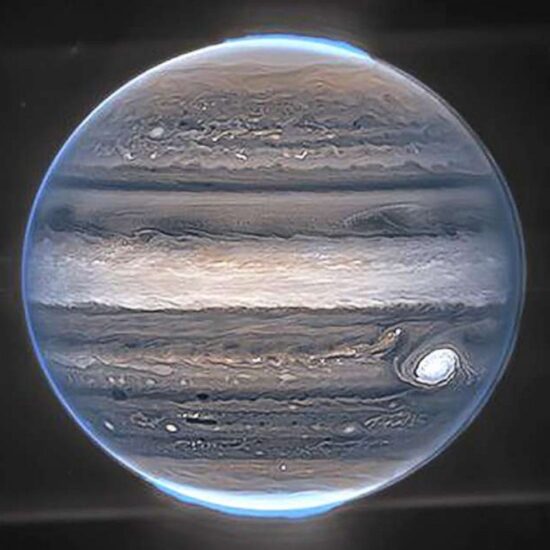
Jupiter is the largest planet in our solar system and although we have probes orbiting the planet photographing it features, they are not able to see features privy to Webb. Thanks to its IR capabilities, Webb has seen auroras at Jupiter’s poles, and extracted previously unseen detail in it rings and the great red spot, a huge anticyclonic storm twice the size of Earth.
The data that Webb has documented and sent back to Earth since July last year has defied every expectation, and its discoveries have caused astronomers to rethink various models of our understanding of the cosmos. As Webb continues to examine the depths of space and time, 2023 will no doubt bring with it many more surprises and incredible insights into our universe.
See Celestial Events SA advert for contact details