With the rains in full force this month, 2023 held an unusual twist for us in the northeast of the country. A ten-day period of almost solid downpours was the result of cloud burst conditions. These were held in place mercilessly by tropical systems pushing in from the east, which met a blockade of cold fronts from the west, culminating in record amounts of rainfall for the region. A dry end to the month was sorely welcomed by all.
Days were undoubtedly at their darkest, with the anticipation of yet another, now almost annual cyclone, this year named as Freddy. This large tightly wound low pressure system hit Madagascar broadside as a world-news-worthy Category 5, before limping across the island to the Mozambique Channel. On its way, it gained strength as it passed right over isolated atolls, and the tiny Europa Island, before making landfall on continental soil as a severe tropical storm. This true force of nature hit our resilient white-sand and palm tree laden neighbour, with little to no effect on locals, but it did bring a number of top-class rare birds to those few who happened to be in the country for the storms arrival.
Rafts of aerial kite-like Greater and Lesser Frigatebirds, with their two-metre wingspan, and half metre long forked tails, caught the currents for hours on end as the winds howled. These incredible kleptoparasitic birds (they steal food from others) dropped in, in small groups or passed a select few dune banks, where tallies of mixed flocks at one site reached into the high 80’s. These species are normally true vagrants at best to any part of the South African coastline, only showing up during these horrendous conditions. Occurrences like these are some of the one-hit wonder spectacles offered for the lucky few along the underexplored, and relatively under-birded, Portuguese-speaking nation’s untapped coastline.
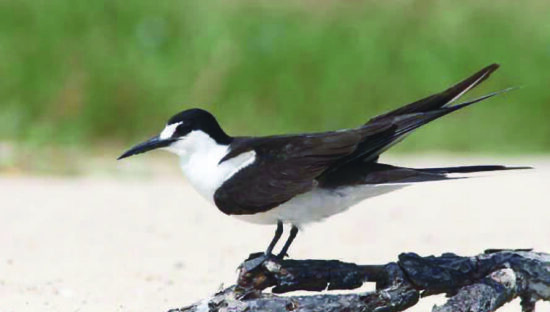
Another iconic species, that was seen by several lucky individuals in vast numbers on the fringes of Freddy, was the large and stunning Sooty Tern. A species of the tropical Indian Ocean, this bird is one of those that send pulses racing for novice, and experienced birders alike. On the morning that Freddy moved inland there were two reports of crazy numbers of these birds, one of 500 at one site, and at least 200 to 300 at another nearby! Hundreds of these incredible pelagic birds, unfamiliar with true land as they were, were seen already making their way back out to sea, and towards their sandy spit of a colony that lay several hundred kilometres away.
Vagrant-chasing in the face of a major storm is not encouraged or advised, but one thing that is worth mentioning is the wealth of birds that can be found in Mozambique. This is especially true for those who already travel to this rural but charismatic nation for breaks or holidays.
The southern part of the country, which is surprisingly large, is still safe from troubles high up towards the Tanzanian border and offers a range of unique and special species. Many of these are sought-after birds only found within South Africa at isolated sites, but are much more readily and reliably seen here, plus a few true isolated and often threatened gems.
For many, the unknown conditions of roads, slow borders and corrupt traffic officials have all been reasons advocating other destinations. However, largely and in most cases, these are things of the past. The Lebombo Border Post at Komatipoort is now open 24 hours a day, all week, with freight vehicles being separated into a different system from cars, coaches, and minibuses.
Weekend days and peak times can be very busy, but for the most part, if in a lull, it can take an average of an hour or less to pass through and enter the immediately different landscape. Main arterial roads, having had foreign investment, are now excellent with adequate sign boarding and several relatively cheap toll gates.
These tolls are numerous but cheap and take a number of currencies at a set exchange rate. By joining organisation’s like DriveMoz, by knowing what equipment is nationally required to be within a private vehicle, and by adhering to speed limits indicated, there is little to no trouble with the local law enforcement officials who are in plain sight and wear their uniforms with pride.
So that’s the background and ease of travel within the country.
Food supplies are often basic, and it is advised to bring from South Africa when coming in for a stay of several days, but fuel is easily accessible, as are local sim cards and internet data.
With that all in mind, one is now set and prepared for a road trip through the best birding spots that this region of our subregion has to offer. Building knowledge of these places, the species they hold, and the absolute top-class specials to focus on, is highly valuable when busy driving between major hotspots.
These top areas include the Maputo area, the zone around and north of Inharrime as well as on the way to, and adjacent to, Vilanculos. To reach and give due attention to these areas, at least four or five days would be adequate, with a week being optimal. If looking for a sneaky slice of ocean air and the sound of waves breaking over sandy beaches, along with some good birding, Maputo and its surroundings can be covered well, over a weekend. Here busy mornings and evenings of birding can be matched with a little time carved out for relaxation and recuperation for those of us who enjoy things like that.
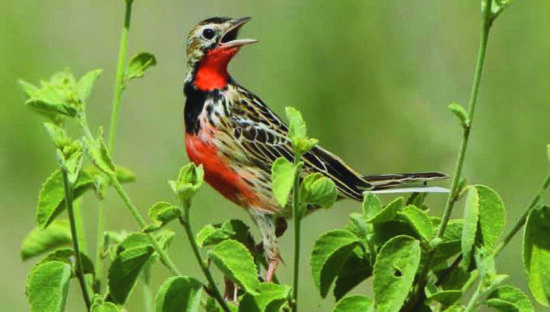
Around the capital city, a modern-day Delagoa Bay as it were, a mere two and half to three hours reach from Nelspruit, there are several great sites for adding some exciting species to one’s list. The top spot is surely that of Macaneta, a tourist resort popular with South Africans, and just to the north of the ring road round the city. With lovely sandy beaches on the ocean side, the best birding is to be had inland of the coast itself, in the saltmarsh areas leading up to the resort. Common, but mouth-watering species that can be found here include Rosy-throated Longclaw, a special that is normally tricky in South Africa, as well as Black Coucal, Rufous-bellied Heron, Rufous-winged Cisticola, African Marsh Harrier and Red-headed Quelea. Blue-cheeked Bee-eaters are all over the place in summer, while Collared Partincoles are plentiful alongside a wide range of other waterbirds. The other major regions close to the city include Inhaca Island, serviced by a daily ferry, that holds a breeding colony of Olive Bee-eaters around the dunes of the hotel on the island. If explored well, species like Sooty Falcon and Mangrove Kingfisher can also be found here. The Special Elephant Reserve offers pristine sand forest and its range of Zululand-like species, but this is an intrepid destination with 4×4 being essential for any access at all.
The bustling rather rudimentary town of Inharrime, lying squarely between Xai Xai and Inhambane, lies in the middle between two relatively essential stops for those on the hunt for new birds. Firstly, around 60km north of the town lies the ever-diminishing miombo-like woodland around the rural village of Panda. This area has long been famed by birders for its one true beauty, the rare and localized, almost warbler-like, Olive-headed Weaver, as well as a range of birds that are highly localized in South Africa. Quality species like White-breasted Cuckooshrike, Neergaard’s Sunbird, Southern Hyliota, Red-faced Crombec and Racket-tailed Roller, are all common here and are usually found while searching for the rare and elusive Weaver. Wetlands on the way to Panda offer a reliable chance to see the highly prized and incredibly cryptic, thus rarely seen Great Bittern! This, as well as offering other wetland birds like herons, waders, rallids and even Swamp Nightjar during hours of darkness.

North of Inharrime lies the excellent accommodation provided at Dunes De Dovela, which lies around 20km from town. Solid chalets sit on a private dune looking out over the vast ocean, and these are surrounded by a small patch of forest. The birding here is excellent with breeding African Hobby in palm trees leading up to the lodge. This area is also excellent for Sooty Falcon, Dickinson’s Kestrel and the elusive Collared Palm Thrush. The forests trails here support a relict population of the beautiful Black-headed Apalis. These birds are no less than 1000km from other members of their species further north towards the Zambezi. Here too are other species such as Livingstone’s Flycatcher, Plain-backed Sunbird, Little Green Woodpecker and Eastern Nicator.
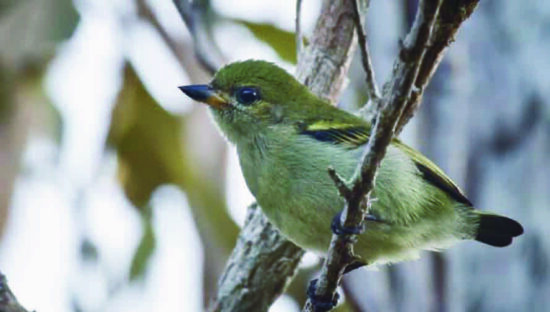
Lastly the region around Unguane towards Vilanculos is worth serious effort and time for the only chance at the elusive and highly sought after Green Tinkerbird, while other species at this stop include hirundines like Mottled and Bohm’s Spinetail.
Vilanculos, and more correctly the infamous San Sébastien Peninsula, Rattray Point, and the beautiful ocean reserve that are adjacent to it, is a mecca for birders. This small area is a great place to find several top specials found nowhere else in the region. The reserve is best accessed from the base that is The Sanctuary. This typically tropical location lies two hours drive from the highway, towards a remote sandy precipice of land jutting out awkwardly into the blue beyond. Birds found here around the lodge include Mangrove Kingfisher, Olive Bee-eater and Collared Palm Thrush. A chartered boat trip to Rattray, as well as offering a chance to glimpse the rare Dugong, often yields the only reliable Saunder’s Tern, Crab Plover, and Eurasian Oystercatcher the whole of Southern Africa has to offer.
Despite its remote nature in some ways, Mozambique is truly a fantastic place to spend some time. Birding here can be challenging but can be extremely rewarding for those who are inspired by some of the top species available.
For travellers who enjoy adventure, taking the unbeaten path and who are rugged by nature, birding in Mozambique offers a great way to enjoy a proper road trip. For those of us that like to take the uncertainty out of birding, and have the best chances at finding tricky specials, it is also worth considering joining a birding tour group. These have set departure dates, operating with South African clientele in mind, and are run by two major companies, namely Bustards Birding and those run by Etienne Marais.
Whether popping in for a weekend, on a holiday break with mates, in search of a rugged into-Africa adventure, or simply heart-set on seeing the birds the country has to offer, Mozambique is more than just a beach or fishing destination. It has much to offer those of us bitten by the birding bug, and who need exciting new species. Birding itself can be a totally new way of experiencing a country that some may have visited many times before.
This month, while flicking or having a look through books and apps, watch out for birds that excite and send the pulses racing, whether they be found locally or over borders. Chances are they are all within reach for those willing to try.