A quiet but highly significant policy rift is opening among southern African states as the world turns its attention to CITES CoP20, scheduled for 24 November 2025 in Samarkand, Uzbekistan.
For decades, Namibia, Botswana, Zimbabwe and South Africa marched in step, championing the sustainable use of wildlife – including promoting the international trade in elephant ivory. Together, they challenged anti-trade coalitions led by east and central African nations, and conservation NGOs.
But this year, South Africa appears to have broken ranks.
Namibia’s big ivory gambit
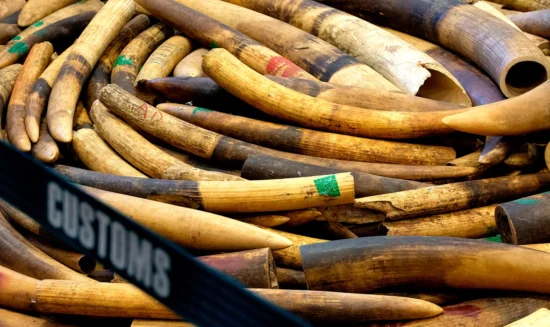
The flashpoint is Namibia’s Proposal 13, which seeks CITES approval to sell more than 46 tonnes of government-owned raw ivory stockpiles for commercial purposes. Namibia argues the sale would be a one-off transaction with CITES Secretariat-verified trading partners, generating conservation revenue. The funds, they argue, would support conservation and rural communities.
The secretariat, however, has raised serious concerns. It flagged ambiguities around how trading partners would be verified, how trade would be monitored and whether the sale might set a precedent for future trade.
Building on this, a global NGO, the Environmental Investigation Agency (EIA), has urged parties at CoP20 to reject the proposal outright. In its own briefing, the EIA argued that legal ivory sales risk reversing decades of progress, stimulating demand and providing cover for laundering illegal ivory.
It cites the 1999 and 2008 one-off sales of more than 150 tonnes of ivory to Japan and China, after which poaching and trafficking spiked to unprecedented levels. With major consumer markets like China now closed, EIA says there are no responsible buyers left.
Southern African officials have previously referred to a $1 billion ivory stockpile, but closer evaluation reveals that this figure is at most $50 million.
South Africa’s strategic retreat
In contrast, South Africa – once a key architect of the pro-trade bloc – is sitting this one out.
In a parliamentary reply on 29 September 2025, Environment Minister Dion George stated:
“The conditions are not currently favourable to enable consideration of the international commercial ivory trade. Significant constraints remain, including limited financial and human resources, inconsistent legislation, weak partnerships, knowledge gaps regarding ecological roles and population dynamics, as well as negative international perceptions and reputational risks.”
He confirmed that South Africa will not submit any proposal on ivory trade at CoP20, noting that the deadline for submissions passed on 25 June. This represents a marked departure from a country that once led the charge to reopen ivory markets.
While the minister did not categorically state that South Africa would not support Namibia’s proposals, it would raise questions both regarding the minister’s personal integrity and also ridicule the country’s international credibility should he fail to ensure South Africa adheres to this unequivocal position.
From pro-trade pioneer to policy moderate
In the late 1990s and 2000s, South Africa was at the forefront of regulated ivory trade. It successfully downlisted its elephant population to Appendix II at CITES CoP10 (1997), paving the way for legal trade. It participated in the 2008 one-off sale to China and Japan, contributing nearly 47 tonnes. At the time, South Africa argued for sustainable trade, which would generate conservation revenue and undercut black markets.
But the landscape has shifted dramatically. The surge in poaching during the 2010s – where Africa lost a third of its savanna elephant population in just seven years as a result of the one-off sale – coupled with the closure of the US and China’s domestic ivory market in 2017 and the EU a couple of years later, has hardened global opposition to any trade. Major markets have disappeared, leaving southern African states without clear legal buyers.
Without a market, South Africa’s decision reflects pragmatism more than ideology. The Department of Forestry, Fisheries and the Environment (DFFE) is signalling that global political realities, governance gaps and reputational concerns outweigh any potential short-term gains from a controversial proposal that would almost certainly fail diplomatically.
This shift places South Africa out of step with Namibia, Botswana and Zimbabwe, which continue to lobby for lifting the trade ban. While Namibia’s Proposal 13 is much about revenue, South Africa’s retreat suggests a different calculation: that aligning with anti-trade sentiment may better serve its interests at CoP20, allowing it to focus on other issues such as biodiversity financing, rather than spending scarce diplomatic capital on a losing fight.
Internal contradictions
Confusingly, this new stance is not universally shared within the DFFE.
Deputy Minister Bernice Swarts told the National Council of Provinces’ Select Committee on Agriculture, Land Reform and Mineral Resources during a briefing on the new Threatened or Protected Species regulations on 7 October 2025, that South Africa should push to sell its own ivory stockpiles as early as next year. Seemingly the deputy minister is unaware of the decisions to be taken at CoP20 in November. Whether this reflects her personal opinion or merely an unfortunate lack of coordination within the ministry is unclear. But it highlights the fragility of the current position – and raises questions about whether George’s view will hold going into CoP20 and beyond.
That said, South Africa’s strategic retreat could have lasting implications:
- Fractured unity: A once-cohesive southern African ivory bloc now faces CoP20 divided;
- Diplomatic repositioning: South Africa may find itself more aligned with anti-trade parties;
- Norm reinforcement: Its stance bolsters the international norm against ivory commerce; and
- Domestic reform: The government appears focused on strengthening governance before reconsidering trade.
Whether this represents a temporary divergence or a deeper realignment remains to be seen. But the symbolism is clear: southern Africa no longer seems to speak with one voice on ivory trade. That could reshape its influence within CITES for years to come.
This article was previously published in the Daily Maverick/Our Burning Planet/Dramatic Shift Op-Ed
Dr Adam Cruise is an investigative environmental journalist, travel writer and academic. He has contributed to a number of international publications, including National Geographic and The Guardian, covering diverse topics from the plight of elephants, rhinos and lions in Africa to coral reef rejuvenation in Indonesia. Cruise is a Doctor of Philosophy, specialising in animal and environmental ethics, and is the editor of the online Journal of African Elephants.