On 9 August 1956, more than 20 000 women marched to the Union Buildings in Pretoria to protest the apartheid pass laws, demanding dignity, equality and freedom. Women’s Month gives South Africans an important moment to remember those women, the courage of their stand and the rights for which they fought.
But recognition alone cannot fulfil those ideals. Dignity, equality and freedom are shaped by what happens in everyday life: who has access to opportunities, who controls resources, who participates in decisions, whose voice is heard, and who has the power to influence what happens as a result.
This is an important distinction, because participation and equality are not the same.
A woman can be present in a meeting, programme, training course or household and still have limited influence over decisions or resources. Gender inequality also does not operate in isolation. In the South African context, unequal access to education, income, ownership, services and decision-making structures can intersect with gender, increasing the distance between being included and having a meaningful say in the decisions that affect one’s life.
For the Kruger to Canyons Biosphere Region (K2C), this understanding has increasingly shaped the way gender is approached across its work. The shift can perhaps be explained most simply through a change in the question being asked. Rather than asking only, “How many women are participating in our programmes?”, K2C is increasingly asking: “How are our programmes changing women’s access to opportunities and their ability to act on them, their say in decisions, and what changes in their lives as a result?”
That difference lies at the heart of gender mainstreaming.
Looking Beyond the Numbers
Gender mainstreaming means building gender considerations into the way an organisation plans, implements, monitors and evaluates its work, rather than treating gender as a separate “women’s component”. A gender-responsive approach is what this looks like in practice: recognising that women, men, girls and boys may experience the same programme, service or environmental challenge differently, and deliberately designing work to respond to those differences.
At K2C, the Gender Working Group and Gender Action Plan help guide this approach, while the organisation’s Gender Policy provides a formal framework for ensuring that gender equality is considered across both its programmes and its own organisational practices. The Gender Working Group serves as an internal platform to guide, strengthen and monitor this commitment, helping to integrate gender considerations across policies, projects, partnerships and organisational culture.
The Gender Policy requires gender analysis throughout the project cycle and calls for women to have greater opportunities to participate in decision-making and access resources and services. It also recognises that gender equality cannot rest on women alone, calling for men and boys to be engaged as agents of change. These principles extend to K2C’s own organisational systems and practices, reinforcing that gender mainstreaming is both an external programme responsibility and an internal one.
What Changes When We Look Through a Gender Lens?
Across K2C’s work, this lens is applied in different ways, from strengthening women’s access to savings and financial literacy through Eco-Savings and Credit Groups, to designing the Absorbent Hygiene Products Project around girls’ and women’s lived experiences.
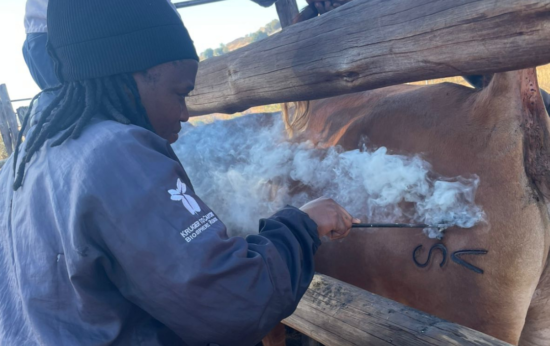
In rangeland management, it means recognising the different roles and voices involved in livestock and natural-resource management. Livestock programmes can easily focus on the person recognised as owning the animals. However, ownership does not necessarily tell the full story of how livestock are managed within a household. Women, men and young people may have different roles in caring for animals, making household decisions and using natural resources.
Looking at a household through a gender lens therefore raises different questions. Who feeds or tends the livestock? Who makes decisions about their care? Who decides when an animal is sold? Who benefits financially from that sale? Who participates in decisions about grazing and other natural resources? These questions help identify people who are deeply involved in the livelihood but may not be the recognised livestock owner, ensuring that their roles and perspectives are considered when programmes are designed and implemented.
They also expose a more difficult issue. K2C’s gender work has identified cultural barriers around livestock ownership for women, including barriers that can limit women’s opportunities to move from livestock care into greater ownership and decision-making. There are no simple programme solutions to deeply rooted social and cultural norms. K2C’s Gender Policy recognises that relationships of inequality can become so embedded in everyday ways of thinking and behaving that they begin to appear “natural”.
Changing those patterns therefore requires more than inviting women into a programme or creating an opportunity on paper. It requires understanding the conditions that shape whether women can access that opportunity, whether being part of the programme gives them meaningful influence, and whether the people and structures around them support change.
This is also why engaging men, boys, households and communities is critical. If established patterns of ownership and decision-making involve entire families and communities, meaningful change cannot rest on women alone.
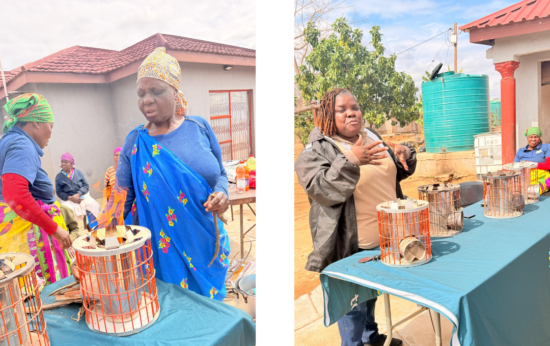
The same principle can play out very differently in another programme. In Xikukwane Village, monitoring by the Community Solutions Team showed lower-than-expected use of K2C-distributed fuel-efficient cookstoves, but the numbers alone could not explain why. By listening to community members, mainly women and girls responsible for preparing meals at home, the team learned that some preferred cooking pots did not fit the stoves, while others were unsure how to light and use them correctly. The response was a practical community cookout and a practical community cookout and refresher session, demonstrating the stoves with familiar meals and drawing on the experience of women already using them.
The example is simple but important: understanding who is actually using an intervention, and listening to their experience, can change how a programme responds.
Participation is the Starting Point, Not the Finish Line
Counting participation remains useful, but numbers cannot tell the full story. A programme may have strong female participation while women still have limited influence over decisions or provide access to training without changing access to resources or opportunities. Gender mainstreaming therefore keeps looking beyond the first number: Who spoke? Who decided? Who benefited? Were women able to influence decisions and lead? Did anything meaningful change as a result?
Gender mainstreaming is an ongoing process, not evidence that gender equality has already been achieved. And there is still a long way to go.
Progress means moving towards a landscape where women are not simply represented, but are increasingly able to access opportunities and resources, have a meaningful say in decisions that affect their lives, and influence what happens as a result.
What Happens After 9 August?
Women’s Day and Women’s Month remain important. They remind us of what was fought for, the progress South Africa has made, and how much remains unresolved. But the ideals represented by the women who marched in 1956 cannot belong to one commemorative date.
Those ideals are shaped by what happens every day of the year, in households, workplaces, community structures, organisations and programmes. We need to look critically at the systems, opportunities and conditions that enable women to participate, lead and thrive, as well as those that continue to limit them, and have honest conversations about both.
Women’s Month gives us an occasion to reflect, but gender equality cannot belong to one date on the calendar. It has to influence the questions we ask and the choices we make every day, across projects, partnerships and communities.
Lauren Booth
Kruger to Canyons Biosphere Communications Manager