Nature & Conservation
Snake season
Summertime is snake season, especially when the first good summer rains fall. We have already seen several snakebites in hospitals throughout the country and several dogs are also getting bitten by snakes.

Summertime is snake season, especially when the first good summer rains fall. We have already seen several snakebites in hospitals throughout the country and several dogs are also getting bitten by snakes.

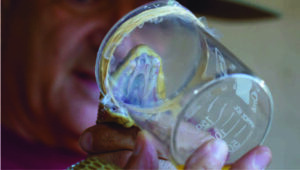
The snouted cobra (Naja annulifera) is by far the largest cobra in the Lowveld, reaching 2,5 m in length. It is usually yellowish to dark brown or blue-black above with a yellow mottled belly but there is also a banded variety.
About eight months back we started running out of antivenom for snakebite and the situation has become worse. While hospitals will have access to antivenom for serious snakebites, veterinarians have largely run out of stock, and pets are dying.
Every year, as the temperature drops and trees lose their leaves, we see a peak of snake activity. While our snakes do not really hibernate, they become inactive during winter and spend most of their time in underground burrows. But on warm winter days, especially in the Lowveld, snakes often come to the surface to bask.
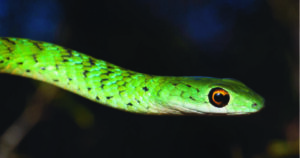
This harmless snake is often mistaken for the Boomslang or Green Mamba but can easily be identified by the dark spots on the front half of the snake as well as the dark eye with an orange pupil.
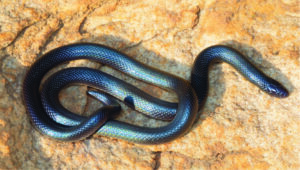
One of the most common snakebites in the Lowveld is from the Stiletto snake, and largely because people mistake this snake for a harmless snake and pick it up.
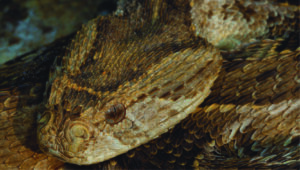
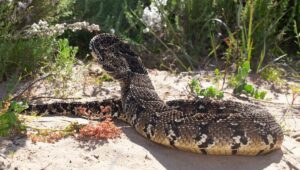
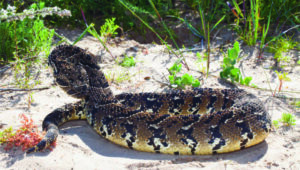
The Puff Adder is widespread throughout much of Southern Africa but avoids high mountain tops and dense forest. It is a slow-moving snake that spends most of its life well camouflaged. R
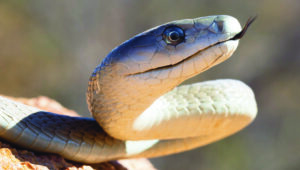
The Black Mamba is, without doubt, the most feared venomous snake in the world. It has a reputation of being extremely aggressive, quick to attack and supposedly can kill a man within seconds.
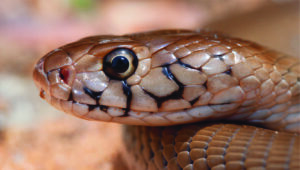
The Mozambique Spitting Cobra (M’fezi), is a common snake throughout much of southern Africa, the venom of this snake is primarily cytotoxic, causing severe pain, swelling, and tissue damage.