With the holidays in the rear-view mirror and life’s rhythm building itself up to normal again, we find ourselves squarely in the grip of our undeniably subtropical climate.
The heat of mid-summer bears down, constant and somewhat nefarious, like an oppressive forcefield precipitated by the constant and equally fierce work of the sun. This, alongside the draining, persistent humidity, means the brisk mornings of winter are a far, but oddly fond memory.
Dawn these days, represents a short respite of delicate coolness, but this well and truly dissipates by breakfast. Birding during this, and the afternoon’s equally thin slice of ideal conditions, can be excellent as most species are packing in as much as possible while the heat is not intolerable. Despite this intense period of the year, sporadic rainfall has offered it’s obligatory flushes of moisture with a somewhat semi-regularity, while hot conditions can always indicate more on the way.
This has predictably resulted in the propagation, and growth of almost all guises of vegetation which are all in full flourish, even at the time of writing. As with last year, and the one before that, and even the one previous to that, where there are flushes of humidity, moisture and heat, comes an explosion of arthropods. These emergences are a direct consequence of, and reaction to, the accumulation of not just one, but many advantageous conditions.
As mentioned in previous before, this explosion of botanical, invertebrate and other food sources, support the vast variety of birds found here during a typical Lowveld summer. Both those rearing broods of chicks and those taking a break whilst on a non-breeding sabbatical from Europe or Asia, have more than enough food to survive, if they have the correct skillsets. These repertoires are a combination of innate knowledge received genetically, and behaviours learned and assimilated through experience or via communication. They thus vary from individual to individual. Those that have adequate skills and behavioural traits survive and breed, while those that do not, or which are unfit in other ways, perish.
When it comes to tools however, in order to achieve their nutritional needs, birds have only a handful available. Having said this, those that do have tools at their disposal are usually highly modified and intricately designed for their purpose. The primary tool that all birds have in their armoury is their bill. This keratin creation is unique. It offers a lightweight, tooth-free appendage which is used to access and ingest an almost infinite variety of food stuffs which are gleaned, hawked, probed, sallied, fished, plucked or stabbed from the environment.
The exact types of food, whether it be the wide variety chosen by generalists, or the particular preferences of those that are specialists, in many ways define the lifestyles of each bird. As a result, the diet of a bird largely defines its niche. This complex concept can be thought of the birds position within the ecosystem, carved out amidst the riot of inter-specific competition found in nature.
With the bill being the primary tool for work needing a prehensile approach, including the highly essential task of accessing birds’ energy-rich dietary requirements, it is an important feature in separating one kind of bird from another. Therefore, an understanding of the various types and shapes of bill, usually offers a good indication of what to expect in terms of what that particular bird might eat, and thus where it might be found.
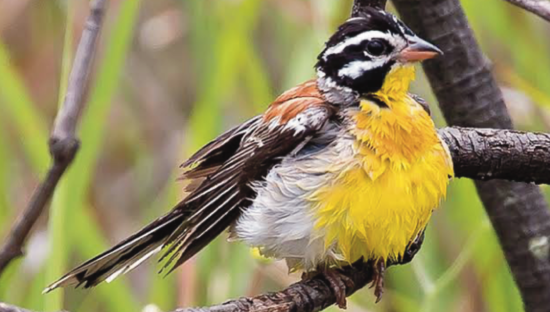
When speaking of these different designs, in most cases birds that are in the same family or even phylogenetic order, share the same general bill structure. From here they may have subsequently radiated out into a variety of genera and species, but their bills and thus lifestyles are usually quite similar. These individual species are either competitors within a single area, or have segregated into a variety of terrains with differing climates. Thus, by adapting, different species have differing habitat requirements compared to similar members of their genus or family. Because of the wide variety of food types and quantities available, this has allowed families that consume either a range of, or singular but very common materials, like grass and other plant seeds, to diverge into many species over time.
Each specific bill type usually falls into one of several categories that include hooked and predatory, wedge-shaped and conical, small, fine and pointed, long straight and spear-shaped, curved for probing and more. Having isolated the bill type accurately, a shortlist of suspect families emerges.
Those with predatory hooked bills possess a sharp notch near the tip which is designed for severing the vertebrae of prey. This bill shape can be found in raptors like Eagles, Vultures, Kestrels as well as in smaller passerine predators like Shrikes, their allies, as well as Drongos. Birds with conical bills, are usually small as this form is primarily designed for its mechanical power when cracking the husks of small resistant grains. Thus this shape is shared by seed-eaters like Waxbills, Pytillias, Weavers, Sparrows and Widowbirds to name a few. Those with big wedge-like bills tend to be generalists like Barbets, Honeyguides and others. Small, dainty sharply-pointed bills belong largely to insectivorous passerines. From hawkers to those that forage through foliage, many of these birds live a largely arboreal existence, with a few exceptions. Families such as Flycatchers, Warblers, Cisticolas, Pipits, Batises and many more, share this kind of bill. Spear-shape bills are found in many, primarily aquatic families like Herons, Egrets and Kingfishers of various kinds. Long recurved bills belong to big birds like Ibises and mudflat waders such as Curlew and the Whimbrel species, as well as the more modest nectar feeding Sunbirds.
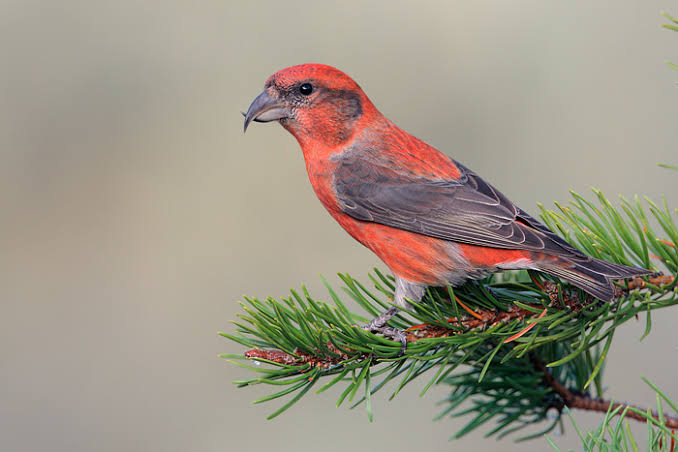
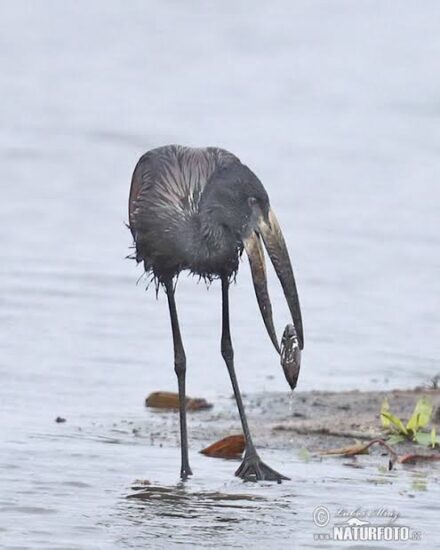
In some cases, the bills of birds have become so specialized for particular kinds of food, that it gives them a unique structure, one that is unto their own. For instance, the overlapping bill of Crossbills in the northern hemisphere pine forests, helps them access energy-rich pine nuts from their protective cones. Closer to home, the bill of the African Openbill is a fascinating utensil. It has a requisite gap of 5 to 7mm in order to precisely crack open the clamped shells of bivalves, such as the African Freshwater Mussel, as well as others. This logically gives them an advantage, one which is possessed by none of their competitors including other Storks and Herons.
Having isolated the bill shape, and arrived with some degree of comfort on a particular family, the next step is to use other features to try and reach a conclusion. Aspects such as plumage, structure, voice and proportions are often used to ascertain a handful of critical features which are particular to that individual species, and nothing else. These features, those that define each species as unique from all others are known as field characters.
In many cases, bill shape and bill colouration may be featured in the list of field characters for a particular species in relation to its relatives and similar cohorts that live nearby. One species having a slightly larger, chunkier, paler, brighter or colour-patterned bill, for example, may make the difference between it and other species that are similar to it. In a few cases, such as in the curious Cuckoo Finch, specific knowledge of the structural components of the bill can make all the difference. In this charismatic little brood parasitic seed-husker, the sharp angled nature of the culmen gives the cutting edge of the bill a slightly different shape to the very similar Southern Red Bishop. This sounds complicated, and it is to some degree, but once the ability to recognize this feature has been developed, the identification of this bird is sealed, even when non-breeding and thus at its most cryptic.
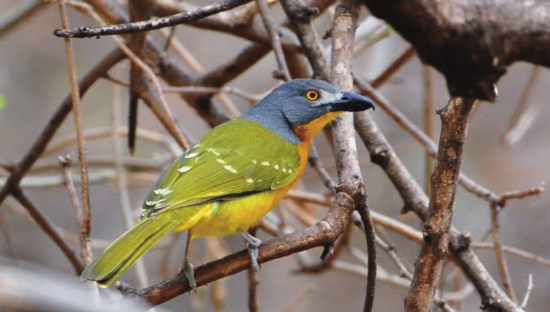
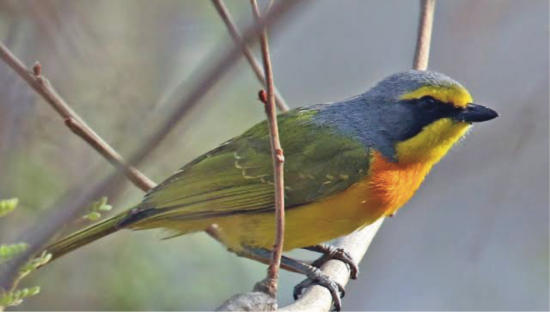
In many similar species the concept of proportion is often an essential one when comparing species with families. Waders like Sandpipers, Stints, Plovers and Godwits have bills that vary in proportion to their body size, in a way that makes each species unique. Various species of Woodpecker can be identified by their bill size relative to their body size, which is then used with other features for confirmation. In many species, the coloration of the bill, and the pattern of that colouration can be useful for identification. An example of this is when comparing the chunky, bicoloured, black-tipped and bright yellow-based bill of the juvenile African Harrier Hawk. It is quite different from the more slender, more curved-tipped, darkish bill of the similarly plumaged in some, but highly variable, European Honey Buzzard. Both Black-crowned Tchagra and Grey-headed Bush Shrike have very large and heavily hooked bills in comparison to the smaller billed Brown-crowned Tchagra and Orange-breasted Bush Shrike respectively.
When out and about in the field this month, take a closer look at both birds that are unfamiliar, as well as those that are known. Check out for the bill shapes of these birds and see if you can figure out a short cut to help get each one down to family level. The bills of birds can be both fascinating and useful while offering a window into the amazing complexity and achievement, that can come about in terms of evolution and adaptation. Even more amazing in terms of acknowledgement, just for the power of observation applied by those few dedicated birders who look for and define identification criteria. It is their eye for detail that has resulted in the concrete features, however simple or technical, that we have at our fingertips today, which allow us to confidently separate one species from the next.
Happy birding!