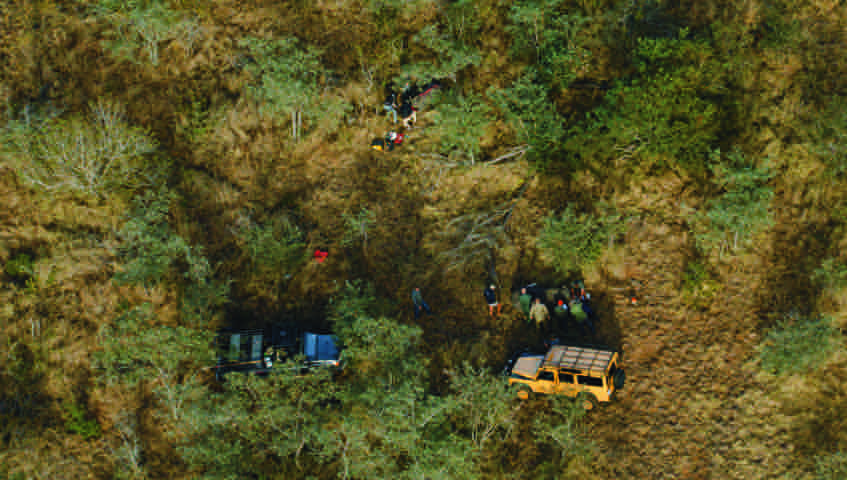
Since the early 2000’s Nkombe Rhino, a South African non-profit organisation, has focused their endeavours on the protection of endangered and threatened species. This is no back-office organisation, they are an organisation that is actively on the ground supporting and helping conservation, from anti-poaching units to veterinarians and helicopter pilots. Through a pool of resources and sustainable partnerships, the organisations’ aim is to better impact the conservation realm as a collective unit of like-minded organisations. A target is to create and engender an awareness in people to the plight of all threatened fauna and flora and to stimulate an everlasting involvement in the conservation cause.
I was fortunate enough to be involved in the Greater Makalali Nature Reserve (GMNR) on a specific project financed by Nkombe Rhino through the fund-raising efforts of three up-and-coming rugby stars from the Stormers camp, together with their fitness and conditioning coach. Nkombe Rhino is the brainchild of Joe Pietersen (ex-Stormers rugby, Founder and Director of Nkombe Rhino), who is on hand and on the ground, participating in all interventions by the organisation.
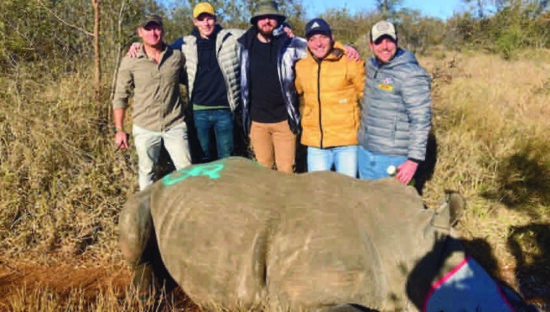
Kade Wolhuter, Jean-Luc du Plessis, Paul de Wet and Migael Wahl (all Stormers) arrived in the Lowveld with a certain amount of trepidation, for what lay ahead.
Kade Wolhuter, had initially reached out to Joe to find out how to get involved in conservation projects. He brought in three other friends to raise money together, to allow them to build a project to take part in an adventure to dehorn rhinos in the kruger2canyons biosphere area.
The experience was mind-blowing for the four, two of which had not ever been to the Lowveld! Never could they have imagined being close-up and personal with these beautiful brutes, taking part in a dehorning operation that could effectively contribute to saving the species for later generations. The learning curve was exponential for all and has now sown the seed for more involvement in conservation.
GMNR have been involved in dehorning rhino for many years. Their success in this endeavour is a combination of good veld and animal management, and a very strong anti-poaching and security set-up.
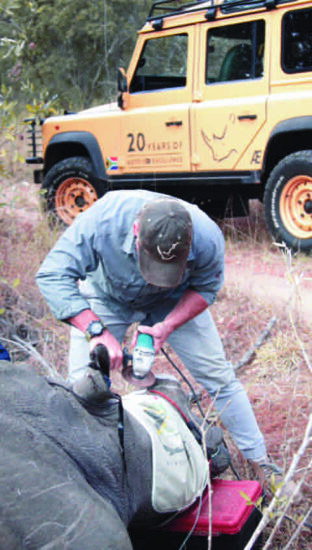
Dehorning is a costly exercise, is stressful for the animals and needs to be repeated regularly. It’s not only a matter of dehorning – a lot of research is also done on the rhinos whilst they are ‘doped’ including DNA sampling and ear notching.
Five animals were selected, and together with helicopter pilot, Gerry Macdonald, and his twin brother, Bruce, in his fixed wing aircraft, the Provet team headed by Dr Pete Rogers, and the team from GMNR headed by Warden Antony Collett, it was ‘all systems go’ for a good day for conservation.
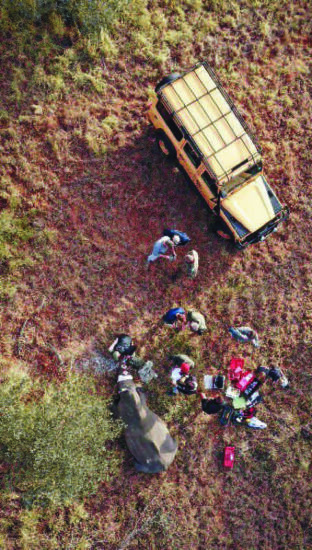
The operation, finely tuned and planned, went off without a glitch. Bruce located the animals and called in Gerry in the helicopter, with Pete ready with the dart gun. Once darted the team on the ground were called in to secure the safety of the animals and the dehorning began.
No animal was ‘out’ for more than 25 minutes, in which time all tests and dehorning was done. The team remained on site to ensure that the animals had no adverse effects of the tranquiliser and were up and about in a normal fashion.
The whole process was so well co-ordinated that within the morning, all five rhinos had been successfully dehorned. The slick functioning of the team on the ground, air and the veterinary services ensured that the animals experienced the minimal amount of stress possible whilst being dehorned, checked, and subsequently ‘released’.
The Nkombe Rhino moto of “Custodians of Hope” certainly resonated with all involved, and it is hoped that the amazing work done by this organisation, continues and grows. We all must do what we can to reduce the poaching scourge, to support those that look after our wildlife heritage, and to safeguard our fauna and flora for generations to come.


