
Those of you with their fingers on the pulse of the latest astronomical news, you may have seen the recent talk on social media about the explosion due to light up our skies over the next few months.
As with many claims made by those clambering for followers, likes and hits, the true nature of this event has been somewhat over-dramatized, at least in terms of what will be visible to the casual stargazer, but its significance should not be under-estimated.
Space is dynamic, with galaxies, stars, planets, moons and more, being born, interacting, merging and dying in a seemingly endless cosmic soap opera on the biggest stage imaginable. But such is the size and scale of these events, the chances of any of us witnessing any of this in our meagre lifespans is, if you excuse the pun, astronomically slim.
However, astronomers are predicting that we may get to see something very special in the coming months – a nova. The word nova comes from the Latin meaning ‘new’, a poignant description since, from our perspective, a new star will be visible in the night sky. The site of this cosmic phenomenon will be the small, but beautiful constellation of Corona Borealis, the Northern Crown. This aesthetically pleasing arc of stars can be seen in South Africa for a few hours after sunset in the northern skies and represents the crown of Ariadne that was tossed into the sky in celebration of her wedding to the god, Dionysus.

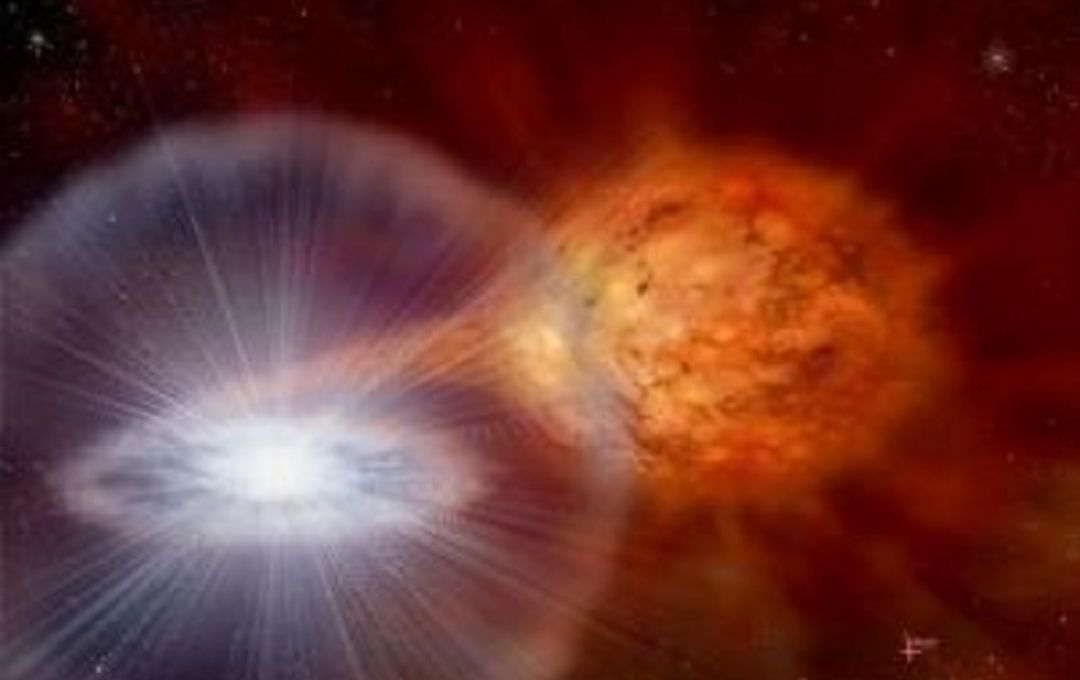
A nova is not the birth of a new star, but more of a brief, fiery resurrection. Binary stars are pairs of stars locked by their mutual gravity, much like the Earth and Moon are bound. In this case, one of the stars is a Red Giant and the other is a White Dwarf, the core of an expired star. Red giants are old stars that are becoming unstable and prone to ejecting some of their hydrogen atmosphere into space. When this happens, the hydrogen is attracted by the white dwarf and begins to build up on its surface, where it is heated to extreme temperatures. As we know all too well, heating hydrogen sufficiently can have disastrous consequences, and eventually produces a runaway thermonuclear explosion.
If the red giant was to have an exceptionally large outgassing event, it is possible that the dwarf star could accrue sufficient mass to destroy itself completely in what is known as a Type 1a Supernova, but in most cases, the denotation simply removes the shell of hydrogen that built up. This means that the process can recur, and often does so at very regular intervals.
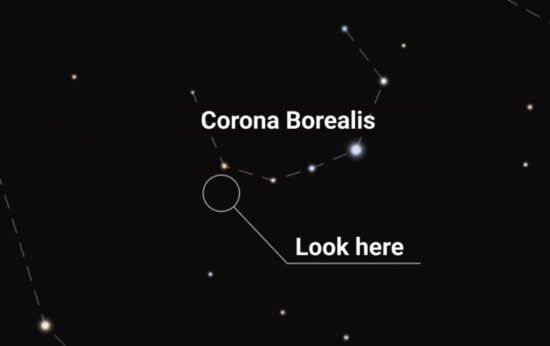
Situated over 3 000 light years away T Coronae Borealis, also known as the Blaze Star is an example of this. Its nova events occur at approximately 80-year intervals, with the last nova witnessed in 1946. Astronomers have been watching the star closely, eagerly awaiting its next eruption and all the signs point to it happening sometime before September this year.
When is does happen, there will not be a blinding flash in the night sky, but a patch of space that is normally empty (to the naked eye) will reveal a star that could get as bright as magnitude 2, about the same brightness as Polaris, the North Star, the 48th brightest star in the night sky. The explosion will be brief by astronomical standards, but the millions of tonnes of hydrogen being vaporised will cause it to outshine all the stars in its native constellation of Corona Borealis for up to a week. Other famous, noticeable magnitude 2 stars include Hamal (Taurus), Nunki (Sagittarius) and The Peacock Star (Pavo).
Out of the 400 billion stars in the Milky Way, less than 15 recurring novas are known. That is a miniscule percentage, and whilst the spectacle may not be akin to science fiction CGI standards, simply having a chance to see the dynamic nature of our galaxy with our own eyes is a supreme honour and quite literally, the opportunity of a lifetime.


