

Widespread corruption at Kruger National Park linked to criminal syndicates in Mpumalanga and the murder of honest rangers are its greatest threat.
At least 40% of Kruger Park’s law enforcement employees are corrupt, and up to 70% of other park employees may be assisting poachers who have decimated the rhino population.
This is according to researcher Julian Rademeyer, citing senior Kruger Park officials in a report for the European Union-funded crime response organisation Enact.
In just one section in the south of the park, he found 14 of its 20 rangers had been linked to poaching networks. “Investigations by private auditing firm KPMG and the Hawks focusing on the IPZ (Intense Protection Zone), home to most of Kruger’s rhinos, have uncovered evidence of payments from syndicates to at least 50 staff from all walks of life. And these numbers are likely to increase.”
According to the park’s head ranger Cathy Dreyer, referring to poaching, “it is impossible for someone to come into Kruger now without some sort of inside link or inside information”.
Landscapes of fear
The report, Landscapes of Fear, found the internal corruption, breakdown of trust and staff cohesion plus worsening organised crime in Mpumalanga, to be of greater threat to the future of the park than poaching.
The report is the outcome of interviews with senior wildlife law enforcement officials, security consultants, SANParks officials, conservation managers and provincial specialists on organised crime and corruption.
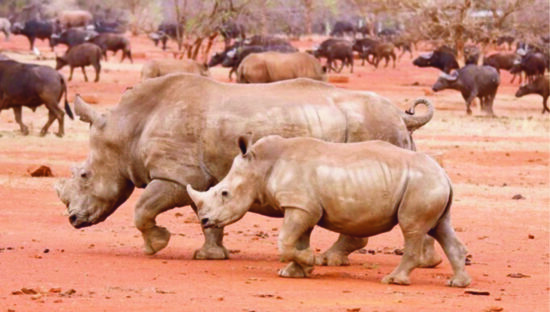
The corrosion was kick-started by rhino poaching. Between 2011 and 2020 the Kruger’s white rhino population fell by 75%, from around 10 600 to 2 607. But it has metastasised, says the report, into “toxic politics, deep-seated inequality, corruption and embedded organised criminality” which have profoundly affected the park and surrounding communities.
This has not taken place in isolation. Crime and corruption in the park, says Rademeyer, have been impacted by “organised crime in Mpumalanga, including kidnappings, cash-in-transit heists, ATM bombings, illegal mining, extortion and corruption.”
According to the report, “relations between staff and management have become strained and increasingly toxic, poisoned by mutual mistrust and suspicion. Morale is low. Accusations of racism and unfair treatment – some real and some in a cynical effort to stymie disciplinary proceedings and investigations – have fuelled tensions.”
To be effective, short-term, reactive policing tactics must be replaced with a long-term strategy to counter and disrupt key criminal networks
A key issue has been integrity/polygraph testing. According to the report, integrity testing works well, but faced problems in Kruger, not the least being union opposition. It is also expensive and, to be effective, the entire staff needs to be tested. During Covid, SANParks operational budget was cut by 70%, and it claims to not have the funds to do this.
However, SANParks financial results for the six months up to 30 September show a surplus of R172-million compared to a deficit of R188-million the previous year. After extensive negotiations with unions, in November last year the board approved integrity testing, with envisaged implementation by the fourth quarter of the 2023 financial year.
Employees at risk
Kruger employs around 2 500 staff and supports an additional 4 500 jobs, mostly in surrounding communities. About 400 staff are field rangers, most of whom are from Mpumalanga and Limpopo, with their families living in villages and small towns surrounding the park. They are at enormous risk from coercion and threats.
“You work in the park, your wife is alone at home with the kids, and this is where the kids go to school. You make the choice,” Rademeyer was told. “The ranger begins to provide information to the syndicate. He receives his first payment of R25 000 in cash or into a bank. Nothing happens to him. And then he helps, again and again, pocketing the money and protecting his family.” Then one day the poacher asks for a favour. He can’t refuse.
According to Cathy Dreyer, “there are 52 vacancies in ranger services alone and no money to fill them. But even if we had the money tomorrow, we are certainly not going to recruit 52 people and put them into what is not a nice work environment at the moment.”
The report, Landscapes of Fear, found the internal corruption, breakdown of trust and staff cohesion, plus worsening organised crime in Mpumalanga to be of greater threat to the future of the park than poaching.
“If you bring anyone in now, you’re just going to break him or her. How do you create a safe space in this world of no loyalty, no trust anymore?”
According to Rademeyer, Kruger’s field rangers, particularly the first responders dropped by helicopter into armed “contacts” with poaching gangs, face enormous psychological and physical pressures that inevitably sap morale. This has led many of them to question the militarised tactics being used, and whether they are fair or moral.
The militarised response to poaching has come at a terrible human cost in the lives of rangers, police, soldiers and poachers. Between 2010 and 2015, the worst years of poaching, up to 200 suspected poachers were shot and killed in Kruger, and seven South African National Defence Force soldiers lost their lives. Many were grievously wounded.
Kruger a strategic pawn in service delivery protests
More than 2,9-million people live within 50 kilometres of Kruger’s western boundary fence, and most are poor. At the end of 2022 average unemployment in the area was 46,5%.
Amid rising discontent over poverty and inequality, Kruger’s significance as a tourist destination, says the Enact report, has made it a strategic pawn in protests against poor service delivery and inadequate housing, electricity, water and roads. Some of this is fuelled by internecine feuds between rival ANC factions.
Around the park, illicit markets abound, and violence and murder are common. Honest officials fear for their lives. Violent organised crime was behind the assassinations of Directorate for Priority Crime Investigation (the Hawks) investigator Lieutenant-Colonel Leroy Bruwer in 2020, and Timbavati head ranger Anton Mzimba in 2022.
Poaching syndicate boss’s coffin arrives at his funeral by helicopter – draped in leopard skin
Poachers become heroes. In 2021 Petros Mabuza (“Mister Big”), a notorious cash-in-transit and rhino-poaching syndicate boss, was killed in a hit as he parked in a mall in Hazyview, Mpumalanga. At his funeral his casket arrived by helicopter, draped in a leopard skin and crowds sang his praises.
Local police stations, says the report, are riddled with corruption. “They are deeply in the pockets of organised-crime groups involved in poaching, cash-in-transit heists, car and truck hijackings, armed robberies, ATM bombings and illegal gold mining. Thus, they offer little meaningful protection. Sometimes they even serve as escorts for contraband.”
“The more honest police and those who feel a sense of dedication to their communities have little option but to turn a blind eye to the activities of their colleagues for fear of being killed.”
Crime province
Mpumalanga is considered one of South Africa’s most corrosively corrupt provinces. Over the past decade, its murder rate has increased by 42%, and between April and June 2022, there were 234 kidnappings – including those involving ransom or extortion.
The report quotes veteran Mpumalanga journalist Sizwe sama Yende, who describes it as “a province crippled by a succession of corrupt actors and administrations.” It is “blinded by the glitter of public resources it holds in its hands, and unable to resist the urge to become rapacious as if government was closing shop in one hour.”
“It is quite common to find an official who was fired or demoted for corruption a few years back now, occupying a position at the apex of a department without any rehabilitation or punitive process having taken place,” he writes.
The geopolitical context within which Kruger operates has been exposed in a series of investigations by Our Burning Planet journalist Kevin Bloom. In an article What happens when an ecosystem collapses and State Capture collide? he outlined how land rights scams and illegal hunting have been linked to the highest rungs of local politics. This has come to light in the legal clash between the conservationist Fred Daniel and then Deputy President David Mabuza, over Daniel’s attempts to establish a conservation sanctuary.
‘Slush fund’ for buying and selling hunting rights
Court proceedings disclosed a hunting scam involving private individuals, in collusion with the Mpumalanga Tourism and Parks Agency, cashing in on selling shoot licences for the hunting of so-called “problem animals” that escape from Kruger Park. Investigator Paul O’Sullivan found the Problem Animal Fund had become “nothing more nor less than a slush fund” for buying and selling hunting rights.
A year earlier, Bloom had uncovered the sudden transfer of land rights from the Mthimkhulu community on the Letaba River and bordering Kruger – which had dropped its fences with the park– to a chief 50 kilometres away, and not recognised by the local people. The Mthimkhulu community, which had been deriving a steady income from legal hunting, found these revenues now went elsewhere. As a result, they took to bushmeat poaching, with devastating results.
Some successes
Kruger Park has notched up some successes. Rademeyer notes renewed efforts to combat corruption, coupled with “a refreshing openness about the extent of the problem and a desire to address it.”
Successes include the arrest of two rangers and 11 alleged accomplices implicated in poaching networks, corruption and money laundering. Long-running financial investigations have identified payments to dozens of Kruger staff and helped pinpoint key actors, giving further cause for hope.
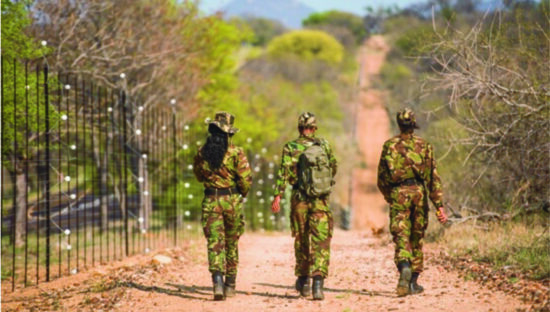
In April 2022, the Mpumalanga Hawks’ serious corruption investigation team arrested two veteran Kruger field rangers based in the park’s Stolsnek ranger section. Daniel Chikwa Maluleke (60) and Solly Ubisi (56), had spent most of their working lives in Kruger.
They were charged with corruption, money laundering and fraud linked to poaching and wildlife trafficking, the first case of its kind in the park. A Hawks spokesman said they had allegedly “provided tactical information to rhino-poaching syndicates in exchange for large sums of money”.
According to Rademeyer, Kruger’s challenge is immense. “Turning it around will require addressing corruption in the park and mending deeply fractured relations between staff and management. Any efforts to counter corruption within Kruger needs to be coupled with carefully targeted efforts to address broader criminal ecosystems in Mpumalanga.”
“To be effective, short-term, reactive policing tactics must be replaced with a long-term strategy to counter and disrupt key criminal networks.”
Prosecutions of high-level actors should be a priority, and possible amnesties for low-level offenders who cooperate with investigators. An independent whistle-blowing mechanism should be set up with all necessary protections and rewards, through which corruption can be reported, evaluated and investigated.
The Kruger Park Management Plan 2018-2028 says the park’s ideal is to “conserve, protect and manage biodiversity, wilderness qualities and cultural resources, provide a diverse and responsible visitor experience, contributing towards social, ecological and economic resilience and well-being, whilst strengthening constituency within a unique regional landscape. Its objective is to restore and maintain the benefits of species of special concern by managing threats as far as possible.”
The Enact report shows how far the park needs to travel to get there.
Kruger Park Communications Officer Isaac Phaahla was asked to comment on the report.
He replied: “It is not necessary for KNP to respond because this is Julian Rademeyer’s document and we are not privy to how he sourced his information and how he reached his conclusions.”
Phaahla had, however, previously commented extensively to The Mail & Guardian, agreeing with parts of the report.
This article was previously published in the Daily Maverick


